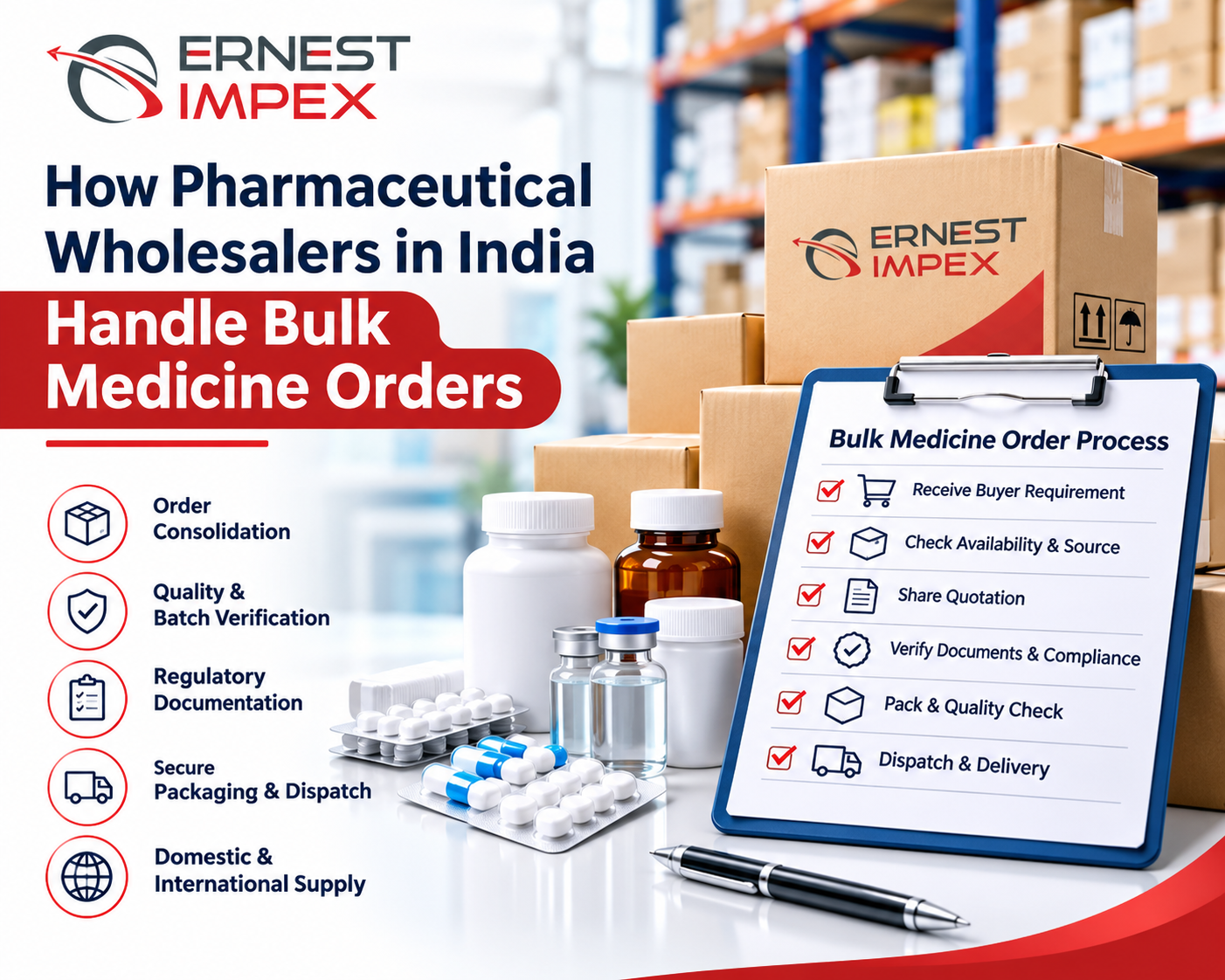
How Pharmaceutical Wholesalers in India Handle Bulk Medicine Orders
Pharmaceutical wholesalers in India manage bulk medicine orders by coordinating product sourcing, stock availability, quotations, batch verification, documentation, packaging, and dispatch. For hospitals, pharmacies, distributors, and international importers, understanding this process helps reduce purchasing errors and improves order traceability. Bulk pharmaceutical procurement is not simply about ordering medicines in large quantities. Each order may involve different manufacturers, pack sizes, manufacturing batches, expiry dates, and regulatory requirements.
What Is the Role of Pharmaceutical Wholesalers in India?
Pharmaceutical wholesalers connect authorized medicine supply channels with eligible business and institutional buyers. Their responsibilities may include checking product availability, coordinating manufacturers and distributors, preparing quotations, maintaining stock records, reviewing documents, and arranging transportation. Some wholesalers focus on domestic distribution, while pharmaceutical merchant exporters coordinate international orders. Businesses purchasing medicines from India can also explore pharmaceutical sourcing and export support to understand how international B2B supply arrangements work.
How Pharmaceutical Wholesalers in India Process Bulk Medicine Orders
1. Receiving the Buyer's Medicine Requirements
The process usually begins when a buyer submits a request for quotation (RFQ).
A detailed inquiry should include:
Medicine name and active ingredient
Strength and dosage form
Required quantity and pack size
Preferred manufacturer or brand
Delivery location or destination country
Required quality and regulatory documentation
For example, requesting 5,000 tablets without specifying the strength or pack size may lead to an incorrect quotation.
2. Checking Product Availability
Once the inquiry is received, the wholesaler checks whether the required medicines are available through appropriate supply channels. Some products may be available in existing inventory, while others require confirmation from manufacturers or authorized distributors. Availability can vary according to the brand, strength, pack size, order quantity, and manufacturing schedule.
3. Preparing a Bulk Medicine Quotation
After reviewing product availability, the supplier prepares a commercial quotation. A quotation should clearly mention the product specifications, manufacturer, pack size, quantity, unit price, total value, estimated lead time, payment terms, and shipping arrangements. Buyers should compare the complete quotation rather than focusing only on the unit price. For additional information about commercial-volume orders, see bulk pharmaceutical export arrangements from India.
4. Verifying Buyer Eligibility and Documentation
Pharmaceutical distribution is subject to licensing and other applicable legal requirements. The Central Drugs Standard Control Organization (CDSCO) publishes regulatory guidance and has issued draft Good Distribution Practices guidelines for pharmaceutical products covering areas such as distribution procedures, documentation, storage, and handling. For international orders, the buyer and supplier must also consider destination-country import permissions and product-specific requirements. The CDSCO document linked above is draft guidance, not a substitute for applicable law.
5. Confirming the Purchase Order
After agreeing on the quotation and necessary requirements, the buyer confirms the order. The purchase order should match the agreed product name, strength, manufacturer, pack size, quantity, price, and delivery terms. Any changes should be confirmed before the order is prepared for dispatch.
How Do Wholesalers Manage Stock for Bulk Medicine Orders?
Stock Allocation and Quantity Verification
Large medicine orders may require stock from different available batches or supply sources.
Consider this hypothetical example:
| Order Details | Quantity |
|---|---|
| Buyer requirement | 1,000 packs |
| Available stock | 700 packs |
| Additional stock required | 300 packs |
| Final packed quantity | 1,000 packs |
| Invoice quantity | 1,000 packs |
The wholesaler should reconcile the packed quantity with the confirmed purchase order.
If the complete quantity is unavailable, the buyer should be informed and any partial delivery should be agreed upon.
Batch Number and Expiry Verification
Batch identification supports pharmaceutical traceability. Before dispatch, the relevant batch numbers and expiry dates should be checked against the medicines prepared for supply. Buyers may also specify minimum remaining shelf-life requirements.
Storage and Inventory Handling
Medicines should be stored according to their approved product instructions. The World Health Organization explains the importance of proper inventory management, storage conditions, stock rotation, and distribution controls in its Good Storage and Distribution Practices for Medical Products. These practices help reduce risks associated with unsuitable handling and storage.
How Are Bulk Medicines Packed and Dispatched?
Pharmaceutical Packaging Checks
Before dispatch, wholesalers should review product identity, packaging condition, batch details, carton quantities, and any special handling requirements. Appropriate packaging depends on the medicine, transport method, and expected shipping conditions.
Preparing Commercial and Shipping Documents
Depending on the transaction, relevant documents may include:
Commercial invoice
Packing list
Purchase order
Transport documentation
Batch and expiry records
Certificate of Analysis, where applicable
Required import or export authorizations
Documentation requirements differ according to the medicine, buyer, and destination.
Coordinating Transportation
Domestic deliveries may be arranged through suitable logistics providers. International shipments require additional attention to customs, carrier eligibility, destination-country regulations, and applicable documentation. The WHO's guidance on pharmaceutical storage and distribution also addresses transport-related risks and the need to maintain appropriate product conditions during distribution.
Common Challenges in Bulk Pharmaceutical Procurement
Product Availability Changes
Availability may change between the initial quotation and purchase-order confirmation.
Incorrect Product Specifications
Differences in strength, pack size, or manufacturer can create purchasing errors.
Documentation Gaps
Missing buyer authorisations, import documents, or required product records may delay order processing.
Quantity and Batch Discrepancies
The final packed quantity and batch information should be checked against the confirmed order.
Shipping and Handling Restrictions
Some pharmaceutical products require special arrangements or may not be eligible for particular destinations or transport services.
Clear communication and written confirmation can help buyers and suppliers manage these issues.
Bulk Medicine Ordering Checklist for B2B Buyers
Before placing a wholesale medicine order, buyers should confirm:
Correct medicine name, strength, and dosage form
Manufacturer and pack size
Total required quantity
Product availability
Applicable licences and authorisations
Batch and remaining shelf-life requirements
Commercial and quality documentation
Packaging and handling arrangements
Payment and delivery terms
Procedure for reporting shortages or discrepancies
Bulk Pharmaceutical Sourcing Through Ernest Impex
Ernest Impex supports pharmaceutical sourcing enquiries from eligible international importers, wholesalers, distributors, hospitals, and healthcare procurement businesses. Buyers can submit product specifications, quantities, manufacturer preferences, and destination details for review. Quotations, product availability, documentation, and shipment arrangements depend on the individual inquiry and applicable requirements. For additional information about order inquiries, pricing, and shipping, buyers can review the Ernest Impex frequently asked questions.
Frequently Asked Questions
1. How do pharmaceutical wholesalers in India handle bulk orders?
They generally review the buyer's requirements, assess availability, prepare a quotation, confirm applicable documents, allocate stock, verify batch details, pack the order, and coordinate dispatch.
2. Can international buyers purchase medicines from Indian wholesalers?
Eligible buyers may source medicines from India when the transaction complies with applicable Indian laws and destination-country requirements.
3. What details are needed for a bulk medicine quotation?
Buyers should provide the medicine name, strength, dosage form, pack size, quantity, preferred manufacturer, and destination.
4. Why are batch numbers important in pharmaceutical wholesale supply?
Batch numbers support traceability and help identify the medicines supplied during complaints, investigations, or recalls.
5. Do bulk medicine orders require a Certificate of Analysis?
Requirements vary according to the product, transaction, contractual terms, and applicable regulations. Buyers should confirm whether a Certificate of Analysis is required and available.
6. Can wholesalers supply medicines from multiple manufacturers?
They may coordinate products from different authorised supply sources, provided the products are correctly identified and the transaction meets applicable requirements.
7. What causes delays in bulk medicine orders?
Common causes include stock shortages, incomplete documents, changes in product specifications, transport restrictions, and customs procedures.
8. What should buyers verify before choosing a pharmaceutical wholesaler?
Buyers should review relevant authorizations, product sourcing arrangements, batch traceability, documentation practices, quotation terms, and delivery requirements.
Conclusion
Pharmaceutical wholesalers in India help coordinate bulk medicine procurement through product sourcing, stock verification, documentation, packaging, and transportation. For domestic and international buyers, clear product specifications, accurate quantity reconciliation, appropriate documentation, and regulatory compliance are important throughout the purchasing process.
Businesses planning bulk pharmaceutical purchases can contact Ernest Impex with their detailed requirements for an availability and quotation review, subject to applicable regulations.
Keywords