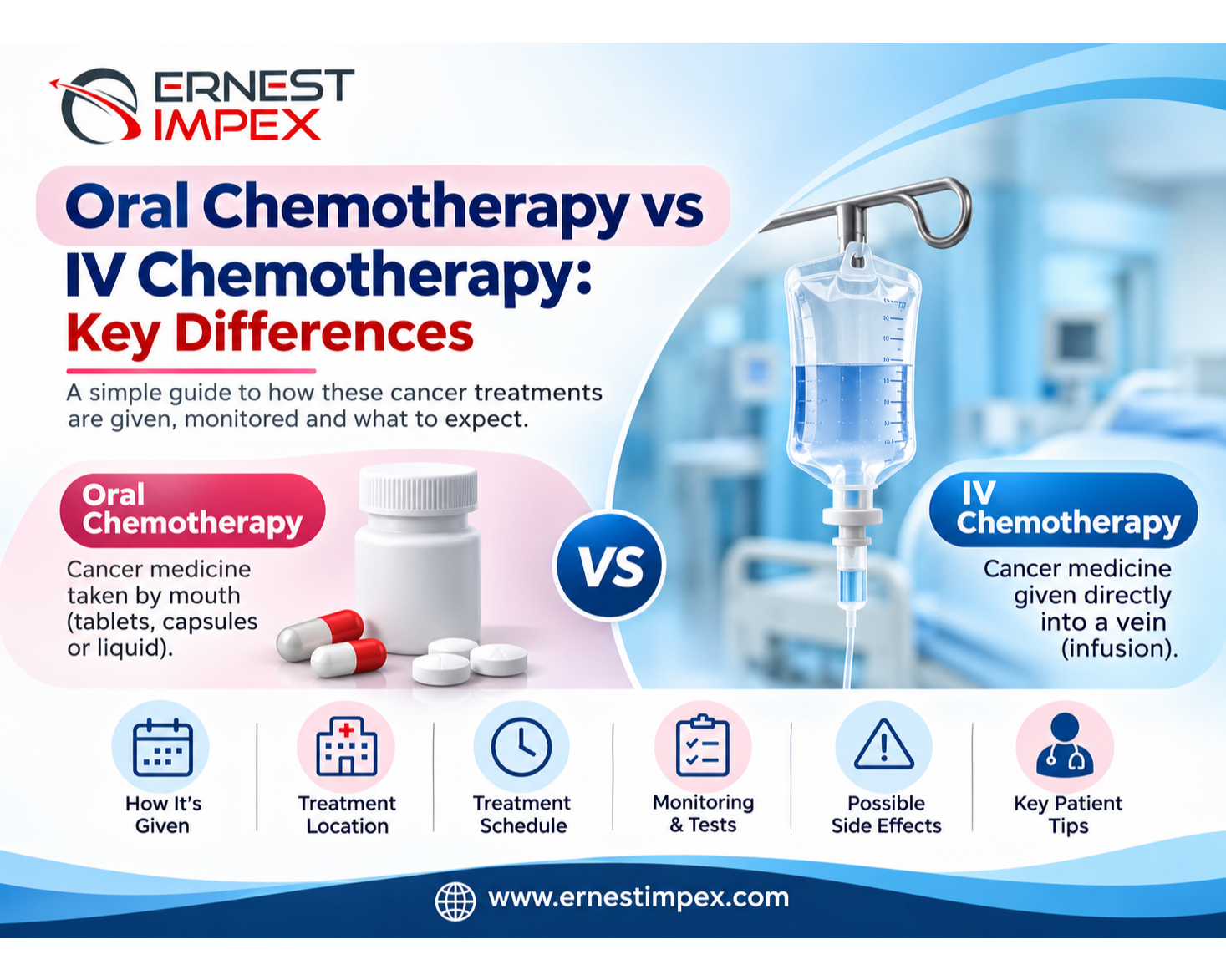
Oral Chemotherapy vs IV Chemotherapy: Key Differences
Cancer medicines can be taken as tablets or given directly into a vein. Understanding how these treatments differ can help patients and caregivers prepare for treatment and follow medical advice safely. When people hear the word chemotherapy, they often imagine a patient sitting in a hospital with an intravenous drip. However, chemotherapy does not always require an infusion. Some chemotherapy medicines are available as tablets, capsules, or oral liquids that patients may take at home. This often raises an important question: Is oral chemotherapy different from IV chemotherapy, and does the way a medicine is given affect treatment?
Both approaches are used to treat cancer, but they differ in how the medicine enters the body, how treatment is organized, and how patients are monitored. Understanding these differences can make chemotherapy easier to discuss with an oncology team.
What Is Oral Chemotherapy?
Oral chemotherapy refers to chemotherapy medicines that are swallowed as tablets, capsules, or liquids. After the medicine is taken, it is absorbed through the digestive system and can enter the bloodstream. Depending on the medicine, it may then travel to different parts of the body and act against cancer cells. Some oral chemotherapy medicines are taken daily for a specified period, followed by a treatment break. Others may follow different schedules. For example, capecitabine is an oral chemotherapy medicine used in the treatment of certain cancers. It belongs to a group of medicines called antimetabolites, which interfere with processes needed for cancer cells to grow and divide. An example of this dosage form can be found on the Capegard 500 mg (Capecitabine) Tablet information page. Although you can take oral chemotherapy at home, you still need regular medical supervision. The guide from the American Cancer Society on oral chemotherapy explains why correct timing, prescribed doses, and regular follow-up are essential.
What Is IV Chemotherapy?
IV chemotherapy is given directly into a vein. Instead of swallowing the medicine, patients receive it through an intravenous line, sometimes using a cannula, central venous catheter, or implanted port. The medicine enters the bloodstream without first passing through the digestive system. IV chemotherapy is commonly administered in hospitals, oncology clinics, or specialized infusion centers. When suitable arrangements are available, trained healthcare professionals may also provide some treatments at home. A chemotherapy infusion may take a relatively short time or several hours, depending on the medicine and treatment plan. Gemcitabine is one example of a chemotherapy medicine administered intravenously. It interferes with DNA production in rapidly dividing cells and is used in selected cancer treatment regimens. Readers can find an example of this injectable formulation on the Abingem 200 mg (Gemcitabine) Injection information page. IV chemotherapy should be prepared and administered according to the medicine's approved instructions by appropriately trained professionals.
Oral Chemotherapy vs IV Chemotherapy: Main Differences
Both oral and intravenous chemotherapy are used in cancer care, but the experience of receiving treatment can be different.
| Feature | Oral Chemotherapy | IV Chemotherapy |
|---|---|---|
| Administration | Swallowed as tablets, capsules, or liquids | Given directly into a vein |
| Treatment location | Often taken at home | Usually given at an infusion center, clinic, or hospital |
| Treatment schedule | Daily, intermittent, or cycle-based, depending on the medicine | Infusion appointments scheduled according to the regimen |
| Patient responsibility | Taking each dose correctly is especially important | Administration is generally managed by trained staff |
| Monitoring | Blood tests, appointments, symptom reviews | Blood tests, clinical checks, and infusion monitoring |
| Side effects | Depend on the specific medicine. | Depend on the specific medicine. |
| Storage | Follow the individual product instructions. | Professional storage and preparation may be required. |
| Treatment effectiveness | Depends on the cancer and prescribed medicine | Depends on the cancer and prescribed medicine |
The route of administration alone does not determine whether a treatment will be more effective.
Doctors select chemotherapy based on the cancer diagnosis, treatment goals, available medicines, and the patient's medical condition.
Does Oral Chemotherapy Work as Well as IV Chemotherapy?
Many patients wonder whether a chemotherapy tablet can work as effectively as a medicine delivered through an IV drip. The answer depends on the particular medicine and the cancer being treated. Oral chemotherapy medicines are developed and studied for specific conditions. When used for an approved indication, they may be effective components of cancer treatment. However, oral and IV medicines are not automatically interchangeable. Some cancer treatments are available only as intravenous formulations. Others are available in oral forms, and a few chemotherapy drugs have both oral and injectable formulations. The amount absorbed, how the body processes it, and how often it is given can all influence the treatment plan. A patient should never replace an IV medicine with an oral medicine, or vice versa, unless the treating oncologist makes that decision.
According to the National Cancer Institute's chemotherapy information, the way chemotherapy is administered depends on factors including the medicine and treatment requirements.
Why Do Some Patients Receive Chemotherapy Tablets Instead of Injections?
Oral chemotherapy can be suitable for certain patients because it may reduce the need for frequent infusion appointments. Taking medicine at home can make treatment more convenient for people who live far from an oncology center or need to balance treatment with everyday responsibilities.
However, convenience does not mean the treatment is simple or less serious. Patients may need to follow a detailed medication schedule, attend regular blood tests, and watch for side effects. Some chemotherapy medicines must be taken at particular times or with specific food instructions. Others require precautions because they can interact with prescription medicines, supplements, or certain foods. If a dose is missed or vomiting occurs after taking a medicine, the patient should follow the oncology team's instructions rather than automatically taking another dose.
Are Side Effects Different Between Oral and IV Chemotherapy?
Both forms of chemotherapy can cause side effects. Some chemotherapy medicines affect healthy cells along with cancer cells, particularly cells that divide rapidly.
Possible treatment-related effects include:
Nausea or vomiting
Fatigue
Reduced blood cell counts
Increased risk of infection
Diarrhea or constipation
Mouth sores
Changes in appetite
Not every patient develops these symptoms, and the severity varies considerably. Some medicines may cause hair loss, nerve problems, hand-foot syndrome, kidney problems, or other specific complications.
Side Effects Associated With Oral Treatment
Oral chemotherapy may cause medicine-specific digestive problems, changes in blood counts, and other adverse reactions. Because patients often take the medicine outside a hospital, they need clear instructions about which symptoms require medical advice.
Side Effects Associated With IV Treatment
IV chemotherapy can also cause systemic side effects. In addition, problems may occur around the infusion site, including irritation, inflammation, or leakage of certain medicines into surrounding tissue. Some patients may develop reactions during or shortly after an infusion. Healthcare professionals monitor for these complications and follow specific procedures when they occur.
Oral and IV chemotherapy should be considered equally safe.
Why Is Regular Monitoring Important for Both Treatments?
Medical monitoring remains important regardless of how chemotherapy is administered. Cancer treatment can affect blood cells, liver function, kidney function, and other aspects of health. Doctors may recommend complete blood counts, liver function tests, kidney function tests, and other investigations depending on the regimen. A complete blood count helps assess white blood cells, red blood cells, and platelets. Low white blood cell counts may increase infection risk, while reduced platelet levels can increase bleeding risk. Monitoring may also include physical examinations, symptom assessments, scans, or tests that measure cancer activity. Even patients who take chemotherapy tablets at home must attend their recommended follow-up appointments. A sudden fever, unusual bleeding, chest pain, or severe breathlessness during treatment requires prompt medical attention.
Can All Anti-Cancer Tablets Be Called Oral Chemotherapy?
No. This is an important distinction. Not every anti-cancer tablet is a traditional chemotherapy medicine. Cancer treatment includes different groups of medicines, such as chemotherapy, targeted therapy, hormonal therapy, and immunotherapy. For example, some oral medicines are designed to interfere with specific proteins or biological pathways involved in cancer growth. These medicines may be classified as targeted therapies rather than conventional chemotherapy. Similarly, hormonal medicines are used in selected hormone-sensitive cancers. Although these treatments may be available as oral tablets or capsules, their mechanisms and medical uses differ. For further information, the National Cancer Institute provides a guide on targeted therapy that explains how targeted medicines differ from standard chemotherapy.
What Should Patients Know About Handling Oral Chemotherapy at Home?
Oral chemotherapy requires careful handling and storage. Some medicines may be hazardous if handled incorrectly, particularly by people who are not receiving treatment. Patients should follow the medicine's specific instructions and guidance from their pharmacist or oncology team. Important precautions include keeping medicines in their recommended packaging, storing them away from children and pets, and avoiding crushing or opening capsules unless explicitly instructed. Unused or expired chemotherapy medicines should not be discarded with ordinary household waste without checking the approved disposal procedure. The American Cancer Society's chemotherapy safety guidance provides additional information about precautions for patients and caregivers.
Why Do Dosage Forms Matter in Oncology Medicine Supply?
For healthcare facilities and pharmaceutical procurement teams, the dosage form is an important part of identifying the correct medicine. An oral tablet and an injectable formulation may require different packaging, handling procedures, preparation facilities, and administration arrangements. For example, an oncology clinic receiving injectable chemotherapy may need trained staff, suitable preparation equipment, and appropriate procedures for managing hazardous medicines. Oral chemotherapy products also require correct storage, labeling, packaging integrity, and safe handling. The actual requirements depend on the individual medicine, its approved product information, and applicable national regulations.
Product details such as the active ingredient, strength, dosage form, manufacturer, batch information, expiry date, and storage instructions should be checked carefully. Information about different oncology dosage forms is available through the Ernest Impex Anti-Cancer Medicine Category. Accurate product identification helps reduce confusion during pharmaceutical procurement and medicine handling.
Frequently Asked Questions
1. What is the difference between oral chemotherapy and IV chemotherapy?
Oral chemotherapy is swallowed as a tablet, capsule, or liquid. IV chemotherapy is administered directly into a vein. Both require medical supervision and regular monitoring.
2. Is oral chemotherapy less powerful than IV chemotherapy?
Not necessarily. Treatment effectiveness depends on the medicine, the type of cancer, and the prescribed regimen rather than simply the route of administration.
3. Can oral chemotherapy be taken at home?
Many oral chemotherapy medicines can be taken at home when prescribed for that purpose. Patients must follow dosing, handling, and monitoring instructions carefully.
4. Does oral chemotherapy cause fewer side effects?
Not necessarily. Oral chemotherapy may cause serious side effects, including reduced blood cell counts and digestive problems. Risks depend on the individual medicine.
5. Why is chemotherapy sometimes given through an IV?
Some medicines are designed for intravenous administration because of their properties, clinical use, or required treatment schedule. The oncology team chooses the appropriate treatment.
6. Do patients taking oral chemotherapy still need blood tests?
Yes. Regular blood tests and medical reviews may be needed to monitor side effects, organ function, and overall treatment safety.
7. Can patients switch from IV chemotherapy to tablets?
A change in treatment should only be made by the treating oncologist. Oral and IV chemotherapy medicines cannot be assumed to be interchangeable.
Conclusion
Oral chemotherapy and IV chemotherapy are different ways of delivering cancer medicines. Oral treatment may allow patients to take prescribed medicines at home, while IV treatment generally involves administration through a vein under clinical supervision. Each approach has its own practical requirements, safety considerations, and monitoring needs. The most appropriate treatment depends on the type of cancer, the prescribed medicine, the patient's condition, and the oncology team's assessment. Understanding these differences can help patients and caregivers ask informed questions and follow treatment instructions more confidently.
Keywords