Difficulty conceiving can arise from several factors, including irregular ovulation, hormonal conditions, reproductive tract problems and male-factor infertility. For some women who do not ovulate regularly, medicines that stimulate ovulation may form part of fertility treatment.
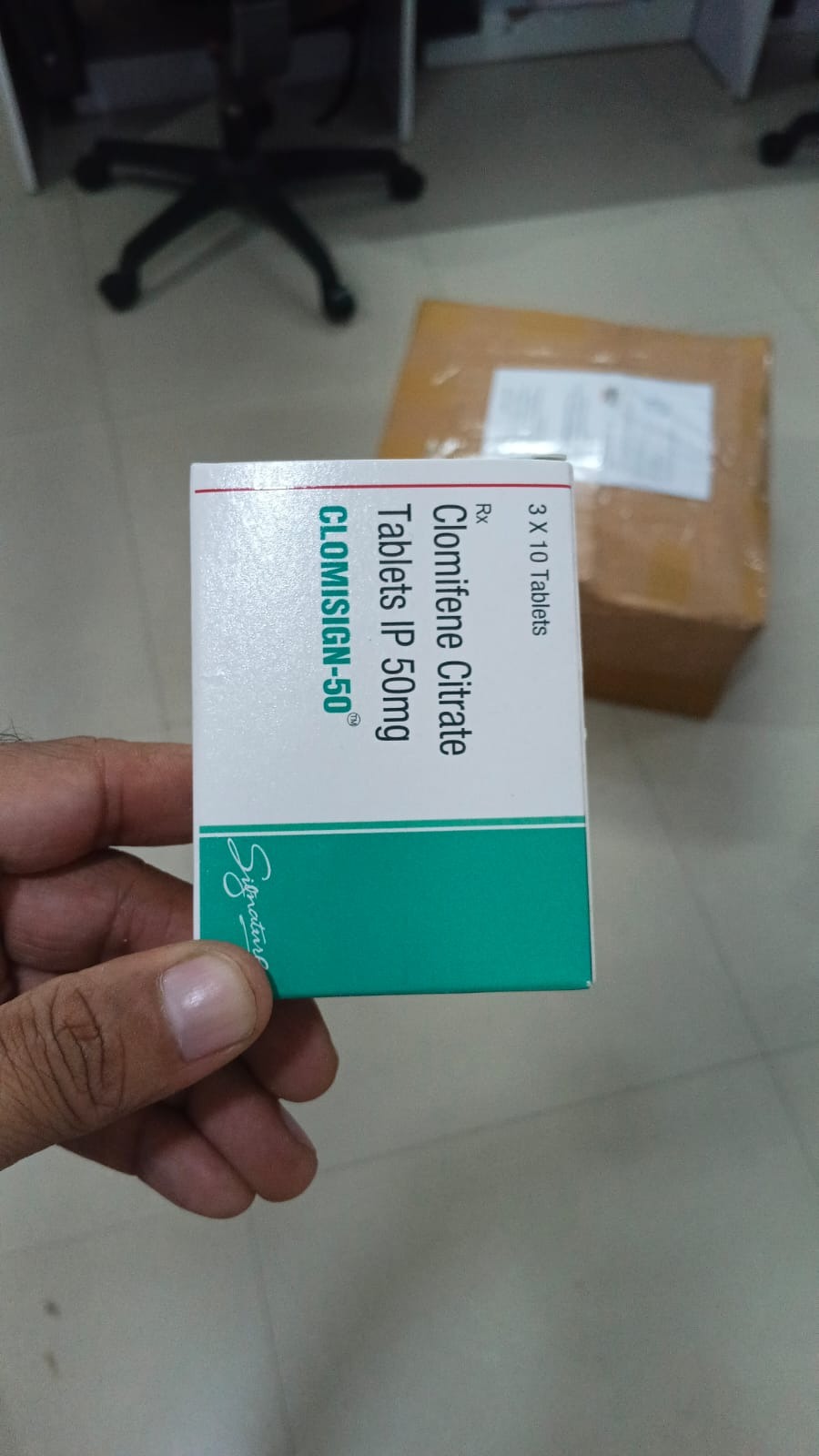
Clomifene citrate, sometimes marketed as Clomisign-50, is a selective oestrogen receptor modulator historically used to help induce ovulation.
Understanding how it works, when it may be appropriate and how treatment is monitored can help patients make informed fertility decisions.
How Does Clomifene Support Ovulation?
Clomifene acts on oestrogen receptors, particularly those involved in hormonal feedback regulation.
By reducing the body's perception of oestrogen activity at certain receptors, it can encourage increased release of hormones involved in follicle development.
These include follicle-stimulating hormone (FSH) and luteinising hormone (LH).
FSH supports the growth of ovarian follicles, while LH contributes to the process leading to ovulation.
For women with certain ovulatory disorders, this hormonal response may help an egg mature and be released.
However, successful ovulation does not guarantee pregnancy.
When Might Fertility Specialists Consider Clomifene?
Clomifene may be considered for selected patients experiencing anovulation or infrequent ovulation.
A common underlying condition is polycystic ovary syndrome (PCOS), although current fertility guidelines often recommend letrozole as the preferred first-line ovulation-induction medicine for suitable women with PCOS.
Clomifene may still have a role depending on the clinical circumstances, local availability and treatment history.
Before prescribing fertility medication, clinicians generally assess other potential causes of infertility.
These assessments may include menstrual history, hormone investigations, semen analysis and evaluation of the fallopian tubes when indicated.
What Happens During Treatment Monitoring?
Fertility specialists may use ultrasound examinations to monitor follicular development and assess the ovarian response.
Monitoring can help identify excessive follicle development and reduce the risk of multiple pregnancy.
Depending on the circumstances, clinicians may also evaluate ovulation through hormone testing or other methods.
Treatment plans are individualised according to the patient's diagnosis, response and reproductive history.
Possible Side Effects and Risks
Clomifene can cause:
Hot flushes and headaches.
Abdominal discomfort or bloating.
Nausea and breast tenderness.
Mood changes.
Visual disturbances.
Increased likelihood of multiple pregnancy.
Rare but important complications include significant ovarian enlargement and ovarian hyperstimulation.
Persistent visual symptoms require prompt medical attention, and the medicine should not be continued without clinical reassessment.
Fertility Treatment Considerations in Singapore
Singapore offers a range of fertility services, including specialist consultations, ovulation-induction programmes and assisted reproductive technologies.
The appropriate approach depends on age, ovarian reserve, duration of infertility and other medical findings.
Patients should also understand that ovulation-induction medicines do not correct every cause of infertility. For example, treatment may be ineffective when conception is prevented by bilateral tubal blockage.
Pharmaceutical purchasers evaluating products such as Clomisign-50 should verify formulation details, manufacturing standards and local regulatory status.
ERNEST IMPEX is associated with pharmaceutical sourcing, where product traceability and appropriate documentation are important when evaluating fertility medicines.
Clomifene remains an established medicine in reproductive healthcare, but its suitability depends on proper diagnosis, treatment monitoring and a realistic understanding of expected outcomes.
Keywords