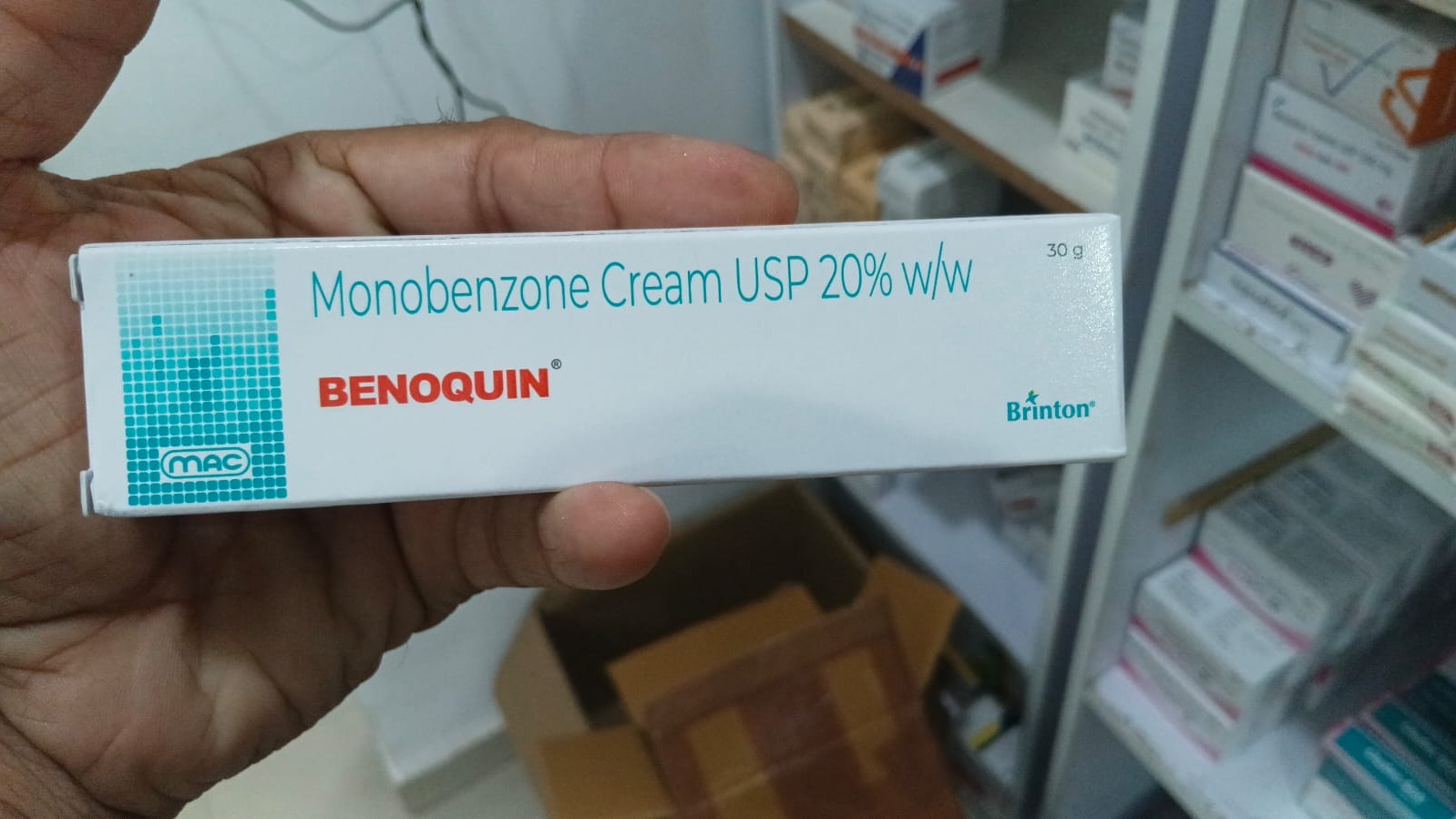
Vitiligo is a skin condition characterised by the loss of pigment-producing cells, resulting in white patches that may appear on different parts of the body. While many treatments focus on restoring pigmentation, a different approach may be considered for individuals with extensive vitiligo.
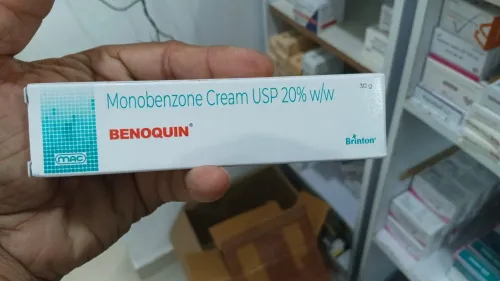
Monobenzone, associated with the brand name Benoquin, is a topical depigmenting medicine used in selected cases to reduce remaining normal skin pigmentation.
Because its effects can be permanent, understanding its purpose and limitations is essential.
What Is Monobenzone?
Monobenzone is a chemical depigmenting agent that affects melanocytes, the cells responsible for producing melanin.
Melanin determines much of the natural colour of the skin, hair and eyes.
Unlike ordinary cosmetic skin-lightening products, monobenzone can cause long-lasting or irreversible pigment loss.
It is not intended for routine skin brightening, treatment of ordinary dark spots or cosmetic complexion changes.
Why Is Depigmentation Considered for Extensive Vitiligo?
Some individuals with vitiligo experience widespread pigment loss across large areas of the body.
When only relatively small patches of normally pigmented skin remain, restoring pigmentation across all affected areas may be difficult.
In carefully selected cases, a dermatologist may discuss depigmentation as an alternative approach to achieving a more uniform skin appearance.
The decision depends on several factors:
The extent and stability of vitiligo.
The proportion of remaining pigmented skin.
Previous treatment outcomes.
The patient's expectations and preferences.
Understanding of permanent pigment loss.
Depigmentation is not generally a first-line treatment for localised vitiligo.
How Does Monobenzone Work?
Monobenzone causes destruction or loss of functional melanocytes, gradually reducing pigmentation in treated skin.
Changes may develop over several months, and the response can vary considerably between individuals.
Depigmentation may also occur beyond the exact area where the product is applied.
This unpredictable spread is one reason the medicine requires specialist supervision.
Treatment does not cure the underlying autoimmune processes associated with vitiligo.
Potential Side Effects and Precautions
Monobenzone may cause irritation, redness, dryness, itching or contact dermatitis.
More importantly, pigment loss can be permanent, even after treatment is discontinued.
Patients should understand that depigmented skin has reduced natural protection against ultraviolet radiation.
Daily sun protection becomes especially important in Singapore, where ultraviolet exposure remains significant throughout the year.
Protective clothing, shade and appropriate broad-spectrum sunscreen can help reduce sun-related damage.
Is Monobenzone Suitable for Every Patient?
Monobenzone is generally unsuitable for ordinary hyperpigmentation, melasma, freckles or cosmetic skin whitening.
It should not be applied casually to unaffected skin.
A dermatologist must evaluate the diagnosis, extent of pigment loss and suitability of other treatment options before considering depigmentation therapy.
Patients should also discuss the psychological and cosmetic implications of permanent skin colour changes.
Pharmaceutical Supply and Product Verification
For pharmaceutical buyers in Singapore, monobenzone-containing preparations require careful assessment of product authenticity, concentration, intended use and regulatory requirements.
ERNEST IMPEX operates within pharmaceutical supply, where accurate product identification and responsible sourcing are relevant to specialised dermatological medicines.
Before procurement, buyers should verify the product's regulatory status and applicable distribution requirements.
Monobenzone represents a specialised medical approach to extensive vitiligo rather than a general-purpose skin treatment. Its potentially irreversible effects make informed consent and specialist guidance essential.
Keywords