Understand low testosterone diagnosis in the UK, including symptoms, repeat morning blood tests, GP assessment and when specialist advice may be needed.
Low Testosterone Diagnosis in the UK: Symptoms, Blood Tests and Next Steps
Ernest Impex LLP | Healthcare Education
Pharmaceutical Trade Enquiries: London, Edinburgh and other locations across Scotland, Cardiff and Belfast
Wondering how doctors diagnose low testosterone? Tired, less interested in sex or having difficulty getting or keeping an erection? But these symptoms don’t necessarily mean you have low testosterone.
To diagnose low testosterone, you need to have symptoms and consistently low blood test results. A symptom checklist or one low reading cannot confirm the condition on its own.
What Is Low Testosterone?
Testosterone is a hormone that helps with sexual function, muscle maintenance, bone health and sperm production.
Doctors may check for male hypogonadism if there is a low level of testosterone production.The assessment takes into account how you feel, your medical history, findings on examination and hormone measurements.
Symptoms worth talking to your GP about
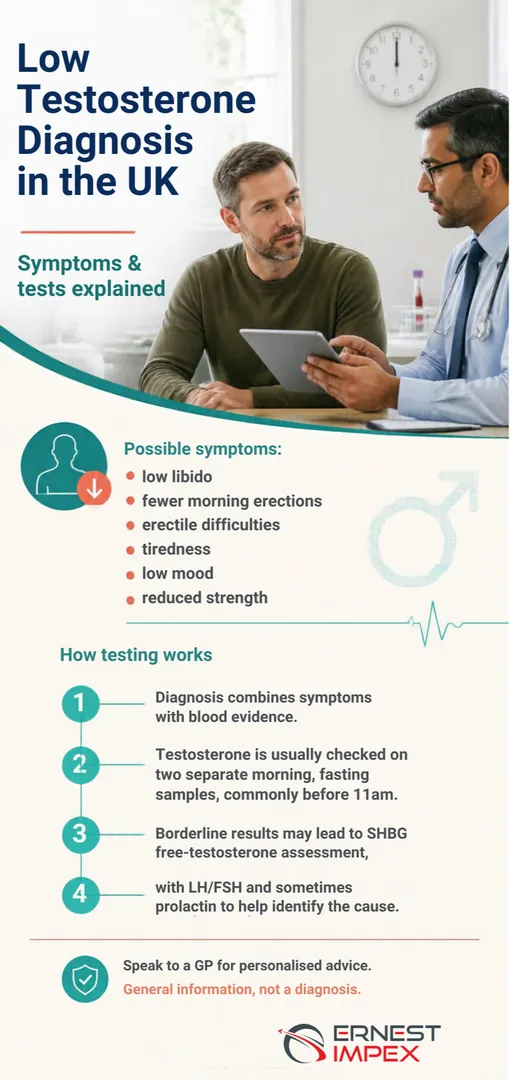
Possible signs are:
Decreased libido all the time.
Fewer spontaneous or morning erections.
Difficulty getting or maintaining an erection.
Reduced energy or muscle mass.
Fertility difficulties.
These symptoms can overlap with other health problems. Persistent changes deserve a medical assessment rather than an assumption that hormone treatment is needed.
Where Does Diagnosis Start in the UK?
Book a GP appointment if symptoms continue or affect your daily life. Your GP can discuss possible causes and arrange investigations where appropriate.
Stress, anxiety, depression, poor sleep and lifestyle factors can produce similar symptoms. The NHS also explains that the phrase “male menopause” can be misleading because age-related testosterone changes do not usually involve a sudden hormone drop.
For related reading, explore Sleep and Everyday Health and Understanding Erectile Dysfunction.
How Doctors Assess Low Testosterone
Medical History and Examination
Your clinician will ask about your symptoms, medicines, supplements, previous illnesses and any hormone or anabolic steroid use.
Mention whether you are planning children. A physical examination may also help guide further investigation.
Morning Testosterone Blood Test
An initial blood test usually measures total testosterone. Clinical guidance recommends taking the sample in the morning while fasting.
Follow the testing instructions given by your GP or laboratory.
Repeat Test to Confirm the Result
If the first reading is low, a second morning measurement is generally done on a separate day.
But testosterone levels vary, and the result can be influenced by being ill or other transitory factors. Repeating the test helps establish whether the level remains low.
Tests You May Hear About
TestWhy It May Be UsedTotal testosteroneInitial measurement of testosterone in the bloodRepeat morning testosteroneChecks whether a low result is consistentFree testosteroneMay help when total testosterone is borderline or binding proteins affect interpretationLH and FSHHelp investigate whether the cause involves the testes or hormone signals from the brain
Not everyone needs every test. The initial findings and presenting symptoms guide further investigation.
What Does a Low Result Mean?
A result below the laboratory range needs interpretation in context. Testing methods and reference ranges vary, so an online number is not a substitute for your clinician’s assessment.
Your doctor considers the repeat result, symptoms and possible underlying causes before confirming a diagnosis.
Why Finding the Cause Matters
Low testosterone may relate to problems affecting the testes, pituitary gland or other health conditions. Use of anabolic steroids can also contribute as can certain medicines.
The cause investigation helps direct the next step.Some contributory conditions can be reversed without treatment with testosterone.
Advantages of Correct Diagnosis
A thorough evaluation is beneficial:
Differentiate testosterone deficiency from other causes of symptoms.
IdIdentify an underlying condition that requires attention.
AvDo not do unnecessary hormone therapy.
Susupport informed fertility and treatment discussions
Testosterone treatment can reduce sperm production. Tell your clinician about fertility plans before any treatment decision.
What Happens After Diagnosis?
Treatment will be based on the cause, symptoms and the individual’s health needs. Your GP may recommend further assessment or specialist advice.
Hormone treatment is not automatic. Where considered appropriate, it requires discussion of risks, expected benefits and ongoing monitoring.
Prepare for Your Appointment
Bring a list of your medicines and supplements, previous blood-test reports and a brief record of your symptoms. Mention sleep problems, recent illness and fertility plans.
Useful questions include:
Could another condition explain my symptoms?
Do I need a repeat morning blood test?
Are further hormone tests necessary?
Would specialist assessment help?
Frequently Asked Questions
1. How is low testosterone diagnosed in the UK?
Assessment usually starts with a GP examination of symptoms and possible causes.Diagnosis is based on relevant symptoms and low testosterone measurements.
2. Is low testosterone simply a matter of tiredness?
No. Tiredness can be caused by many things, sleep disorders, psychological or lifestyle problems.It does not cause testosterone deficiency.
3. Why do I need a second testosterone blood test?
Levels can fluctuate, so a second morning test can help determine if the low number from the first test is a fluke.
4. Is there one testosterone number that diagnoses everyone?
No single result should be interpreted alone. Laboratory methods, reference ranges, symptoms and repeat testing all matter.
5. Does a low result mean I need testosterone treatment?
Not necessarily. The cause and clinical findings guide treatment. Some contributing factors can be addressed without hormone therapy.
About Ernest Impex LLP
Ernest Impex LLP is a pharmaceutical export business welcoming B2B enquiries from pharmacies, pharmaceutical distributors, wholesalers, hospital supply businesses and healthcare procurement teams.
Business enquiries are welcome from London, Edinburgh and other locations across Scotland, Cardiff and Belfast. This geographical coverage refers to trade enquiries, not diagnostic clinics.
For company information, visit About Ernest Impex LLP or Contact Us.
Website: www.ernestimpex.com
This article provides general health information. Ernest Impex LLP does not provide a medical diagnosis through this page. Consult a qualified healthcare professional for assessment.
Keywords