Health Awareness & Nutrition Research
Clove contains eugenol, a compound studied for antioxidant and antimicrobial activity. Ernest Impex explains what laboratory findings mean, why the “67 times” claim needs context, and important safety considerations for London, UK readers.
Clove Benefits and Safety: A Research Guide for London, UK
Clove benefits are often discussed in connection with antioxidants, bacteria, fungi, and biofilms. Some laboratory research supports scientific interest in clove compounds. However, those findings do not mean eating cloves will treat an infection or produce the same effects inside the human body.
Ernest Impex shares this educational overview for London, UK readers, pharmaceutical distributors, wholesalers, hospital supply partners, and healthcare procurement teams.
What Is Clove?
Clove is a spice obtained from the dried flower buds of Syzygium aromaticum. One of its main aromatic compounds is eugenol, which has been investigated for several biological activities.
Whole cloves, ground clove, concentrated extracts, and clove oil are different preparations. Their composition, concentration, and safety cannot be treated as interchangeable.
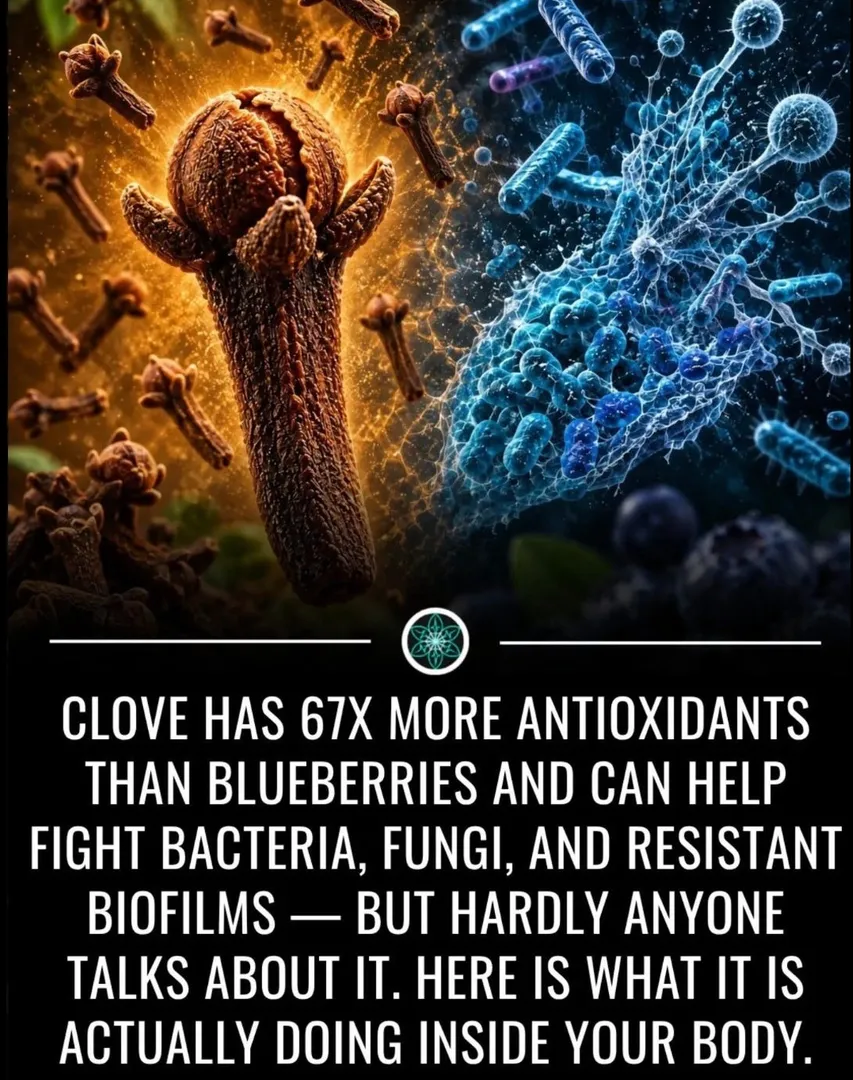
Does Clove Have 67 Times More Antioxidants Than Blueberries?
The exact “67 times” figure should not be presented as a universal fact without identifying the test, samples, and comparison.
A large food-analysis study found high antioxidant activity in dried cloves, but results varied between samples. Such measurements describe activity under laboratory conditions—not how much protection a food provides inside a person.
Comparing equal weights of a dried spice and fresh fruit also overlooks normal serving sizes. People generally eat much smaller quantities of cloves than blueberries. A high laboratory score does not establish that cloves are a better food or provide proportionally greater health benefits.
What Does Antimicrobial Research Show?
Researchers have tested eugenol against selected bacteria and fungi under controlled conditions.
For example, a study examined its effects on Candida albicans and Streptococcus mutans including drug resistant strains and mixed biofilms.Results suggested laboratory activity that requires further investigation.
They didn’t prove that eating cloves or drinking clove water cures bacterial or fungal infections in humans.
Could Clove Compounds Affect Biofilms?
Biofilms are mass colonies of microbes that adhere to surfaces encased in a protective matrix. They can make some infections harder to treat.
Laboratory studies have shown that Eugenol has an effect on some Candida biofilms.But effectiveness depends on the organism, the preparation, the concentration, and the experimental conditions.
These findings do not prove that clove products remove resistant biofilms from the human body. Human treatment requires evidence about both effectiveness and safety.
What Is Actually Happening Inside Your Body?
The studies discussed above do not establish exactly what happens after someone eats an ordinary serving of cloves.
A laboratory experiment may expose microorganisms directly to a measured concentration of eugenol. Eating a spice involves digestion, absorption, and metabolism. These are different circumstances.
Likewise, laboratory research combining eugenol with antimicrobial medicines does not justify making your own combinations or changing prescribed treatment.
Potential Benefits: Keep the Claims Proportionate
Clove has a clear culinary role: it adds a strong aroma and flavour to food.
Its compounds also provide useful subjects for antimicrobial research and antioxidant research. Their potential medical applications require further investigation rather than promises of infection clearance, detoxification, or disease prevention.
Clove Oil Safety Deserves Attention
Concentrated clove oil is different from using small amounts of the spice in cooking.
Large ingestions have caused serious poisoning, including liver injury, particularly in children. Do not swallow clove essential oil as a home treatment. If accidental ingestion occurs, seek urgent medical advice.
Concentrated preparations can also cause irritation or allergic reactions. Ask a pharmacist or clinician before using a clove product medicinally, particularly for a child or alongside other treatments.
For London readers with a suspected infection or persistent dental symptoms, seek appropriate medical or dental assessment rather than relying on clove products.
Important Product Details to Check
Product typeWhat buyers should confirmWhole or ground cloveIdentity, food-grade suitability, packaging, and storageClove extractExtract specification, intended use, and relevant testingClove oilComposition, concentration, directions, and safety informationFinished medicinal productExact formulation, authorised use, and product instructions
A research ingredient, food product, and finished medicine serve different purposes. An ingredient’s laboratory activity does not establish the effectiveness of every product containing it.
Ernest Impex: Pharmaceutical Supply Enquiries for London, UK
Ernest Impex welcomes enquiries across pharmaceutical categories from exporters, pharmaceutical distributors, wholesalers, hospital supply partners, and healthcare procurement teams.
London, UK buyers can submit requirements for pharmaceutical sourcing from India. Inquiries for domestic market and pan-India pharmaceutical supplies are also welcome.Product availability, documentation and applicable supply requirements to be confirmed on individual basis.
Share the following for a useful quote:
Name, composition and strength of the Product.
Dosage form and pack size.
Required quantity.
Delivery destination.
Minimum acceptable remaining shelf life.
Rerequired papers.
Quality Assurance Before Buying
Confirm product identity, manufacturer details, batch traceability, expiry, packaging integrity and storage requirements for hospital medicine procurement and pharmaceutical wholesale supply.
Relevant specifications for botanical ingredients may also include identity testing, composition and contaminant limits depending on the intended use.
Good documentation aids in evaluating specifications.They do not prove that a product cures infections or gives the effects shown in laboratory experiments.
Frequently Asked Questions
1. Is the “67 times more antioxidants” claim real?
It needs a named source, a test method and a clear comparison.It is not to be considered as 67 times more health benefits.
2. Can cloves substitute antibiotics or anti-fungal drugs?
No.The laboratory results presented here do not demonstrate that cloves can replace prescribed treatment for infection.
3. Can clove water eradicate resistant biofilms?
The studies cited do not prove that drinking clove water cures biofilm-related infections in humans.
4. Is the use of cloves in food safe like clove oil?
No. Concentrated oil has a different safety profile and can cause serious poisoning when ingested in large quantities.
5. How can London businesses reach out to Ernest Impex?
Please send us the exact product specification, quantity, destination, shelf-life requirement and documentation needs for our review.
Conclusion.
Clove contains compounds with interesting laboratory properties, but hyperbolic comparisons can hide what the evidence actually says.Ernest Impex campaigns for the right of healthcare buyers to clear health information, right professional care and right to check the products carefully.
Keywords