Generic vs Branded Medicines: What Importers Should Know
Choosing between generic vs branded medicines is an important decision for pharmaceutical importers, distributors, and healthcare procurement teams. While price is often part of the comparison, it should not be the only factor. Buyers also need to consider product registration, active ingredients, dosage forms, manufacturer details, quality documentation, and local import regulations. An appropriately approved generic medicine is expected to provide the same clinical benefit as its reference brand-name medicine. However, not every product sold under a different brand name is automatically an approved or interchangeable generic. This guide explains the differences between generic and branded medicines and what international buyers should verify before making procurement decisions.
What Are Generic Medicines?
Generic medicines are pharmaceutical products developed to correspond to an existing reference medicine. In the United States, an FDA-approved generic must meet requirements relating to its active ingredient, strength, dosage form, route of administration, quality, and bioequivalence. For example, a generic tablet may contain the same active ingredient and strength as a reference brand-name tablet but have a different name, color, shape, or inactive ingredients. These differences do not necessarily change how the medicine works. However, the product must meet the applicable regulator's requirements before it can be approved. The US Food and Drug Administration's generic drug guidance explains the standards applied to FDA-approved generic medicines. For importers, the important point is that the word "generic" should not be treated as proof of regulatory approval. Buyers must verify the particular product and manufacturer.
What Are Branded Medicines?
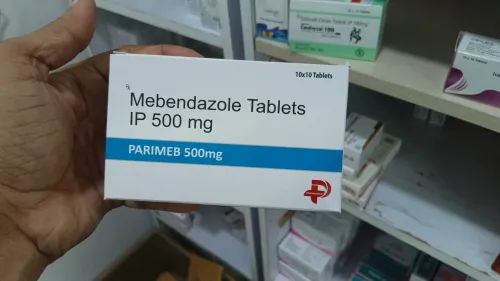
Branded medicines are sold under a specific trade or brand name. An originator brand is typically associated with the company that originally developed and obtained approval for a medicine. Developing a new medicine may involve extensive research, testing, and regulatory review. However, not every branded product is an originator medicine. In India and several other pharmaceutical markets, generic formulations may also be sold under company-specific brand names. These are often described as branded generics. This distinction matters for international buyers because a medicine's commercial name does not, by itself, establish whether it is an originator product, a branded generic, or an approved equivalent. Buyers should confirm the active ingredient, manufacturer, regulatory status, and product specifications rather than relying only on the name printed on the packaging.
Generic vs Branded Medicines: Key Differences
The following table compares the main considerations for pharmaceutical buyers.
| Comparison | Generic Medicines | Branded Medicines |
|---|---|---|
| Product name | May use the generic name or another approved name | Marketed under a trade name |
| Active ingredient | Must meet applicable equivalence requirements for the reference product | Contains the approved active ingredient or combination |
| Manufacturer | May be produced by a different manufacturer | Produced by or for the brand owner |
| Price | Often lower than the originator brand | May be higher, depending on the product and market |
| Appearance | Colour, shape or packaging may differ | Usually follows the brand's approved presentation |
| Regulatory approval | Requires approval or authorisation as applicable | Requires relevant approval or authorisation |
| Bioequivalence | Generally important for conventional generic approval pathways, subject to product-specific rules | An originator medicine is assessed through its applicable approval pathway |
| Import eligibility | Must be verified for the destination country | Must also be verified for the destination country |
The main difference is not simply that one medicine is expensive and the other is inexpensive.
For procurement purposes, buyers must evaluate the specific product's regulatory status, suitability and total acquisition cost.
Are Generic Medicines as Effective as Branded Medicines?
A common concern among buyers is whether generic medicines provide the same therapeutic effect as branded medicines.
For an appropriately approved generic, the relevant regulator assesses whether it meets the requirements for equivalence to its reference product.
For example, the FDA requires approved generics to demonstrate the necessary pharmaceutical equivalence and bioequivalence.
This means an approved generic is expected to deliver the same clinical benefit and risks as its reference brand-name medicine.
However, importers should distinguish between a regulator-approved generic and a product that has merely been described as generic by a supplier.
A product's regulatory approval must be verified in the intended destination market.
What Is Bioequivalence?
Bioequivalence is an important concept in generic medicine evaluation. For many medicines, it involves demonstrating that the generic product delivers the active ingredient into the body at a comparable rate and extent to the reference product. This helps regulators assess whether the products are expected to perform similarly. The FDA's explanation of generic drug approval describes how it evaluates pharmaceutical equivalence, bioequivalence, and manufacturing quality. Not every dosage form follows an identical testing approach. Certain complex products require additional or different evidence. Importers should therefore avoid assuming that matching active ingredients alone establish interchangeability.
Why Do Generic Medicines Often Cost Less?
Generic medicines are frequently priced below originator-branded products. One reason is that generic manufacturers may use regulatory pathways that rely on the established safety and effectiveness findings for an approved reference medicine, rather than repeating the entire original clinical development program. Competition between multiple approved manufacturers can also influence pricing. However, a lower quoted price does not automatically mean a better procurement decision. International buyers should consider the complete cost of obtaining and distributing the medicine.
This may include:
Product purchase price
Minimum order quantity
Freight and insurance
Import duties and taxes
Registration-related costs
Storage and handling
Remaining shelf life
Local distribution requirements
A lower unit price may offer limited value if the product cannot be legally imported or does not meet the buyer's procurement specifications.
What Does Branded Generic Mean?
The term "branded generic" is commonly used in markets where generic formulations are sold under distinct trade names. For example, two companies may market medicines containing the same active ingredient and strength under different commercial names. This does not automatically mean the products are interchangeable. Their dosage forms, release characteristics, approved uses, regulatory status, and other product details must be considered. For international importers, a branded generic should be evaluated as a specific pharmaceutical product, not simply as an alternative name for another medicine. The importing country's regulatory requirements determine whether a particular product can be marketed or substituted.
What Should Pharmaceutical Importers Verify Before Ordering?
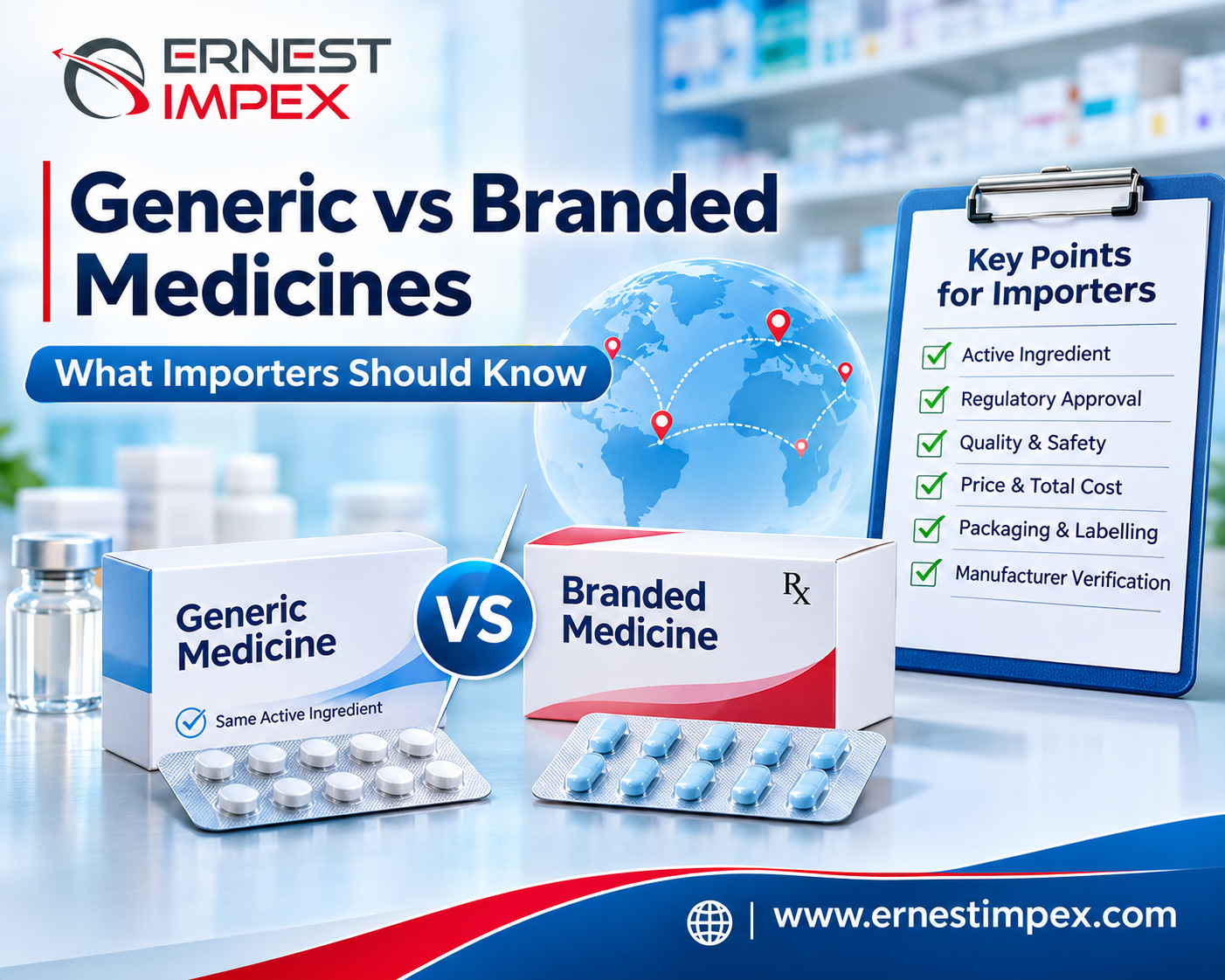
International buyers should follow a structured verification process when comparing generic and branded medicines.
1. Active Ingredient and Strength
Confirm the active ingredient, strength and formulation. Two medicines may have similar names but different strengths or combinations of ingredients.
2. Dosage Form and Release Characteristics
Check whether the product is an immediate-release tablet, extended-release tablet, capsule, injection, cream, or another dosage form. Medicines with the same active ingredient but different release characteristics should not automatically be treated as interchangeable.
3. Manufacturer Information
Verify the actual manufacturer and the manufacturing site where relevant. A brand owner, marketing company, and manufacturing company may be different entities.
4. Product Registration
Confirm that the medicine is registered, authorized, or otherwise legally permitted in the destination country. Approval in India does not automatically establish approval in another market.
5. Quality Documentation
Depending on the product and transaction, buyers may request:
Manufacturer details
Applicable manufacturing authorizations
Product specifications
Certificate of Analysis, where required
Batch and expiry information
Relevant regulatory certificates
The documents needed depend on the product, the buyer's requirements, and destination-country regulations.
6. Packaging and Labelling
Review the approved pack size, language requirements, product identification, and storage instructions. Packaging suitable for one market may not satisfy another country's rules.
7. Remaining Shelf Life
Confirm whether the available batch meets the minimum remaining shelf life required by the buyer or destination authority.
8. Supply Continuity
For recurring procurement, ask whether the proposed manufacturer and product presentation can support future requirements. Availability may vary by manufacturer, batch and market. Ernest Impex's pharmaceutical export overview provides additional information about its international branded and generic medicine sourcing activities.
Regulatory Approval and Quality Assurance
Regulatory approval and quality assurance are essential for both generic and branded medicines. Buyers should not assume that branded medicines are automatically higher quality or that generic medicines are automatically interchangeable. The correct comparison is between specific products that meet the applicable regulatory and quality requirements. The World Health Organization's prequalification program provides an additional quality-assurance mechanism for eligible health products used in international procurement. WHO prequalification does not cover every medicine, and it should not be confused with automatic marketing authorization in every country. International buyers should verify product-specific approvals and any relevant procurement requirements.
Generic vs Branded Medicines in International Procurement
When sourcing medicines from India, importers may encounter several options for the same active ingredient. The decision should be based on more than whether the product has a familiar brand name. Consider a distributor evaluating two tablet products with the same stated active ingredient and strength. Before comparing prices, the distributor should establish whether both products meet the destination country's registration requirements.
The next step is to compare manufacturer details, approved dosage forms, pack sizes, shelf life, documentation, and supply availability. Only after confirming these factors should the buyer compare commercial terms. This approach helps prevent situations where an apparently suitable medicine cannot be imported, distributed or used as intended. For more information about cross-border procurement requirements, see Ernest Impex's guide to the export of pharmaceuticals from India.
Common Mistakes When Comparing Generic and Branded Drugs
Assuming the Same Ingredient Means Automatic Substitution
Products with the same active ingredient may differ in dosage form, release characteristics, or approved status.
Substitution decisions should follow the relevant regulatory and professional requirements.
Choosing Only by Price
Price is important, but registration, quality documentation, shelf life, and supply reliability also affect procurement decisions.
Confusing a Branded Generic With an Originator Brand
A trade name does not necessarily mean the product is the original innovator's medicine.
Ignoring Destination-Country Rules
A product available in India may require separate authorization before it can be imported or distributed elsewhere.
Failing to Confirm the Manufacturer
Buyers should verify the manufacturer of the actual product being supplied, rather than assuming that the brand owner and manufacturer are the same company.
Requesting Documentation Too Late
Product-specific documentation should be discussed before the order is finalized.
Buyer Checklist: Generic or Branded Medicine?
| Procurement Check | Question |
|---|---|
| Product identity | Is the active ingredient and strength correct? |
| Dosage form | Does the formulation match the requirement? |
| Regulatory status | Is the product permitted in the destination market? |
| Manufacturer | Is the manufacturer identified and acceptable? |
| Quality documents | Are the required records available? |
| Packaging | Does the pack meet local requirements? |
| Shelf life | Is the remaining shelf life sufficient? |
| Price | Is the total landed cost acceptable? |
| Supply | Can the required quantity be sourced consistently? |
This checklist can help procurement teams compare available options using consistent criteria.
How Ernest Impex Supports Generic and Branded Medicine Enquiries
Ernest Impex works with international pharmaceutical buyers seeking generic and branded medicines from India. Depending on product availability and applicable requirements, buyers may inquire about specific manufacturers, strengths, pack sizes and quantities. The company coordinates pharmaceutical sourcing and export-related commercial information for B2B requirements. Its frequently asked questions explain that generic and branded options may be available depending on the product. Importers should provide complete product specifications and confirm their local regulatory requirements before placing an order.
Frequently Asked Questions
1. What is the main difference between generic and branded medicines?
A generic medicine is developed to meet applicable equivalence requirements for a reference medicine. A branded medicine is sold under a trade name. Some generic medicines are also marketed under brand names.
2. Are generic medicines less effective than branded medicines?
An appropriately approved generic is expected to provide the same clinical benefit as its reference medicine. Buyers should verify the product's regulatory approval rather than relying on the generic label alone.
3. Why are generic medicines often cheaper?
Generic manufacturers may avoid repeating the full original drug-development program, and competition can reduce prices. Actual costs vary by product and market.
4. Are branded generics the same as original branded medicines?
Not necessarily. A branded generic is generally a generic formulation marketed under a trade name, while an originator brand is associated with the original approved product.
5. Can international importers purchase generic medicines from India?
Eligible importers may source medicines from India, subject to applicable Indian export rules and destination-country registration, licensing, and import requirements.
6. Do generic and branded medicines require different import documents?
The document requirements depend on the specific medicine, regulatory pathway, destination country, and transaction. The commercial name alone does not determine the complete document checklist.
7. Can a generic medicine replace a branded medicine?
Substitution depends on product equivalence, regulatory status and applicable clinical or pharmacy rules. It should not be assumed solely because the products contain the same active ingredient.
8. What should buyers verify before ordering medicines in bulk?
Buyers should confirm product identity, manufacturer, registration status, dosage form, batch details, shelf life, quality documentation, packaging, and commercial terms.
Conclusion
The comparison of generic vs branded medicines involves more than price and product names. For international pharmaceutical importers, the most important considerations are regulatory approval, product equivalence, manufacturer verification, documentation, and suitability for the destination market. Both generic and branded medicines can play important roles in healthcare supply when they meet the applicable quality and regulatory requirements. A careful product-by-product comparison helps buyers make informed procurement decisions and avoid preventable problems during international trade.
Keywords