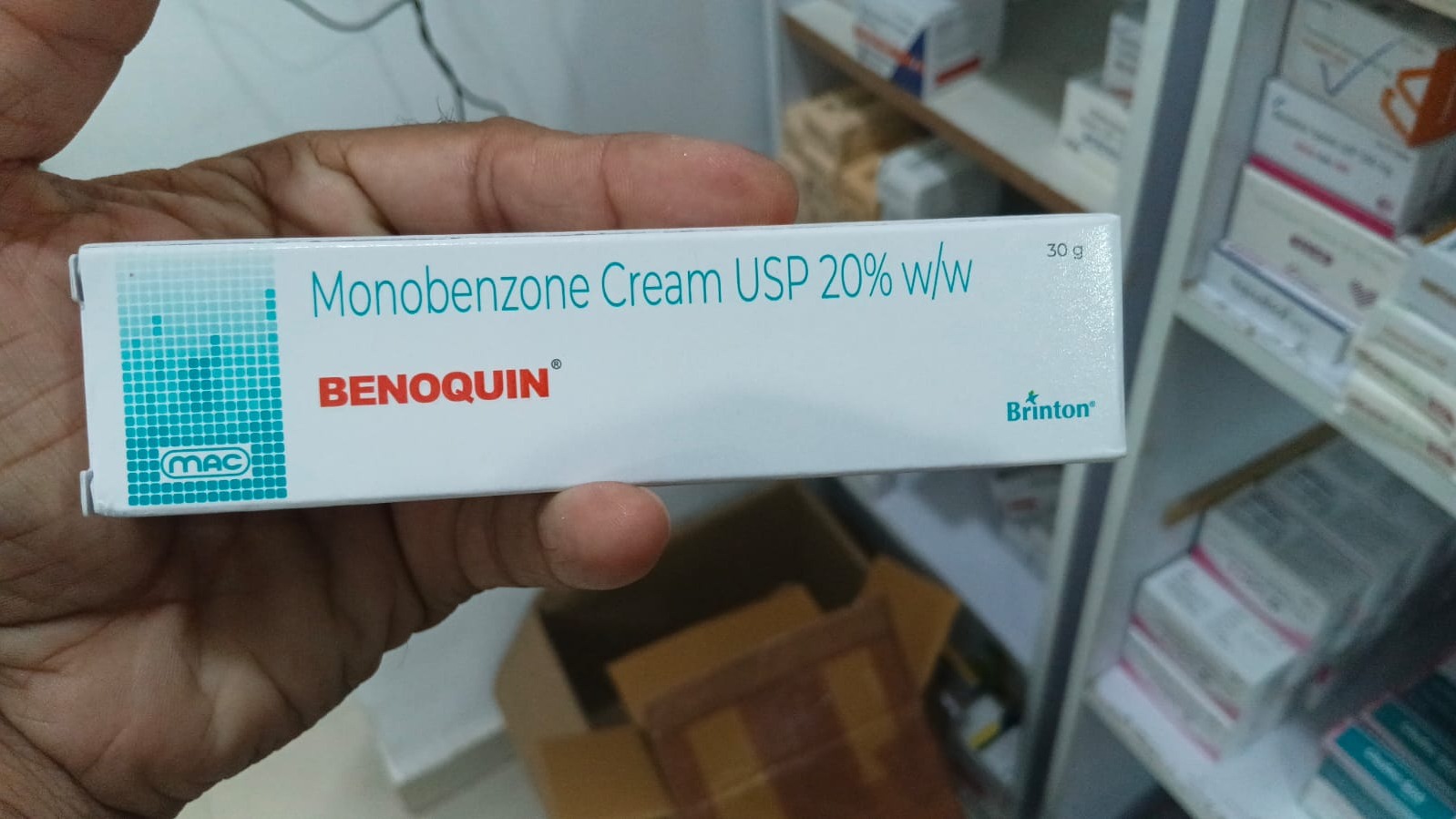
Choosing a treatment for vitiligo involves understanding both the condition and the long-term implications of different therapeutic approaches. Monobenzone is a particularly significant option because its purpose is to remove remaining pigmentation rather than restore lost skin color.
For patients with extensive vitiligo, the decision to consider Monobenzone requires more than reviewing a product description. Treatment suitability, permanence, skin sensitivity, and future sun protection all deserve careful attention.
Is Monobenzone Suitable for Every Patient With Vitiligo?
Monobenzone is generally reserved for selected individuals with extensive vitiligo.
It is not a standard treatment for people who have only a few depigmented patches.
Patients with limited vitiligo may have other treatment options, including topical medicines, phototherapy, or specialist procedures depending on their clinical circumstances.
The decision to pursue depigmentation depends on the extent of pigment loss, the distribution of remaining pigmentation, previous treatment outcomes, and personal preferences.
A dermatologist should establish whether the condition is sufficiently extensive to justify considering an irreversible approach.
What Should Be Evaluated Before Treatment?
A thorough dermatological assessment helps identify whether Monobenzone is appropriate.
Important considerations include the following:
The proportion of skin affected by vitiligo.
The location and appearance of remaining pigmented areas.
Previous responses to repigmentation treatments.
Existing skin sensitivity or inflammatory conditions.
The patient's expectations regarding permanent color changes.
The ability to maintain consistent sun protection.
Patients should also discuss the possibility of uneven depigmentation and changes extending beyond directly treated areas.
These issues may influence satisfaction with the final appearance.
Why Permanence Is a Major Consideration
Unlike temporary cosmetic products, Monobenzone can cause long-lasting or permanent destruction of pigment-producing cells.
Once substantial depigmentation occurs, restoring the original natural skin color may not be possible.
This makes the decision especially important for individuals who are uncertain about their desired appearance.
Patients should understand that depigmentation does not necessarily produce immediate or perfectly uniform results.
Some areas may respond differently, and ongoing dermatological follow-up may be necessary.
How Does Monobenzone Differ From Ordinary Skin-Lightening Products?
Cosmetic brightening products generally aim to reduce the appearance of uneven pigmentation without permanently eliminating melanocytes.
Monobenzone has a different mechanism and treatment objective.
Its intended medical use involves extensive depigmentation in selected vitiligo cases.
Using Monobenzone for ordinary cosmetic lightening can produce unpredictable, permanent changes in skin color.
It should not be confused with treatments commonly used for melasma, acne marks, or superficial pigmentation concerns.
Managing Skin Sensitivity and Sun Exposure
Skin treated with Monobenzone may become more vulnerable to ultraviolet radiation as melanin levels decrease.
This is especially relevant in Saudi Arabia, where outdoor temperatures and sunlight exposure can be substantial.
Patients may need to adjust their daily routines to reduce unnecessary sun exposure.
Broad-spectrum sunscreen, protective clothing, and shaded environments can help protect depigmented skin.
Individuals who work outdoors should discuss how treatment may affect their occupational activities.
Skin irritation is another possible concern. Redness, itching, or dermatitis should be assessed rather than ignored.
Questions About Product Quality and Availability
Patients researching Monobenzone-containing products should check whether the specific formulation is authorized for distribution in Saudi Arabia.
Important product considerations include active ingredient identity, manufacturer information, labeling, and appropriate storage.
ERNEST IMPEX is a pharmaceutical supply business that may be encountered during product research. However, supplier availability alone does not establish treatment suitability or regulatory authorization.
Products obtained through unverified channels may create additional concerns regarding authenticity and quality.
Making a Long-Term Treatment Decision
Monobenzone treatment should be approached as a significant medical and personal decision.
Patients should understand what the medicine can achieve, what it cannot reverse, and how it may affect their daily skin-care requirements.
For individuals in Saudi Arabia with extensive vitiligo, the most useful starting point is a complete dermatological assessment and a clear understanding of the long-term consequences of depigmentation.
Keywords