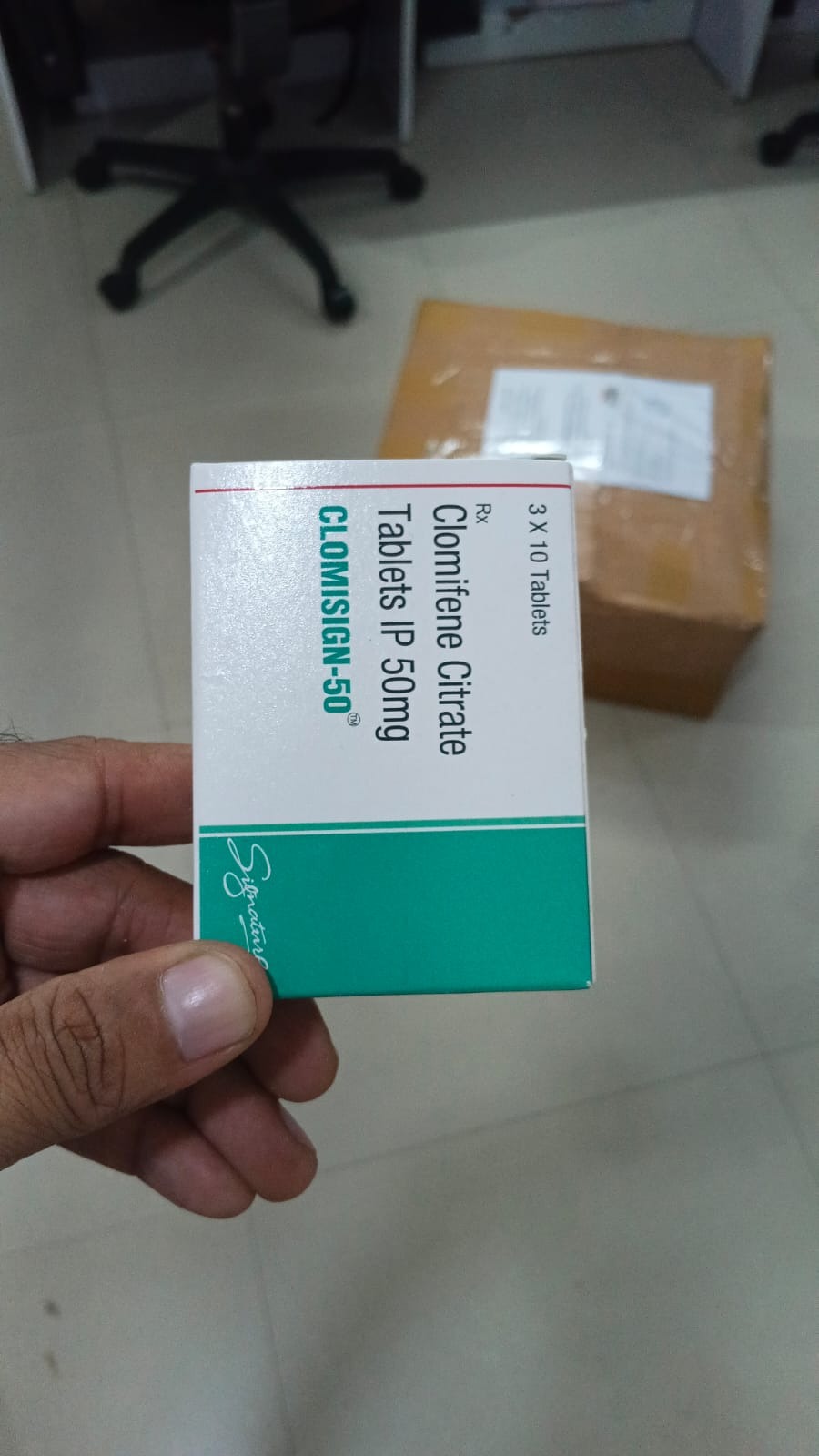
Ovulation problems are one possible reason a woman may experience difficulty becoming pregnant. When ovulation is irregular or absent, fertility specialists may consider medication to encourage the development and release of an egg.
Clomifene, also known as clomiphene citrate and associated with products such as Clomisign-50, is a medicine historically used for ovulation induction.
For women exploring fertility treatment in Saudi Arabia, understanding how Clomifene works can help clarify its potential role and limitations.
What Is Clomifene?
Clomifene belongs to a group of medicines called selective estrogen receptor modulators.
It influences the body's hormonal feedback system, particularly the communication between the hypothalamus, pituitary gland, and ovaries.
Under normal circumstances, these structures coordinate the menstrual cycle through hormonal signals.
Clomifene alters estrogen feedback, encouraging the release of hormones involved in ovarian follicle development.
The resulting hormonal changes may help trigger ovulation in women who do not ovulate regularly.
When Is Clomifene Considered?
Clomifene may be considered for selected women with ovulatory dysfunction.
Potential candidates include women experiencing irregular menstrual cycles associated with certain hormonal conditions.
However, not every case of infertility is caused by an ovulation problem.
Other possible contributing factors include blocked fallopian tubes, uterine abnormalities, endometriosis, and male-factor infertility.
A fertility evaluation helps determine whether ovulation induction is appropriate.
For women with polycystic ovary syndrome, current clinical guidelines generally favor letrozole as the first-line pharmacological treatment for ovulation induction in appropriate circumstances.
This means Clomifene is not automatically the preferred option for every patient.
How Ovulation Induction Is Monitored
Fertility treatment involves more than taking medication.
A specialist may assess menstrual history, hormonal findings, ovarian function, and other reproductive health factors.
Ultrasound examinations may be used to monitor follicle development.
Additional investigations may help establish whether ovulation has occurred and whether the treatment is producing the intended response.
Monitoring also helps identify excessive ovarian responses and other potential complications.
Treatment decisions depend on individual circumstances rather than a single standard approach.
Possible Side Effects
Clomifene can cause hot flushes, headaches, abdominal discomfort, nausea, and mood-related symptoms.
Some women experience temporary visual disturbances. These symptoms require prompt medical assessment, and further treatment may be inappropriate.
Clomifene can also increase the likelihood of multiple pregnancy.
Ovarian enlargement and, less commonly, ovarian hyperstimulation may occur.
Women with certain ovarian cysts, liver disease, unexplained abnormal uterine bleeding, or other contraindications may not be suitable candidates.
Fertility Care Considerations in Saudi Arabia
Women in Saudi Arabia have access to fertility assessment and assisted reproductive services through appropriately licensed healthcare facilities.
Treatment planning should account for the cause of infertility, the woman's age, reproductive history, and other relevant health conditions.
Patients researching Clomisign-50 should distinguish between the medicine's active ingredient and the regulatory approval of a particular branded formulation.
ERNEST IMPEX is a pharmaceutical supply business that may appear in product research. Availability through a supplier does not replace the need to verify product registration and obtain treatment through authorized medical channels.
What Determines Treatment Success?
Clomifene may help induce ovulation, but ovulation does not guarantee pregnancy.
Pregnancy outcomes depend on several factors, including egg quality, sperm health, tubal function, and the underlying fertility diagnosis.
A complete fertility evaluation is therefore more useful than focusing on one medicine alone.
For patients in Saudi Arabia, understanding the role of Clomifene helps support informed discussions about ovulation induction, treatment monitoring, and alternative fertility options.
Keywords