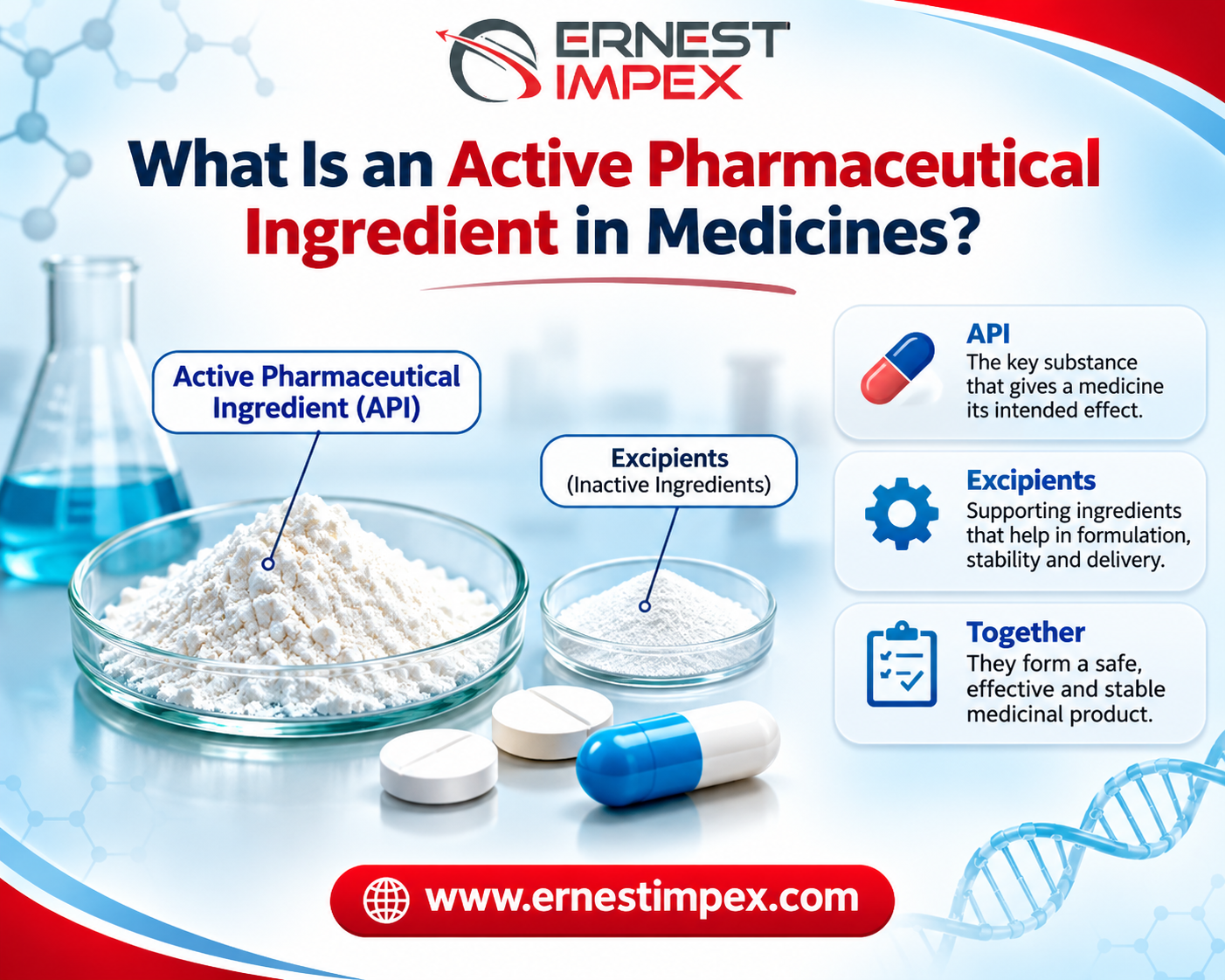
What Is an Active Pharmaceutical Ingredient in Medicines?
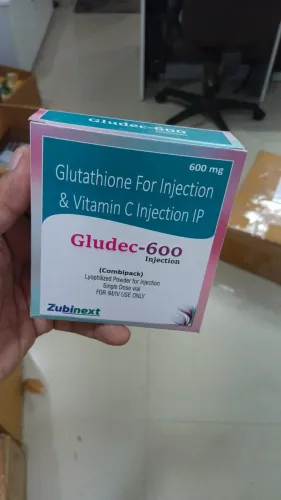
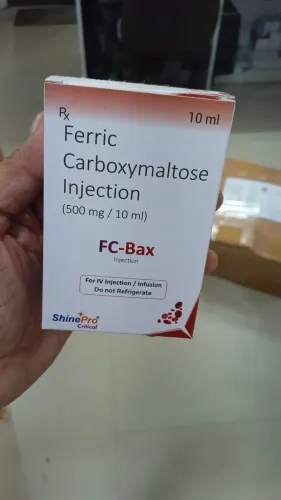
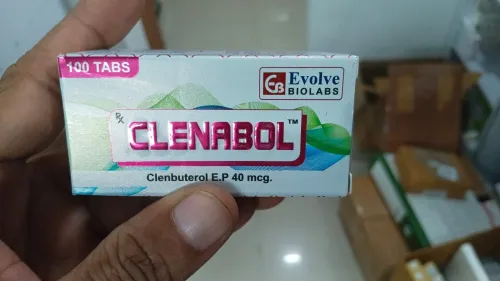
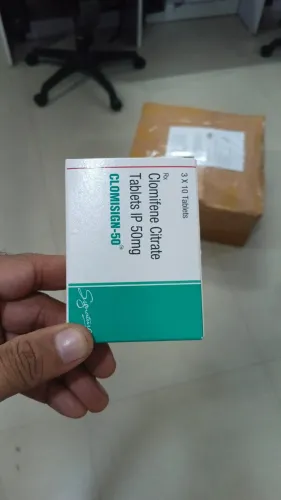
When reading a medicine label, you may notice two different names: the brand name and the name of the substance responsible for the medicine's effect. While the brand name identifies the commercial product, the active ingredient tells you what gives the medicine its intended pharmaceutical activity. An active pharmaceutical ingredient (API) is a substance used in the production of a medicine that provides its intended pharmacological or other direct effect in the body. However, an active ingredient is only one part of a finished medicine. Other pharmaceutical ingredients also help determine the product's stability, physical form, and drug-release characteristics. Understanding these components makes it easier to interpret medicine labels, compare formulations, and identify pharmaceutical products correctly.
What Does API Mean in the Pharmaceutical Industry?
API stands for Active Pharmaceutical Ingredient. It is also commonly referred to as a drug substance. An API may be intended to help manage a medical condition, relieve symptoms, prevent disease, or influence a particular biological function. For instance, paracetamol is the active ingredient in many pain-relief and fever-reducing medicines. The same active ingredient may appear in products sold under several different brand names. The ICH Q7 guidance for active pharmaceutical ingredients provides internationally harmonized principles for API manufacturing and quality management. A finished pharmaceutical product may contain one active ingredient or a combination of several active ingredients.
How Do Active Ingredients Work in Medicines?
Different active drug ingredients interact with the body in various ways. Their activity depends on their chemical or biological properties and the intended therapeutic purpose. Some ingredients influence enzymes involved in biological processes. Others interact with receptors, affect microorganisms, or modify specific cellular functions. However, the presence of an API alone does not determine how quickly or effectively a medicine delivers that ingredient. The dosage form, route of administration, formulation, and release mechanism also influence how the medicine behaves. For example, a conventional tablet and an extended-release tablet may contain the same active ingredient but deliver it differently over time. This explains why understanding the complete formulation is important rather than identifying a medicine by its active ingredient alone.
Common Examples of Active Pharmaceutical Ingredients
Active pharmaceutical ingredients are found across many therapeutic categories, from everyday medicines to specialized pharmaceutical products.
The following list provides examples of widely recognized active ingredients and their general pharmaceutical roles.
| Active Pharmaceutical Ingredient | Therapeutic Category | General Role |
|---|---|---|
| Paracetamol (Acetaminophen) | Analgesic and antipyretic | Pain and fever relief |
| Ibuprofen | Anti-inflammatory medicine | Management of pain and inflammation |
| Metformin | Antidiabetic medicine | Blood glucose management |
| Amoxicillin | Antibiotic | Treatment of susceptible bacterial infections |
| Omeprazole | Proton pump inhibitor | Reduction of stomach acid production |
| Cetirizine | Antihistamine | Management of allergy symptoms |
| Amlodipine | Calcium channel blocker | Blood pressure management |
| Atorvastatin | Statin | Cholesterol management |
| Salbutamol | Bronchodilator | Relief of airway narrowing |
| Insulin | Biological medicine | Regulation of blood glucose |
This active pharmaceutical ingredient list is illustrative rather than exhaustive. The appropriate use of each medicine depends on its approved indications and professional medical guidance.
Can a medicine contain more than one API?
Yes. Some pharmaceutical products contain two or more active ingredients in a single dosage form. These are commonly described as combination medicines. Each active ingredient contributes to the intended pharmaceutical activity of the product. For example, Ernest Impex's oral antidiabetic medicine overview includes examples of single-ingredient and combination formulations.
Active Pharmaceutical Ingredients vs Excipients
Not every ingredient in a medicine is responsible for its therapeutic effect. Most finished pharmaceutical formulations also include excipients, commonly described as inactive ingredients.
These ingredients perform supporting functions during manufacturing, storage, or medicine administration.
| Feature | Active Pharmaceutical Ingredient | Excipient |
|---|---|---|
| Primary purpose | Provides intended pharmaceutical activity | Supports formulation and delivery |
| Alternative term | Drug substance | Inactive ingredient |
| Main function | Produces an intended direct effect | Helps maintain physical or functional characteristics |
| Examples | Metformin, paracetamol | Cellulose, lactose, starch |
| Selection criteria | Therapeutic activity and quality | Compatibility, safety and formulation requirements |
The FDA's active and inactive ingredient information explains the regulatory distinction between these two types of pharmaceutical components.
Although excipients are called inactive ingredients, they are not necessarily without biological effects. Certain individuals may have sensitivities or intolerances to particular excipients.
Why Are Excipients Added to Medicines?
Different excipients perform different functions within a pharmaceutical formulation.
For example:
Binders help tablet ingredients remain together.
Fillers provide suitable tablet volume.
Disintegrants help tablets break apart under intended conditions.
Coating materials may protect the formulation or modify drug release.
Preservatives help control microbial growth in certain preparations.
Stabilizing agents help maintain product characteristics.
The selection of an excipient depends on the dosage form and the properties of the active ingredient.
Where Do Active Pharmaceutical Ingredients Come From?
Pharmaceutical APIs can originate from different chemical and biological sources. The production method depends on the characteristics of the substance being developed.
Chemically Synthesized APIs
Many conventional small-molecule medicines contain active ingredients produced through controlled chemical reactions. The resulting substance undergoes appropriate processing, purification, and quality testing.
Naturally Derived APIs
Some active pharmaceutical substances originate from plants, microorganisms, or other natural sources. These substances may require extraction, isolation, and purification before pharmaceutical use.
Semi-Synthetic APIs
Semi-synthetic ingredients are produced by chemically modifying substances originally obtained from natural or biological sources. Certain antibiotics belong to this category.
Biological and Biotechnology-Derived Ingredients
Some active substances are produced using living organisms, cell cultures, or biotechnology-based processes. Examples include certain proteins, hormones, and therapeutic antibodies. Biological drug substances may require specialized production and quality-control approaches because of their structural complexity.
How Are Active Pharmaceutical Ingredients Manufactured?
API manufacturing involves more than producing a chemical or biological substance. Manufacturers must establish suitable processes and quality controls to obtain a drug substance that meets its required specifications. Depending on the API, manufacturing can involve material selection, chemical or biological processing, purification, testing, and controlled packaging. The exact stages vary considerably between different pharmaceutical ingredients. Throughout the process, manufacturers need appropriate systems for documentation, contamination control, equipment suitability, and material traceability. The objective is to maintain consistent product characteristics across manufacturing batches.
Why Does API Quality Matter in Medicines?
An active ingredient's identity, purity, and physical properties can influence the quality of the finished pharmaceutical product. Even when two raw materials have the same chemical name, differences in characteristics such as particle size, impurity levels, or physical form may be important during pharmaceutical development. Quality assessment therefore goes beyond confirming that the correct ingredient is present. Depending on the substance, relevant quality parameters may include:
| Quality Parameter | Purpose |
|---|---|
| Identity | Confirms the correct substance |
| Assay | Measures the specified active substance content or activity |
| Impurity profile | Evaluates unwanted chemical substances |
| Physical characteristics | Assesses properties relevant to processing and formulation |
| Residual solvents | Evaluates remaining processing solvents where applicable |
| Stability | Assesses changes under defined storage conditions |
| Microbiological quality | Evaluates microbial characteristics where required |
The Health Canada GMP guidelines for active pharmaceutical ingredients provide additional information about API quality systems, production controls, and testing. These principles help manufacturers maintain consistent drug-substance quality.
API vs. Finished Pharmaceutical Product
The terms "active pharmaceutical ingredient" and "finished pharmaceutical product" describe different stages of pharmaceutical production. An API is a drug substance used as an active component during medicine manufacturing. A finished pharmaceutical product is the completed medicine in its intended dosage form and final product presentation.
| API | Finished Pharmaceutical Product |
|---|---|
| Pharmaceutical drug substance | Completed medicine |
| Used in formulation development and manufacturing | Intended for authorized distribution or medical use |
| Often supplied in bulk material containers | Presented as tablets, capsules, injections, or other dosage forms |
| Assessed against drug-substance specifications | Assessed against finished-product specifications |
For example, metformin hydrochloride as a pharmaceutical drug substance is different from a finished metformin tablet packaged for distribution. A raw API should not be considered a ready-to-use medicine or consumed as a substitute for a finished pharmaceutical product.
How to Identify the Active Ingredient on a Medicine Label
The active ingredient is generally identified in the composition or active ingredient section of the medicine packaging or in the official product information.
When reading a label, it is useful to distinguish between the following details:
Brand name
Generic or active ingredient name
Strength or concentration
Dosage form
Release characteristics
Manufacturer details
For example, two medicines may have different brand names but contain the same stated active ingredient. Conversely, similar-looking packaging does not necessarily mean that two medicines contain identical ingredients. The article on generic vs branded medicines explains additional considerations when comparing pharmaceutical products. The active ingredient is an important starting point, but it does not establish that two medicines are automatically interchangeable.
What Pharmaceutical Buyers Should Know About APIs
For pharmaceutical procurement teams, understanding active ingredients helps reduce misunderstandings when reviewing product specifications. A request containing only a brand name may not provide enough information to identify the required formulation. Buyers should establish the complete active ingredient name, strength, dosage form, and relevant product specifications. They should also verify manufacturer information, applicable regulatory status, batch details, and quality documentation where required. The information needed when sourcing a bulk drug substance may differ from the information required when sourcing a finished medicine. For finished pharmaceutical product composition and specification enquiries, readers can refer to the Ernest Impex frequently asked questions.
Frequently Asked Questions
1. What is an active pharmaceutical ingredient in medicines?
An active pharmaceutical ingredient is a substance intended to provide a medicine's pharmacological or other direct effect in the body.
2. What is the full form of API in pharma?
API stands for Active Pharmaceutical Ingredient. It is also commonly known as a drug substance.
3. What are examples of active pharmaceutical ingredients?
Paracetamol, metformin, amoxicillin, ibuprofen and omeprazole are examples of active pharmaceutical ingredients.
4. What is the difference between an API and an excipient?
An API provides the intended pharmaceutical activity, while excipients support functions such as formulation stability, tablet structure, and drug delivery.
5. Is an API the same as a finished medicine?
No. An API is the active substance used during pharmaceutical manufacturing, whereas a finished medicine is the completed dosage form intended for authorized medical use.
6. Can two medicines contain the same active ingredient?
Yes. Different products may contain the same active ingredient while differing in strength, excipients, release characteristics or other pharmaceutical properties.
7. Can a pharmaceutical product contain multiple APIs?
Yes. Combination medicines contain two or more active pharmaceutical ingredients within a single formulation.
8. Why is API purity important?
API purity helps control unwanted substances that may affect pharmaceutical quality. Appropriate purity requirements depend on the specific drug substance and applicable standards.
Understanding the Ingredients Behind a Medicine
Knowing the active pharmaceutical ingredient provides valuable information about a medicine's intended activity. However, its formulation, supporting ingredients, and quality characteristics are equally important when evaluating the complete pharmaceutical product. For readers, understanding these differences makes medicine labels easier to interpret. For pharmaceutical buyers, it supports more accurate product identification and specification verification. The most reliable approach is to review the full composition and official product information rather than relying solely on a brand name or active ingredient.
Keywords