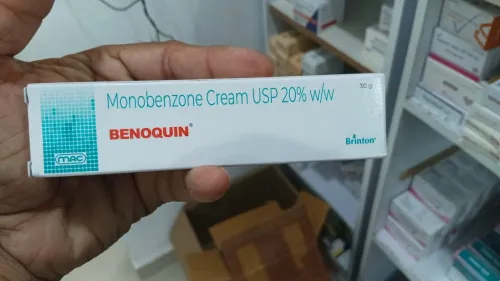
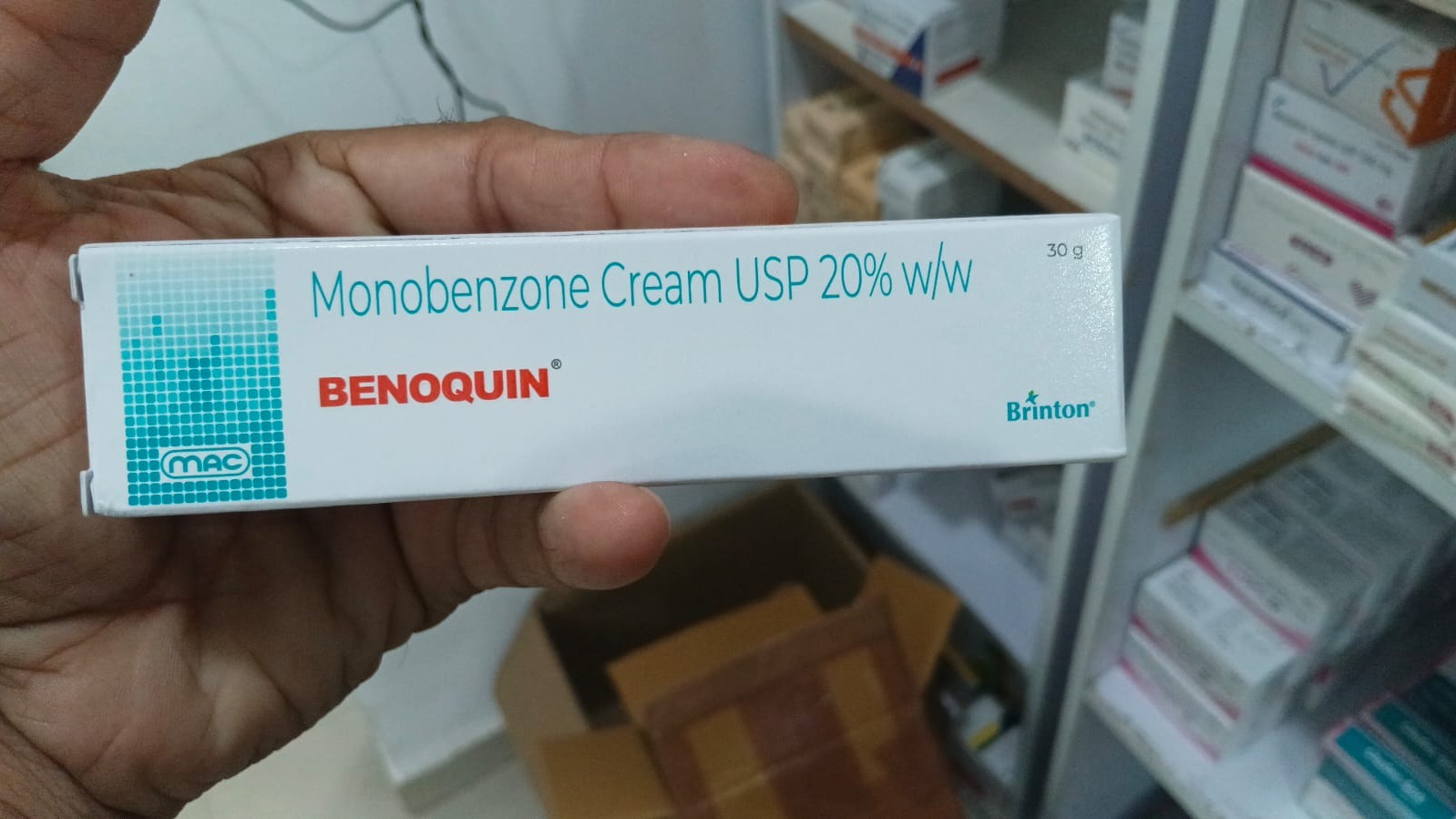
Monobenzone is a topical depigmenting medicine historically associated with the brand name Benoquin. It has been used in selected patients with extensive vitiligo, a condition characterized by the loss of natural skin pigmentation.
Unlike ordinary cosmetic skin-lightening products, monobenzone can cause permanent pigment loss. This makes its intended medical use, safety considerations and long-term effects particularly important.
For individuals in Washington researching treatment options for vitiligo, understanding how monobenzone works can help distinguish medical depigmentation from routine cosmetic pigmentation treatments.
What Is Monobenzone and What Is Its Active Ingredient?
Monobenzone, also called monobenzyl ether of hydroquinone, is the active pharmaceutical ingredient in formulations historically marketed as Benoquin.
It belongs to a category of topical depigmenting agents.
The medicine affects melanocytes, the specialized cells responsible for producing melanin.
Melanin contributes to natural skin colour and helps protect the skin against ultraviolet radiation.
Monobenzone can cause destruction of melanocytes, resulting in substantial and potentially permanent loss of pigmentation.
What Are the Medical Uses of Monobenzone?
Monobenzone has historically been used for final depigmentation in selected individuals with extensive vitiligo.
Vitiligo may cause irregular white patches on different parts of the body.
When the condition affects a large proportion of the skin, the contrast between depigmented and normally pigmented areas may become pronounced.
In certain circumstances, dermatologists may discuss depigmentation of the remaining pigmented skin as a management option.
This approach is different from treatments intended to restore pigment.
Monobenzone does not cure the underlying causes of vitiligo.
How Does Monobenzone Differ From Skin-Lightening Creams?
Many cosmetic pigmentation products are intended to reduce the appearance of dark spots, uneven skin tone or post-inflammatory marks.
Monobenzone works differently because it can permanently remove pigmentation.
Its effects may also extend beyond the application area.
For this reason, monobenzone is not an appropriate treatment for ordinary tanning, freckles, melasma or cosmetic skin whitening.
Using it for these purposes may cause extensive and irreversible pigment changes.
What Are the Possible Side Effects of Monobenzone?
Potential adverse reactions include:
Skin redness and irritation.
Contact dermatitis.
Burning or itching sensations.
Uneven depigmentation.
Pigment loss outside treated areas.
Increased sensitivity to sunlight after depigmentation.
Because melanin provides some protection against ultraviolet radiation, depigmented skin requires consistent sun protection.
Protective clothing, shade and broad-spectrum sunscreen can become important parts of long-term skin care.
Who Should Consider Dermatological Evaluation?
Not every white patch on the skin is caused by vitiligo.
Fungal infections, inflammatory skin conditions and other pigmentation disorders can produce similar changes.
A dermatologist may assess the distribution of affected areas, medical history and clinical findings before discussing treatment options.
Patients should also understand that depigmentation may be permanent, making treatment expectations particularly important.
What Should Patients in Washington Know?
Historical information about Benoquin should be distinguished from current pharmaceutical availability and regulatory status.
International product listings do not automatically establish FDA approval or availability in the United States.
ERNEST IMPEX may be encountered when researching monobenzone formulations, but any product requires verification of its composition, intended use and regulatory documentation.
For people with extensive vitiligo, understanding the permanent effects of monobenzone is essential before considering depigmentation as part of a dermatological treatment plan.
Keywords