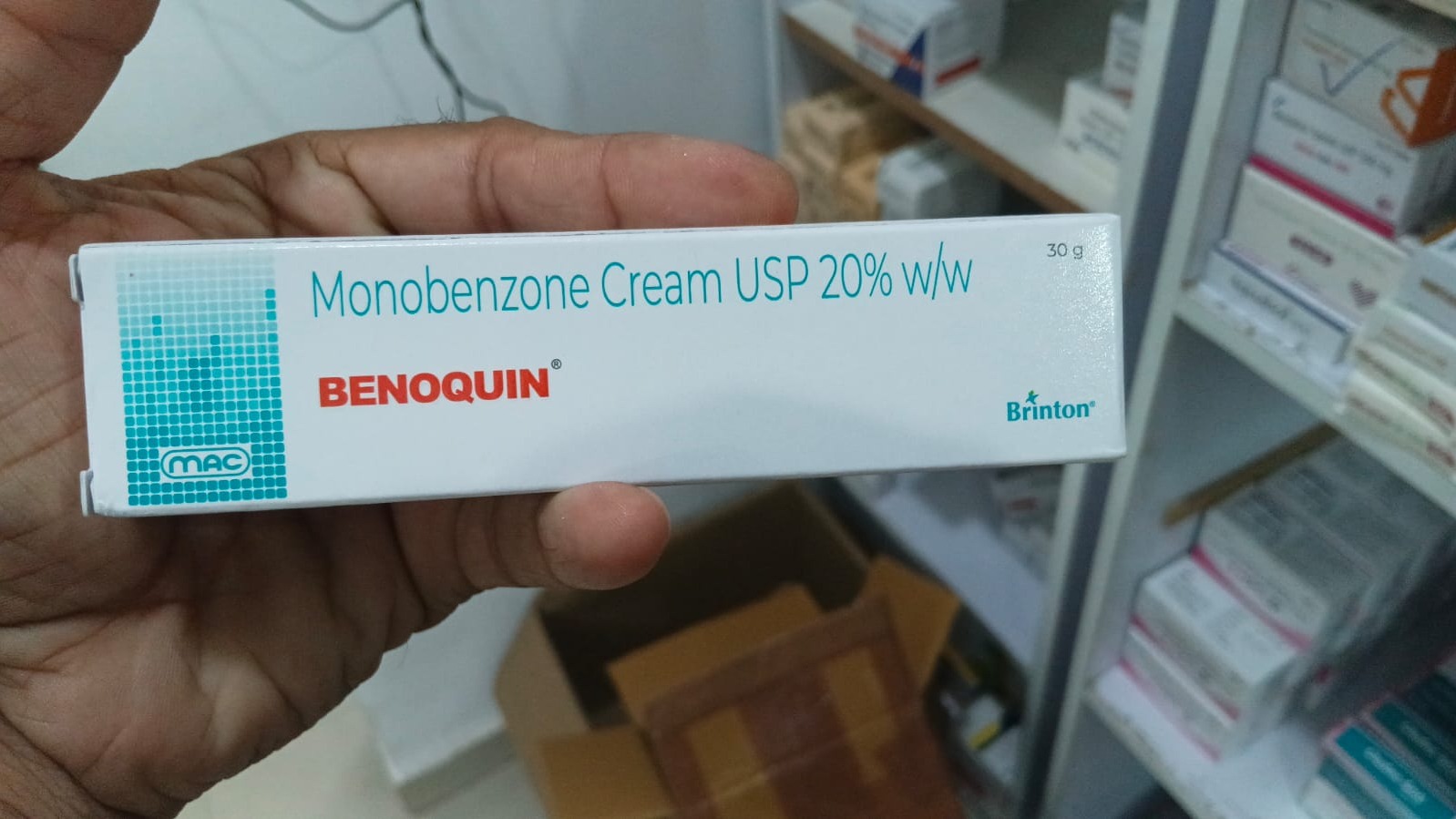
Monobenzone is a topical depigmenting agent historically used in selected individuals with extensive vitiligo. Unlike medicines designed to restore pigmentation, monobenzone can cause permanent loss of natural skin colour by affecting melanocytes.
This difference makes monobenzone an important but highly specialized treatment option in dermatology.
For people in Washington researching vitiligo management, understanding the distinction between depigmentation and repigmentation helps clarify when monobenzone may be considered and why it is unsuitable for ordinary cosmetic skin lightening.
What Is Monobenzone and How Does It Work?
Monobenzone is also known as monobenzyl ether of hydroquinone.
It affects melanocytes, the cells responsible for producing melanin.
Melanin gives skin its natural pigmentation and contributes to protection against ultraviolet radiation.
Monobenzone can cause melanocyte destruction, resulting in substantial and potentially permanent pigment loss.
The effects may extend beyond the application area, which makes careful patient selection particularly important.
What Are the Medical Uses of Monobenzone?
Monobenzone has historically been associated with final depigmentation in patients with extensive vitiligo.
Vitiligo is a condition in which areas of skin lose their natural pigmentation.
In some individuals, the condition affects a large proportion of the body, leaving isolated areas of normally pigmented skin.
This contrast can be a significant cosmetic and emotional concern.
For selected patients, a dermatologist may discuss depigmentation as an option for achieving a more uniform skin appearance.
However, the decision requires careful consideration because the resulting changes may be irreversible.
How Is Depigmentation Different From Repigmentation?
Repigmentation treatment aims to restore colour to areas affected by vitiligo.
Depending on the patient's condition, treatment may involve topical corticosteroids, topical calcineurin inhibitors, phototherapy or other dermatological interventions.
Certain patients with nonsegmental vitiligo may also be eligible for treatment with FDA-approved topical ruxolitinib.
Monobenzone follows a different approach.
Rather than restoring colour, it aims to remove pigmentation from remaining unaffected areas.
These treatments therefore serve different purposes and should not be considered interchangeable.
What Are the Possible Side Effects of Monobenzone?
Potential adverse reactions include:
Redness and skin irritation.
Contact dermatitis.
Burning or itching.
Uneven pigmentation changes.
Depigmentation beyond treated areas.
Increased vulnerability to ultraviolet radiation.
Because the loss of melanin can reduce natural protection against sunlight, long-term sun protection becomes particularly important.
Patients may need to maintain protective clothing, broad-spectrum sunscreen and other measures to reduce ultraviolet exposure.
Why Is Monobenzone Not Recommended for Cosmetic Whitening?
Monobenzone is not intended for treating ordinary tanning, freckles, acne marks or melasma.
These conditions differ significantly from extensive vitiligo.
Using a permanent depigmenting agent for cosmetic skin lightening can result in extensive and unwanted pigment loss.
The changes may also be difficult or impossible to reverse.
This makes accurate diagnosis essential before considering any depigmenting medicine.
What Should Patients in Washington Consider?
A dermatologist may evaluate the extent of vitiligo, disease activity, previous treatment response and the patient's expectations.
The psychological implications of permanent pigmentation changes should also be considered.
Historical information about Benoquin does not necessarily reflect current pharmaceutical availability or authorization.
ERNEST IMPEX may appear during pharmaceutical product research, but monobenzone formulations require verification of their composition, intended use and regulatory status.
Understanding the permanent effects of monobenzone helps individuals with extensive vitiligo evaluate treatment options according to their medical needs and long-term preferences.
Keywords