Medicine Storage Temperature: A Guide for US Pharmaceutical Buyers
A medicine can leave the manufacturer in optimal condition but still develop quality problems if someone stores it incorrectly during transportation or distribution. For pharmaceutical wholesalers, importers, and hospital procurement teams, medicine storage temperature is an important part of product quality. Some medicines can be kept at controlled room temperature, while others require refrigeration or special handling. The correct temperature depends on the particular medicine, its formulation, and the storage instructions approved for that product. There is no single temperature suitable for every medicine. This guide explains common pharmaceutical storage conditions, how temperature is monitored, and what US pharmaceutical buyers should check before accepting a shipment.
Why Does Medicine Storage Temperature Matter?
Medicines contain ingredients that may react to heat, moisture, light, or freezing conditions. When a product is exposed to unsuitable temperatures, its stability may be affected. Depending on the medicine and the exposure, such conditions can create concerns about its quality, strength, or performance. For example, a refrigerated medicine may be damaged if it freezes. Another product may tolerate normal room-temperature storage but must be protected from excessive heat. The important point is that storage conditions are part of the product's quality requirements, not simply a warehouse preference. The US Food and Drug Administration's information on expiration dates explains that the labelled storage conditions are linked to medicine stability and expiry dating. For buyers, this requirement means that checking the expiry date alone is not enough. The medicine must also have been handled under suitable conditions.
What Is the Recommended Temperature for Storing Medicines?
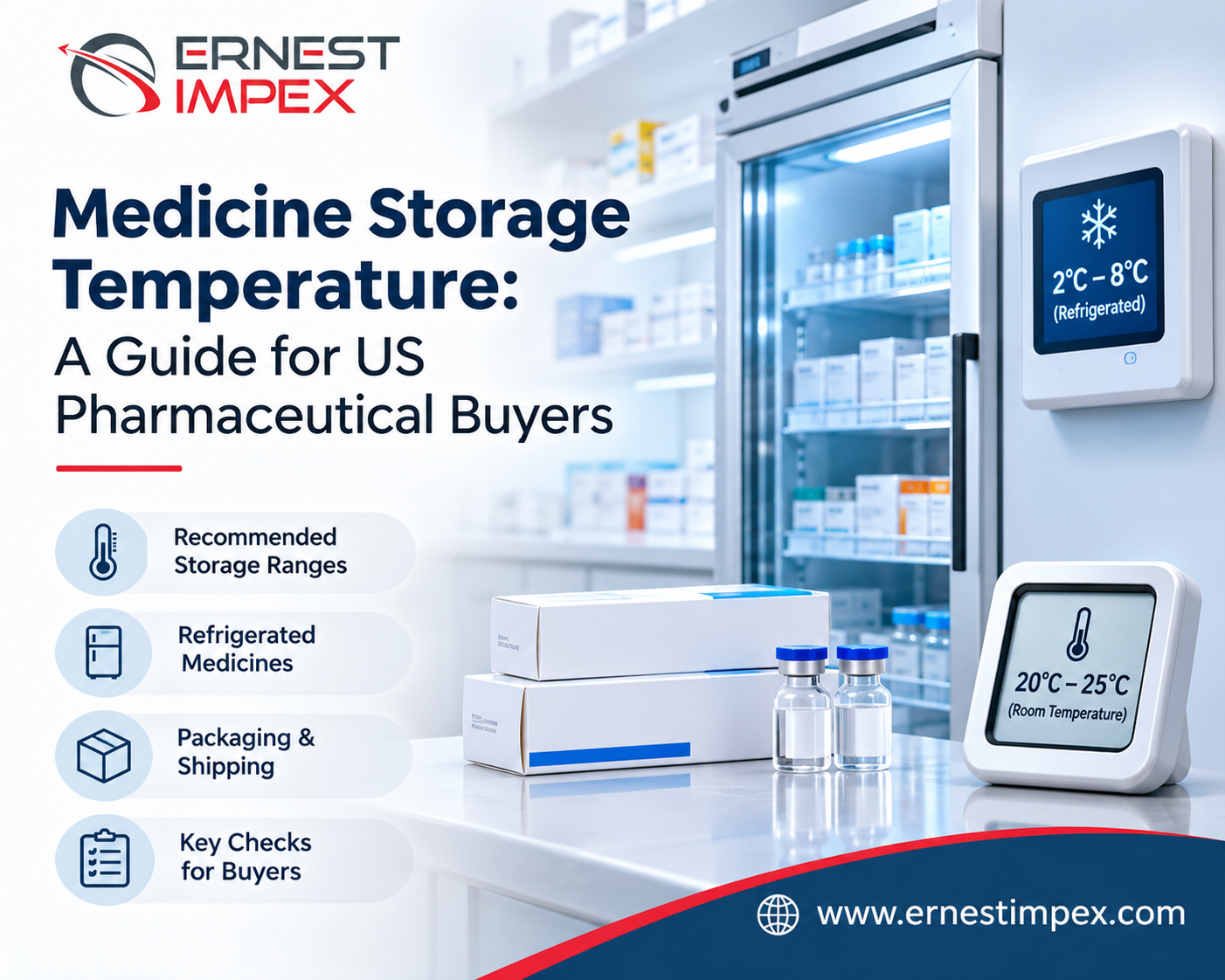
Different pharmaceutical products have different storage requirements. A common example of controlled room-temperature labelling is 20°C to 25°C (68°F to 77°F), with permitted excursions specified in the product's approved information.
Many refrigerated pharmaceutical products have a labeled storage range of 2°C to 8°C (36°F to 46°F).
However, these are examples rather than universal instructions. Some products require different ranges, and not all medicines tolerate excursions outside their normal storage limits.
Storage Category Example: Temperature What Buyers Should Check: Controlled room temperature Often 20°C–25°C (68°F–77°F) Product-specific label and permitted excursions Refrigerated storage: often 2°C–8°C (36°F–46°F) Refrigeration, freezing restrictions, and monitoring Frozen storage product-specific Exact labelled temperature and suitable equipment Special storage varies in protection from light, moisture, or other conditions.
Important: The approved product label or manufacturer-provided instructions take priority over general temperature charts.
Understanding Controlled Room Temperature
The phrase room temperature may sound straightforward, but it can mean different things in everyday conversation. A warehouse in a hot climate may be much warmer than an air-conditioned pharmacy. A product that requires controlled room temperature should not simply be left wherever the surrounding air feels comfortable. In US pharmaceutical labeling, some products specify storage at 20°C to 25°C, with excursions permitted between 15°C and 30°C under applicable conditions. These excursion allowances do not permit every medicine to be stored continuously at the extremes. For pharmaceutical buyers, the useful questions are whether the storage area is monitored, whether temperature records are maintained, and whether the product's specific requirements are understood. The FDA's prescription medicine labelling information explains where storage and handling instructions appear in approved prescribing information.
Which Medicines Require Refrigeration?
Certain vaccines, biological medicines, and other temperature-sensitive products require refrigerated storage. Refrigeration helps maintain the conditions that keep those products stable. But refrigeration is not automatically better for every medicine. Some products should not be frozen, while others are intended for room-temperature storage. Keeping a product in the refrigerator without checking its label can be inappropriate.
Why Freezing Can Be a Problem
Freezing can damage a product even when it normally requires refrigeration. For some formulations, freezing can affect physical properties or stability. This is why a refrigerated shipment should be protected against both excessive heat and temperatures below its permitted range.
Vaccines Need Particular Attention
Many routinely refrigerated vaccines are stored between 2°C and 8°C, but individual vaccine requirements may differ. The CDC Vaccine Storage and Handling guidance explains temperature monitoring, suitable equipment, and the management of storage problems. This CDC guidance is specifically relevant to vaccines and related immunization products. It should not be treated as a universal storage standard for all medicines.
How Pharmaceutical Warehouses Monitor Temperature
A suitable storage area needs more than an air-conditioning system or refrigerator. The warehouse must demonstrate that it has maintained products under the required conditions.
Temperature monitoring arrangements may include:
Calibrated temperature sensors
Continuous temperature recording
Alarm systems for out-of-range readings
Documented temperature reviews
Backup power or contingency arrangements
Written procedures for equipment failures
The appropriate system depends on the products, storage environment, and applicable quality requirements.
Why Temperature Records Matter
Suppose a warehouse refrigerator is found at 11°C during a morning inspection. The current reading identifies a problem, but it does not explain when the temperature first moved outside the permitted range. A continuous monitoring record may help determine the duration and extent of the event. This information is useful when assessing whether the affected products can remain in distribution.
What Is a Temperature Excursion?
A temperature excursion occurs when a medicine is exposed to conditions outside its specified temperature limits. An excursion may happen during warehouse storage, airport handling, customs clearance, local delivery, or international transportation. Possible causes include equipment failure, delayed transit, incorrect packaging, an open refrigerator door, or exposure to extreme weather.
What Should Buyers Do After an Excursion?
When a suspected excursion is identified, the affected stock should be handled under the organization's quality procedures.
A practical response generally includes:
Identify and segregate the affected products.
Record the temperature range and estimated exposure duration.
Preserve available monitoring records.
Contact the manufacturer or qualified quality personnel for product-specific assessment.
Release, reject or otherwise dispose of the stock only after an authorized decision.
A medicine should not automatically be considered safe because its packaging looks normal. For vaccine-specific situations, the CDC also provides storage and handling resources, including guidance on documenting temperature excursions.
Medicine Storage During International Shipping
Pharmaceutical storage requirements do not end when a shipment leaves the warehouse. A product may pass through several locations before reaching a US importer, including collection facilities, cargo terminals, customs areas, and distribution centers. The temperature conditions at each stage can affect the shipment.
For international buyers, useful pre-shipment questions include:
What storage temperature does the product require?
Is the proposed shipping method suitable?
Does the packaging protect against expected transit conditions?
Is temperature monitoring needed?
How will delays be managed?
Who will review any temperature excursion?
What documentation will be available on delivery?
The correct answers depend on the particular medicine and shipping route. Buyers sourcing medicines internationally can also review Ernest Impex's article on the export of pharmaceuticals from India, which explains export documentation and transportation considerations.
Packaging for Temperature-Sensitive Medicines
Temperature-sensitive products may require insulated containers, appropriate refrigerants, or specialized temperature-controlled transport. The choice of packaging depends on the medicine's permitted temperature range, expected transit duration, and environmental conditions. For example, gel packs may be suitable for certain shipments, but direct contact with frozen packs could create a freezing risk for some refrigerated medicines. Packaging thus needs to be selected and qualified for the product and route rather than chosen only because it contains insulation. Ernest Impex's frequently asked questions discuss refrigerated products, insulated packaging, and shipping arrangements that may be available depending on the medicine and destination.
What Should US Pharmaceutical Buyers Verify Before Ordering?
US pharmaceutical buyers should review storage requirements before confirming a purchase, especially when medicines will travel internationally.
A useful starting point is the product's approved storage information. For FDA-approved medicines, buyers can use them to locate available approval and labeling information. The procurement team should also check the product's regulatory eligibility, manufacturer details, and applicable distribution requirements.
Practical Buyer Checklist
Checkpoint: Question to Ask: Product label: What temperature range is specified? Are the storage instructions confirmed? Packaging: Is the proposed packaging suitable for transit? Monitoring: Will temperature records be available where needed? Shelf life: Does the batch meet the buyer's expiry requirements?Are transit delays and environmental risks considered? Delivery: Who will inspect the shipment on arrival? Excursions: Is there a procedure for handling out-of-range exposure? US compliance: Is the product legally eligible for the intended US transaction?
A shipment should not be accepted solely because it arrives on time. Product identity, packaging condition, required records and any suspected temperature problems also deserve attention.
Common Medicine Storage Mistakes
Assuming All Medicines Need the Same Temperature
A general temperature chart cannot replace the storage instructions for a particular product.
Keeping Every Medicine in a Refrigerator
Some medicines require room-temperature storage or protection from freezing. Unnecessary refrigeration may create problems.
Ignoring Short Temperature Excursions
Even a brief excursion may require assessment. Its significance depends on the product and exposure conditions.
Relying Only on the Current Thermometer Reading
A single reading does not show what happened during the previous hours.
Using Unsuitable Shipping Packaging
A package that protects against physical damage may not provide adequate temperature control.
Failing to Plan for Delivery Delays
Unexpected customs or transport delays can extend the period during which a shipment must maintain suitable conditions.
How Storage Requirements Affect Pharmaceutical Procurement
Medicine storage temperature can influence several purchasing decisions. A temperature-sensitive medicine may require different packaging, transport services, delivery arrangements, and quality records than a product stored at controlled room temperature. These requirements may affect total shipping costs and the time needed to prepare an order. For buyers comparing suppliers, it is useful to ask about product availability and storage requirements at the same time. This approach reduces the chance of selecting a product or shipping arrangement that does not meet the intended distribution conditions.
Frequently Asked Questions
1. What is the normal medicine storage temperature?
There is no single normal temperature for every medicine. Many products have controlled room-temperature instructions, while others require refrigeration, freezing, or special protection. Always follow the specific product label.
2. What is the usual refrigerated medicine storage range?
Many refrigerated medicines are labelled for storage between 2°C and 8°C (36°F and 46°F), but product-specific requirements may differ.
3. Can all medicines be stored in a refrigerator?
No. Refrigeration is not appropriate for every medicine. Some products may be affected by freezing or have specific room-temperature storage requirements.
4. What happens if medicine is exposed to high temperatures?
Excessive heat may affect the stability or quality of certain medicines. The significance depends on the product, temperature, and duration of exposure.
5. What is a pharmaceutical temperature excursion?
It is exposure to conditions outside a product's specified storage temperature limits. A qualified assessment may be needed before the affected stock is released.
6. How do wholesalers monitor medicine storage conditions?
Depending on their operations and products, wholesalers may use calibrated sensors, continuous temperature monitoring, alarm systems, documented reviews and written procedures.
7. Are temperature records necessary during pharmaceutical shipping?
The need for monitoring and records depends on the product, shipping method and applicable quality requirements. Temperature-sensitive products may require documented evidence of suitable handling.
8. What should US buyers verify before importing temperature-sensitive medicines?
Buyers should check product-specific storage instructions, regulatory eligibility, suitable packaging, transport conditions, monitoring arrangements and the procedure for managing temperature excursions.
Conclusion
Correct medicine storage temperature is essential for maintaining pharmaceutical quality throughout storage, transportation, and distribution. For US pharmaceutical buyers, the safest approach is to begin with the specific product's approved storage instructions and then confirm that the warehouse, packaging, and shipping arrangements can meet those requirements. Careful temperature monitoring, accurate records, and clear procedures for handling excursions help reduce avoidable quality risks. Whether a medicine is stored at controlled room temperature or requires refrigeration, the goal remains the same: maintaining suitable conditions from the point of supply to the intended destination.
Keywords