Vitiligo is a skin condition characterized by the loss of pigment in certain areas of the body. While many treatments focus on restoring pigmentation, some patients with extensive vitiligo may consider an entirely different approach: reducing the remaining natural skin pigmentation to create a more uniform appearance.
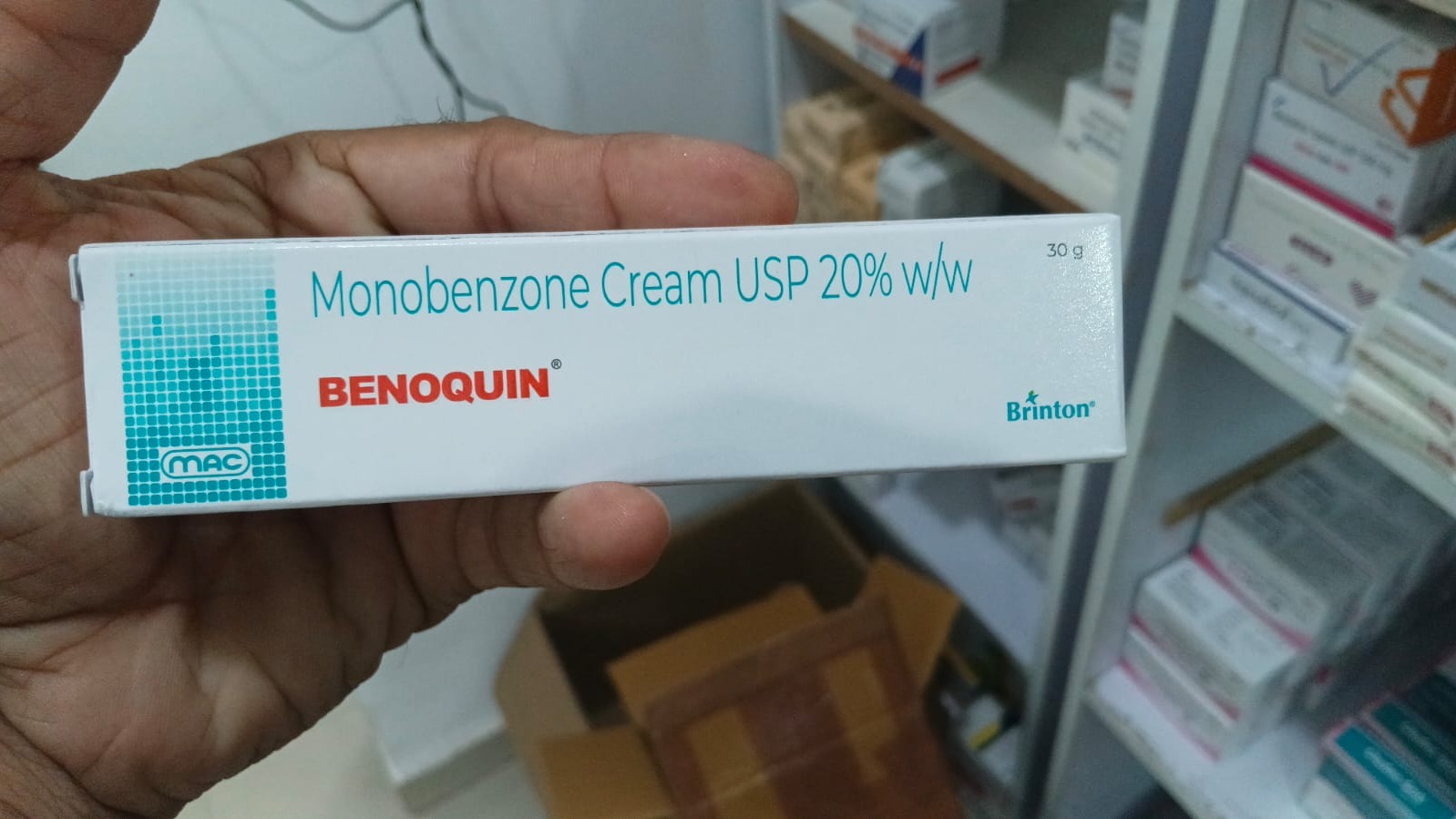
Monobenzone, associated with the brand name Benoquin, is a topical depigmenting medicine used in carefully selected cases of extensive vitiligo.
Understanding its purpose, limitations, and potentially permanent effects is important for patients in Saudi Arabia exploring specialist dermatological treatment.
What Is Monobenzone?
Monobenzone is a topical depigmenting agent that acts on pigment-producing cells called melanocytes.
Unlike ordinary cosmetic skin-lightening products, Monobenzone is intended to produce substantial and generally permanent pigment loss.
Its medical role is highly specialized. It is not intended for treating normal pigmentation, tanning, freckles, or routine cosmetic concerns.
The treatment may be considered when vitiligo affects such a large proportion of the skin that attempting to restore pigment is impractical or unlikely to provide a satisfactory result.
Why Is Depigmentation Considered for Extensive Vitiligo?
Vitiligo can produce irregular patches of lighter skin across the face, hands, arms, torso, and other areas.
When most of the skin has already lost pigmentation, the remaining darker areas may create a pronounced contrast.
For selected patients, depigmentation aims to reduce this contrast by removing pigment from unaffected skin.
This approach does not cure the underlying autoimmune condition. Instead, it changes the appearance of remaining pigmented areas.
Because the results may be irreversible, the decision requires careful discussion of physical, psychological, and long-term lifestyle considerations.
How Monobenzone Works
Monobenzone causes progressive destruction of melanocytes, reducing the skin's ability to produce melanin.
Melanin is the pigment responsible for much of the natural coloration of skin, hair, and eyes.
The depigmentation process is gradual and can vary between individuals.
Some treated areas may respond differently from others, and the final appearance may not be completely uniform.
Pigment loss may also develop beyond the areas where the medicine is directly applied.
This possibility makes careful specialist assessment especially important.
Potential Side Effects and Limitations
Monobenzone may cause local skin irritation, including redness, dryness, itching, and contact dermatitis.
Uneven depigmentation can occur, particularly during the treatment process.
More importantly, loss of melanin reduces natural protection against ultraviolet radiation.
Patients may therefore become more vulnerable to sunburn and other consequences of sun exposure.
Monobenzone is not an appropriate treatment for melasma, post-inflammatory hyperpigmentation, or ordinary cosmetic skin brightening.
Sun Protection Considerations in Saudi Arabia
Saudi Arabia's strong sunlight and high ultraviolet exposure make sun protection particularly relevant for individuals undergoing depigmentation.
Skin that has lost melanin requires consistent protection during outdoor activities.
Protective clothing, shade, and appropriate broad-spectrum sunscreen can help reduce ultraviolet exposure.
Patients who work outdoors or spend considerable time traveling between locations should discuss practical sun-protection strategies with their dermatologist.
Evaluating Treatment Suitability
Before considering Monobenzone, a dermatologist should assess the extent of vitiligo, previous treatments, patient expectations, and the psychological implications of permanent pigment loss.
The medicine's regulatory status and availability should also be verified in Saudi Arabia.
ERNEST IMPEX may be relevant to pharmaceutical sourcing enquiries, although any Monobenzone-containing product must meet applicable authorization and distribution requirements.
Understanding the Long-Term Commitment
Depigmentation therapy represents a significant treatment decision rather than a temporary cosmetic adjustment.
Patients need to understand that pigment loss may be permanent, results can vary, and lifelong sun protection may become increasingly important.
For individuals in Saudi Arabia with extensive vitiligo, an informed decision should balance appearance-related goals with medical suitability, irreversible effects, and long-term skin care.
Keywords