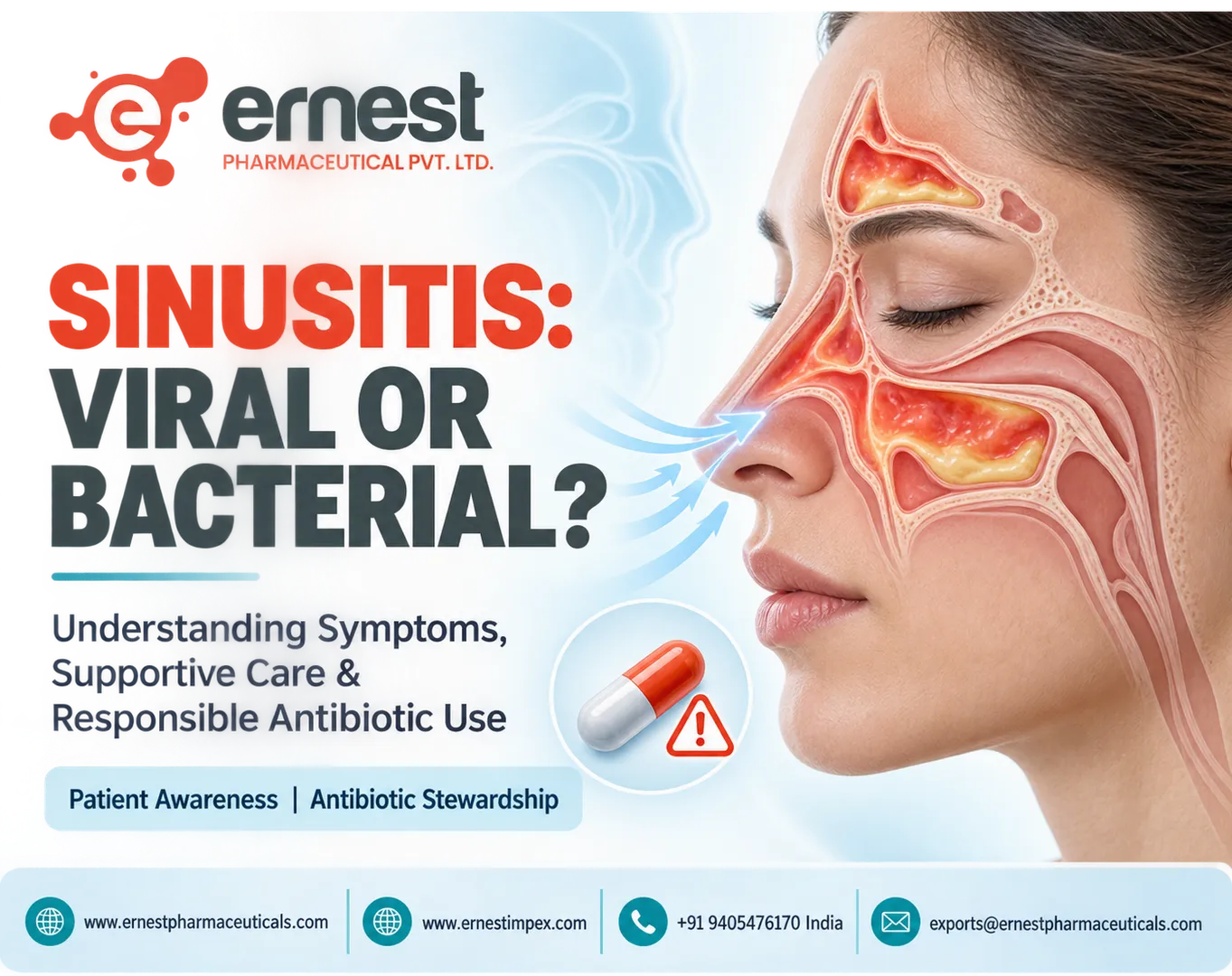
Sinusitis treatment medicines, pharmaceutical exporter, antibiotic medicine supplier, nasal spray distributor, bulk medicine supplier, pharmaceutical importer, hospital medicine supplier, global pharmaceutical distribution
Sinusitis: Better Understanding, Responsible Treatment and Global Medicine Supply
Sinusitis is one of the most frequent reasons people seek medical care for nasal congestion, facial pressure, headache and nasal discharge. It is also a condition in which antibiotics are often expected even when they may provide no benefit.
The key fact is that most acute rhinosinusitis cases are caused by viruses. According to the US Centers for Disease Control and Prevention, approximately 90–98% of acute rhinosinusitis cases are viral. Antibiotics work against susceptible bacteria—not viruses—and therefore should not be used automatically for every sinus infection.
A better approach begins with identifying the likely cause, evaluating the duration and severity of symptoms and selecting treatment based on clinical need.
What Is Sinusitis?
Sinusitis, also called rhinosinusitis, occurs when the tissues lining the nose and sinuses become inflamed. Swelling can interfere with normal sinus drainage, allowing mucus and fluid to accumulate.
Common symptoms include:
- Blocked or congested nose
- Thick nasal discharge
- Facial pain, pressure or tenderness
- Reduced sense of smell
- Headache
- Cough
- Pressure around the eyes, cheeks or forehead
- Fever in some cases
- Tiredness or general discomfort
Sinusitis may be classified as acute, recurrent or chronic depending on the duration and pattern of symptoms. A healthcare professional should assess persistent or repeatedly returning symptoms because allergies, nasal polyps, structural abnormalities, asthma and other conditions may contribute.
Viral and Bacterial Sinusitis Are Not the Same
Most acute cases begin with a viral upper respiratory infection, such as a common cold. These cases generally improve without antibiotic treatment.
A bacterial infection may be more likely when:
- Symptoms continue for more than 10 days without improvement
- Severe fever occurs with purulent nasal discharge or significant facial pain
- Symptoms initially improve but then become noticeably worse
- A patient is systemically unwell or has a higher risk of complications
These patterns can help clinicians decide whether further evaluation or an antibiotic is appropriate. They should not be used by patients to self-diagnose or start prescription medicines without medical supervision.
Why Unnecessary Antibiotic Use Matters
Taking an antibiotic for a viral infection does not shorten the illness or cure the underlying infection. It can still cause adverse effects such as nausea, diarrhoea, allergic reactions and disruption of the normal microbial community in the body.
Unnecessary or inappropriate antibiotic use also contributes to antimicrobial resistance. This occurs when microorganisms change in ways that reduce the effectiveness of medicines used to treat them. The World Health Organization identifies misuse and overuse of antimicrobials as important drivers of this global health challenge.
Responsible antibiotic use does not mean avoiding antibiotics when they are genuinely needed. It means using the right medicine, for the right patient, at the right dose and for the appropriate duration under qualified medical supervision.
Supportive Care for Uncomplicated Sinusitis
Many uncomplicated viral sinus infections improve with time and appropriate symptom management. Depending on the patient’s condition and medical history, a healthcare professional may recommend:
- Adequate rest and fluid intake
- Saline nasal sprays or suitable nasal irrigation
- Appropriate pain and fever relief
- Intranasal corticosteroids in selected cases
- Allergy management when allergic rhinitis contributes to symptoms
- Avoidance of cigarette smoke and other nasal irritants
- Maintaining a comfortable indoor humidity level
Only sterile, distilled or previously boiled and cooled water should be used for nasal irrigation. Humidifiers should also be cleaned regularly because poorly maintained equipment can support microbial growth.
Decongestants and medicated nasal sprays are not suitable for every patient. Some nasal decongestant sprays can cause rebound congestion when used for longer than directed. People with hypertension, heart disease, glaucoma, pregnancy or other health conditions should seek professional advice before using such products.
Factors That Can Affect Sinus Health
Sinus health depends on more than a single medicine. Several factors can influence nasal inflammation, mucus clearance and breathing:
Nasal airflow and drainage
Normal sinus function depends on open drainage pathways. Nasal polyps, a deviated septum or persistent tissue swelling may interfere with airflow and mucus drainage.
Allergies
Dust mites, pollen, mould, animal dander and other allergens can cause ongoing nasal inflammation. Identifying and managing relevant triggers may reduce recurring symptoms.
Air quality
Smoke, industrial pollution, strong fragrances and dry air can irritate the nasal lining. Workplace and environmental exposure should be considered when symptoms repeatedly return.
Mucociliary function
The small hair-like structures lining the respiratory tract help move mucus and trapped particles. Smoking, dehydration, inflammation and certain medical conditions can impair this natural clearance system.
General health
Adequate sleep, balanced nutrition, hydration and proper management of chronic conditions support normal immune function. However, no particular diet, supplement or “detox” should be promoted as a proven cure for sinusitis without reliable clinical evidence.
When Medical Attention Is Necessary
Patients should seek medical advice if symptoms are severe, persist without improvement or repeatedly return.
Urgent medical assessment is particularly important when sinus symptoms are accompanied by:
- Swelling or redness around the eyes
- Changes in vision
- Severe or rapidly worsening headache
- Stiff neck
- Confusion or unusual drowsiness
- Difficulty breathing
- Persistent high fever
- Significant facial swelling
- Symptoms in an immunocompromised patient
Children, older adults, pregnant patients and people with complex medical conditions may require earlier clinical evaluation.
Pharmaceutical Supply for Global Healthcare Markets
Reliable access to quality-assured medicines is essential for hospitals, pharmacies, pharmaceutical importers, distributors and healthcare institutions. Sinusitis and respiratory-care procurement may include saline preparations, nasal sprays, antihistamines, analgesics, corticosteroid nasal formulations and prescription antibiotics where permitted and clinically indicated.
Ernest Pharmaceutical Pvt. Ltd. supports legitimate B2B pharmaceutical requirements across:
Our supply services are intended for licensed pharmaceutical distributors, registered importers, wholesalers, pharmacies, hospitals and institutional healthcare buyers. Product availability, registration requirements, import permissions, prescriptions, labelling and documentation differ between countries.
All enquiries are therefore reviewed according to the requested product, quantity, destination market and applicable regulatory requirements.
Our B2B Pharmaceutical Services
Ernest Pharmaceutical Pvt. Ltd. supports global procurement partners with:
- Bulk pharmaceutical supply
- Export-oriented product sourcing
- Distributor and importer requirements
- Hospital and pharmacy procurement
- Commercial quotations for approved products
- Batch and product documentation, where applicable
- International shipping coordination
- Third-party manufacturing support
- Destination-specific packaging and documentation assistance
Prescription medicines and antibiotics are supplied only against appropriate commercial and regulatory documentation. Availability is subject to manufacturer stock, destination-country rules and applicable export controls.
Responsible Access, Reliable Distribution
Effective sinusitis care starts with the correct diagnosis. Antibiotics have an essential role when a qualified healthcare professional identifies or strongly suspects an appropriate bacterial infection, but they should not be treated as a routine answer to every blocked nose or sinus symptom.
For healthcare businesses, dependable pharmaceutical procurement is equally important. Quality verification, documentation, regulatory compliance and responsible distribution should remain central to every supply decision.
Send Your Medicine Requirement Today
Contact Ernest Pharmaceutical Pvt. Ltd. for product availability, bulk quantities, export documentation and international supply information.
Pharmaceutical Exporter | Bulk Medicine Supplier | Worldwide Distribution
Medical disclaimer: This content is provided for general educational and B2B informational purposes only. It does not replace diagnosis, treatment or advice from a qualified healthcare professional. Prescription medicines and antibiotics must be used only under appropriate professional supervision.
Keywords