Cancer is one of the most complex and challenging health conditions of modern times, affecting millions of people worldwide across all age groups and lifestyles. Although the word cancer often sounds frightening, advances in medical science have significantly improved how cancer is diagnosed, treated, and managed.
One of the most important breakthroughs in oncology is the development of anti-cancer drugs. These medicines are designed to slow down, stop, or destroy cancer cells while protecting healthy cells as much as possible. Today, anti-cancer treatment is highly personalized, based on cancer type, stage, genetics, and the patient’s overall health.
In this blog, we explore the major types of anti-cancer drugs, their uses, and how they fight cancer cells, explained in clear and easy-to-understand language.
Major Types of Anti-Cancer Drugs
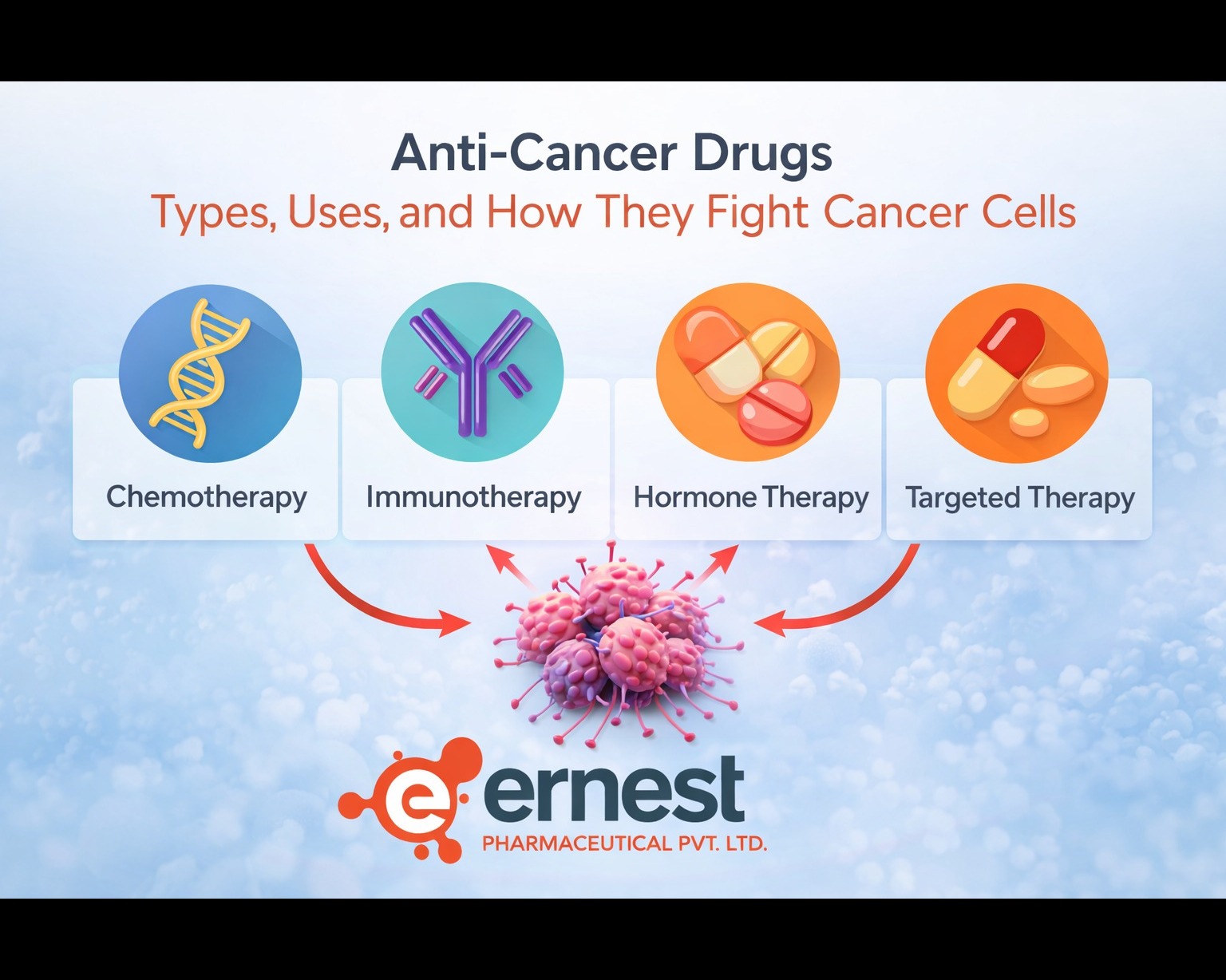
1. Chemotherapy Drugs
Chemotherapy is one of the oldest and most widely used cancer treatments.
How they work:
Chemotherapy drugs target rapidly dividing cells. They damage the DNA or internal structures of cancer cells, preventing them from multiplying and surviving.
Common uses:
Breast cancer
Lung cancer
Leukemia and lymphoma
Ovarian and colorectal cancers
Limitations:
Since chemotherapy also affects healthy fast-dividing cells (such as hair follicles and bone marrow), side effects like hair loss, fatigue, nausea, and low immunity may occur.
2. Targeted Therapy Drugs
Targeted therapies are more precise than traditional chemotherapy.
How they work:
These drugs block specific proteins, genes, or pathways that cancer cells depend on for growth and survival.
Common uses:
HER2-positive breast cancer
Lung cancer
Colorectal cancer
Certain leukemias
Key advantage:
Targeted therapies cause less damage to healthy cells and usually result in fewer side effects.
3. Immunotherapy Drugs
Immunotherapy represents a major advancement in cancer treatment.
How they work:
Cancer cells often hide from the immune system. Immunotherapy drugs remove these disguises or strengthen immune activity, allowing immune cells to recognize and destroy cancer.
Common uses:
Melanoma
Lung cancer
Kidney cancer
Certain blood cancers
Notable benefit:
In some patients, immunotherapy provides long-lasting results even after treatment is completed.
4. Hormone Therapy
Some cancers grow in response to hormones.
How they work:
Hormone therapy blocks hormone production or prevents hormones from attaching to cancer cells.
Common uses:
Estrogen-positive breast cancer
Prostate cancer (testosterone-driven)
Important note:
Hormone therapy slows cancer growth rather than killing cells directly, making it effective for long-term disease control.
5. Anti-Angiogenic Drugs
Tumors need blood vessels to grow.
How they work:
Anti-angiogenic drugs block signals that promote new blood vessel formation, cutting off oxygen and nutrients to tumors.
Common uses:
Colorectal cancer
Kidney cancer
Lung cancer
6. Cytotoxic Antibiotics
Despite the name, these drugs are not used to treat infections.
How they work:
They interfere with cancer cell DNA replication, preventing cell division and growth.
Common uses:
Breast cancer
Testicular cancer
Leukemias
7. Gene Therapy–Based Anti-Cancer Drugs
Gene therapy is an emerging and highly advanced approach in oncology.
How they work:
These therapies modify or replace faulty genes responsible for cancer development to:
Stop cancer cell growth
Repair mutated genes
Trigger cancer cell death (apoptosis)
Improve response to chemotherapy or radiation
Common uses:
Certain rare cancers
Blood cancers such as leukemia
Cancers caused by specific genetic mutations
Why it matters:
Gene therapy targets cancer at its genetic root, offering highly personalized treatment options.
How Do Anti-Cancer Drugs Fight Cancer Cells?
Anti-cancer drugs work through several key mechanisms:
Stopping cell division: Interrupting the cancer cell cycle
Damaging DNA: Preventing cancer cells from repairing or replicating
Blocking growth signals: Cutting off survival pathways
Activating immune response: Helping the immune system attack cancer
Cutting off nutrient supply: Starving tumors by blocking blood vessels
Combination Therapy: A Smarter Approach
Modern cancer treatment often uses multiple anti-cancer drugs together, known as combination therapy. This approach:
Targets cancer from different angles
Reduces drug resistance
Improves overall treatment outcomes
For example, chemotherapy may be combined with targeted therapy or immunotherapy for better results.
Side Effects and Their Management
Side effects depend on the drug type, dosage, and individual patient response. Common side effects include:
Fatigue
Nausea
Hair loss
Reduced immunity
Doctors closely monitor patients and adjust treatment plans to maintain the best balance between effectiveness and quality of life. Supportive medications and lifestyle guidance also help manage side effects.
Conclusion
Anti-cancer drugs have transformed cancer care, offering hope, longer survival, and improved quality of life for millions of patients. From traditional chemotherapy to advanced targeted therapies, immunotherapy, and gene-based treatments, each drug type plays a vital role in fighting cancer at the cellular level.
With continuous research and innovation, cancer treatment is becoming more effective, personalized, and patient-friendly.
For reliable access to a wide range of high-quality anti-cancer products, trusted sourcing is essential.
Explore verified anti-cancer drugs and formulations at:
🌐 www.ernestimpex.com
Powered by Ernest Pharmaceutical Pvt. Ltd.
(Ernest Group of Companies)
@ErnestImpex | @ErnestPharmaceutical
📧 exports@ernestpharmaceuticals.com
🌐 www.ernestimpex.com | www.ernestvision.com | www.ernestpharmaceuticals.com
📲 WhatsApp: +91 94054 76170