
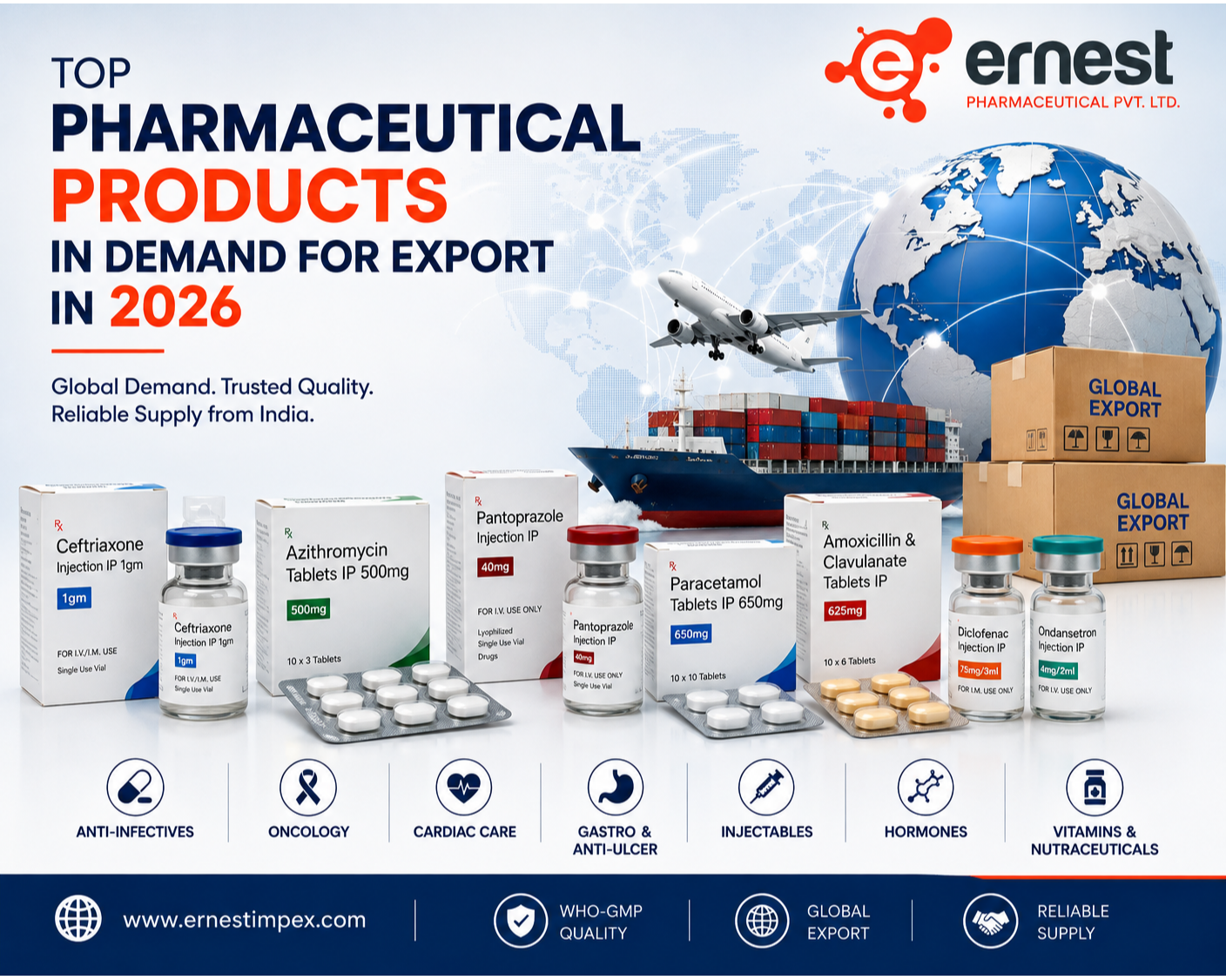
Most In-Demand Pharmaceutical Products for Export in 2026
I had a sourcing discussion with a pharmaceutical
buyer from East Africa recently, and he made an unusual remark. A few years
ago, his biggest worry was getting the best price for his prescriptions. His
priorities are drastically different now. He looks for suppliers who can
reliably supply the right Pharmaceutical products, maintain the quality of
each shipment, and provide dependable documentation when required.
This transformation reflects the current state of the global healthcare industry
Price alone no longer determines the demand for pharmaceutical
products for export. Hospitals, distributors, government procurement
agencies, and pharmacy chains are looking for a reliable pharmaceutical
supplier to ensure continuous access to high-quality medications. With the
growth of healthcare systems, purchasing suitable pharmaceutical
products for international markets has become a strategic
decision, not a simple one.
India continues to play an important role in meeting
this requirement. With a strong manufacturing base, a broad range of generic
and specialty medicines, and experienced pharmaceutical exporters from India,
the country remains a leading destination for international buyers.
But which medicinal goods and pharmaceutical products
will be in greatest demand in 2026? We have to look at the categories still
affecting the global pharmaceutical trade.
The Reason for Increased Global Demand for Pharmaceutical Products
Healthcare needs are changing almost everywhere. As
life expectancy increases, the number of patients requiring chronic disease
medications increases. At the same time, governments are increasing investment
on healthcare infrastructure, while private hospitals and pharmacy networks
continue to grow.
This mix has meant that there is a constant demand for
pharmaceutical products in developed and emerging markets.
Another crucial factor is affordability. Buyers are
encouraged to select high-quality generic
pharmaceutical products that offer effective treatment at a lower
cost, as healthcare budgets are under pressure.
This is an opportunity for pharmaceutical distributors
and importers to form long-term relationships with a reliable pharmaceutical
products supplier from India who understands the international pharmaceutical
business.
1. Cancer Drugs Continue to Lead
Cancer treatment is one of the fastest-growing fields
in modern medicine. As awareness of cancer increases and it becomes easier to
diagnose, hospitals need more varieties of oncology
pharmaceutical products than ever before.
"The consumer of today is not in search of a
single or a few medications." Often they require comprehensive oncology
portfolios, including supportive care, hormones, targeted therapy, and
chemotherapeutic medicines.
Pharmaceutical distributors must ensure the continuous
availability of these oncology products for export, as treatment schedules
depend on their availability. Supplier reliability is as crucial as price,
because any delays can impact patient care.
2. Diabetes Medicines Are Still a Global Priority
Diabetes is no longer considered a disease confined to
certain parts of the world. Urbanization, lifestyle changes, and an aging
population have made diabetes management a global healthcare priority.
So the demand for diabetes
pharmaceutical products is constant on a global scale.
Importers often seek insulin products, oral
antidiabetic drugs, and new treatment alternatives to meet the growing demands
of patients. Pharmaceutical wholesalers and distributors also still do a
regular trade in drugs for diabetes, because patients often need therapy for
life.
Diabetes products are one of the strongest
pharmaceutical export categories, given the steady demand.
3. Pharmaceuticals for Cardiovascular Diseases
Heart disease continues to be a burden on healthcare
systems around the world.
The most commonly prescribed cardiovascular pharmaceutical products are
still those that control blood pressure, cholesterol, heart rhythm problems,
and blood clotting.
Unlike seasonal drugs, cardiovascular therapies are
needed throughout the year. This creates predictable purchasing patterns for
government healthcare programs, pharmacy chains, hospitals, and pharmaceutical
distributors.
Cardiovascular drugs are still one of the most stable
therapeutic groups for a pharmaceutical medicine exporter from India, with low
levels of demand fluctuation.
4. Anti-infective Drugs
Even with the advancement of medical science,
infections remain a serious public health problem.
Hospitals continue to procure vital anti-infective pharmaceutical products
for routine patient treatment, including antibiotics, antifungal medications,
antiviral therapies, and antiparasitic drugs.
Many healthcare organizations also keep inventories of
emergency medicine to ensure that these pharmaceutical products for export
continue to be in regular demand regardless of seasonal variations.
Anti-infective medicines continue to be an important
component of a balanced export portfolio for pharmaceutical suppliers and
wholesalers.
5. Ophthalmic Drugs
Vision care has never been more critical. The growing
awareness pertaining to preventive eye care, eye diseases caused by diabetes,
and the increasing population are driving the demand for ophthalmic
pharmaceutical products.
Hospitals, eye clinics, and distributors routinely
purchase eye
drops, glaucoma drugs, lubricants, antibiotic eye
preparations, and post-operative ophthalmological products.
The growth of ophthalmology services in international
markets has led eye care businesses to be increasingly reliant on reliable
access to quality ophthalmic
pharmaceutical products for export.
On the Way
The international pharmaceutical trade is still
largely based on traditional therapeutic categories, but buyers are more
interested in specialty medicines, biosimilars, injectable formulations, and
new ways to treat diseases.
For pharmaceutical sourcing companies, medicine
importers, wholesalers, and distributors, keeping up with these trends is no
longer a choice but a need if they want to stay ahead in an ever-changing
healthcare market.
Companies that partner with an experienced pharmaceutical products
exporter from India that can reliably deliver high-quality
pharmaceutical products will be better placed to serve their customers and
react to future market trends.
Frequently Asked Questions (FAQs)
1. Which pharmaceutical products are most in demand for
export in 2026?
Oncology medicines, diabetes medicines, cardiovascular drugs, anti-infective
medicines, ophthalmic products, injectables, and specialty medicines are among
the major pharmaceutical products in demand for export in 2026.
2. Why is India a major source of pharmaceutical products
for export?
India has a large pharmaceutical manufacturing base and offers a broad range of
generic, specialty, and finished pharmaceutical formulations for international
markets.
3. Who buys pharmaceutical products from India?
International pharmaceutical importers, distributors, wholesalers, hospitals,
pharmacy chains, healthcare organizations, and procurement companies commonly
source medicines from India.
4. Are generic medicines in demand in international
markets?
Yes. Generic pharmaceutical products remain important because healthcare
systems and buyers seek cost-effective treatment options while maintaining
required quality standards.
5. Which therapeutic categories have consistent
pharmaceutical export demand?
Oncology, diabetes, cardiovascular, anti-infective, and ophthalmic medicines
generally have continuing demand because they address major healthcare
requirements.
6. What should buyers consider when choosing a
pharmaceutical exporter from India?
Buyers should consider product availability, consistent quality, documentation
support, packaging, supply capacity, delivery reliability, and the supplier's
experience in international pharmaceutical trade.
7. Can pharmaceutical products be supplied in bulk for
distributors and wholesalers?
Yes. Pharmaceutical products can be sourced in commercial quantities for
importers, wholesalers, distributors, hospitals, and other institutional
buyers, subject to product availability and applicable regulatory requirements.
8. What documents may be required for pharmaceutical
exports?
Documentation varies by product and destination country. Buyers may require
commercial documents, product-related certificates, quality documentation, and
other regulatory documents depending on local import requirements.
A Group Company of Ernest Pharmaceutical Pvt. Ltd.
Official Websites
🌐 www.ernestimpex.com
🌐 www.ernestvision.com
🌐 www.oncologymedicinesupplier.com
Corporate Email
📧 exports@ernestpharmaceuticals.com
WhatsApp
📱 +91 93599 02383
Chat with Us on WhatsApp
💬 https://wa.me/919359902383