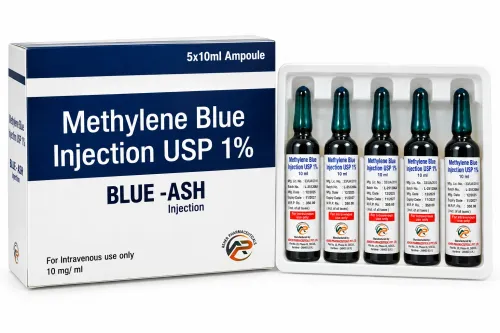
Procurement of Blue Ash 1% Methylene Blue Injection for Hospitals and Pharmaceuticals in the United States Methylene Blue 1% Injection for Hospital and Institutional Buyers Methylene Blue 1% is a medicine used in specialized clinical settings, particularly for treating acquired methemoglobinemia when medically indicated. Methylene blue has an established role in restoring the oxygen-carrying function of blood in patients with clinically significant methemoglobinemia. Its administration requires trained healthcare professionals, appropriate monitoring, and careful consideration of contraindications. Brand Name: Blue Ash 1% Product Name: Blue Ash 1% Methylene Blue Injection Generic Name: Methylene Blue Alternative Name: Methylthioninium Chloride Active Ingredient: Methylene Blue Declared Concentration: 1% Equivalent Concentration: 10 mg/mL Dosage Form: Injectable Solution Medicine Category: Antidotes / Emergency Medicines Therapeutic Segment: Emergency Medicine and Critical Care Pharmacological Classification: Redox-Active Agent Why Methylene Blue Injection Matters in Emergency Medicine Restoring Functional Hemoglobin Methemoglobinemia interferes with the normal delivery of oxygen to body tissues. Methylene blue can help convert methemoglobin back into functional hemoglobin, supporting recovery of blood oxygen-carrying capacity. A Recognized Antidote in Selected Poisoning Cases Acquired methemoglobinemia can occur following exposure to certain medicines or chemicals. Methylene blue may be used as an antidote when clinically appropriate and when the expected benefits outweigh the risks. Safety Considerations for Methylene Blue Injection Important safety considerations include: - Serotonin syndrome: Potentially life-threatening reactions can occur with serotonergic medicines, including certain antidepressants and opioids. - G6PD deficiency: Patients with this condition may experience hemolytic anemia and may not receive the full benefits of methylene blue. - Hypersensitivity: Allergic reactions may occur. - Monitoring: Clinical response, oxygenation, and other relevant parameters require assessment. - Pulse oximetry interference: Methylene blue can temporarily affect pulse oximeter readings. Frequently Asked Questions 1. What is Blue Ash 1% Injection? Blue Ash 1% is identified as a methylene blue injectable formulation intended for specialized medical use. 2. What is the primary medical application of Methylene Blue Injection? Its principal established use is the treatment of acquired methemoglobinemia when clinically indicated. 3. What does a 1% methylene blue concentration mean? This is equivalent to 10 mg methylene blue per milliliter of a 1% w/v solution. The product label should confirm the exact concentration. 4. How does methylene blue help in methemoglobinemia? It supports the conversion of methemoglobin into functional hemoglobin through a reduction process involving leukomethylene blue. 5. Is methylene blue considered an antidote? Yes. It is classified as an antidote for certain cases of acquired methemoglobinemia. 6. Why is G6PD deficiency important when considering methylene blue? Patients with G6PD deficiency may be at increased risk of hemolysis, and the treatment may not work effectively. 7. Can methylene blue interact with antidepressant medicines? Yes. Certain serotonergic medications can cause serious serotonin syndrome. 8. Is Methylene Blue Injection intended for routine self-administration? No. It requires professional medical administration and monitoring. 9. Before looking at Blue Ash 1%, hospitals should check the following: They should review the exact concentration, manufacturer, formulation, labeling, batch information, expiry, and applicable regulatory status. 10. Why is the concentration important for injectable methylene blue? Different concentrations can affect preparation and administration requirements. The exact product concentration must be verified to reduce medication-error risks.

Washington
+919405476170
+919359902383
 Chat with us
 Chat with us