Calcitriol 0.0003% w/w cream
Description
Calcitriol Ointment 3 mcg/g for Topical Psoriasis Treatment
A Topical Formulation for Psoriasis-Affected Skin:
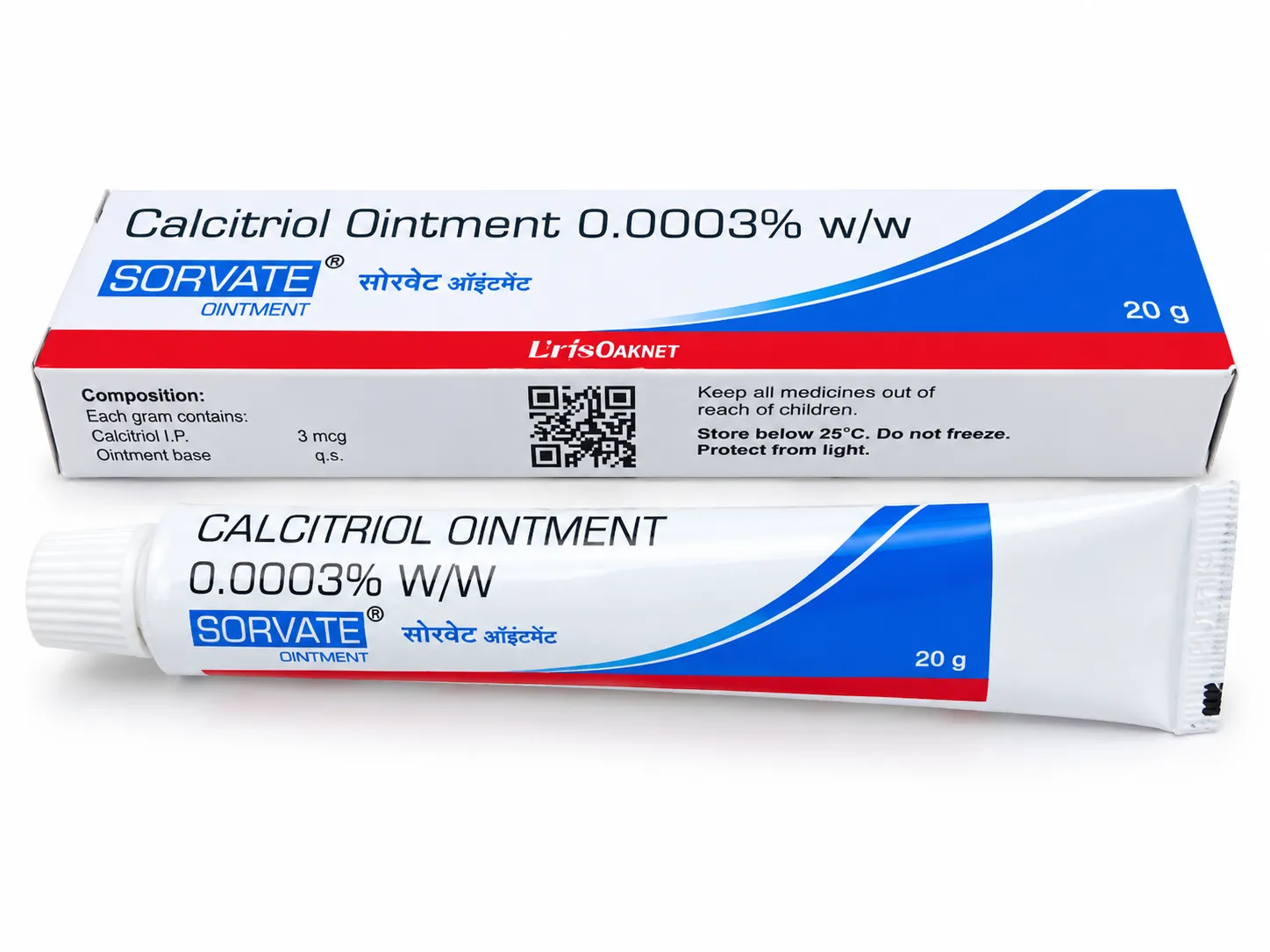
Calcitriol 0.0003% w/w Ointment is a prescription topical medicine used in the treatment of mild to moderate plaque psoriasis. Each gram contains 3 micrograms of calcitriol, an active form of vitamin D. When applied to psoriasis-affected skin, it helps regulate abnormal skin-cell activity and supports improvement in the thickness and scaling of plaques. Its indication, age eligibility and application instructions must follow the approved label in the patient’s country.
Product Information
Generic Name: Calcitriol
Active Ingredient: Calcitriol
Composition: Each gram contains Calcitriol 3 micrograms
Equivalent Strength: Calcitriol 0.0003% w/w
Dosage Form: Topical ointment
Medicine Class: Vitamin D analogue
Therapeutic Category: Antipsoriatic medicine
Primary Application: Mild to moderate plaque psoriasis
Administration Route: Topical application to the skin
Understanding the Composition
The active content, calcitriol, is the hormonally active form of vitamin D. In this topical formulation, every gram of ointment contains 3 micrograms of calcitriol, which is equivalent to 0.0003% w/w.
Calcitriol is included in an ointment base that enables controlled application directly over the affected skin. The exact inactive ingredients can vary between marketed products, so international buyers should verify the product insert or composition statement for the specific brand being sourced.
How Topical Calcitriol Works:
Plaque psoriasis causes skin cells to develop and accumulate faster than normal, producing thick, raised and scaly patches. Calcitriol interacts with vitamin D receptors in the skin and helps regulate processes involved in skin-cell growth and differentiation
Potential Benefits:
When prescribed for an appropriate patient, topical calcitriol may help:
- Reduce excessive accumulation of skin cells
- Improve the thickness of psoriasis plaques
- Reduce visible scaling
- Support smoother-looking affected skin
- Assist with the ongoing management of localised plaque psoriasis
Calcium-Related Safety Considerations:
Although applied to the skin, calcitriol can be absorbed into the body. Excessive application or use over large skin areas may affect calcium metabolism and increase calcium levels in the blood or urine.
A doctor should be informed if the patient:
- Has an existing calcium-metabolism disorder
- Has high blood-calcium levels
- Has kidney or liver problems
- Takes calcium supplements
- Uses high doses of vitamin D
- Takes medicines that can increase serum calcium
- Uses another topical psoriasis medicine
Possible Side Effects:
Not every patient experiences side effects. Reported reactions can include:
- Local skin irritation
- Itching
- Redness
- Discomfort at the application site
- Worsening of psoriasis symptoms
- Increased calcium levels after excessive exposure
Storage and Handling:
For appropriate product handling:
- Keep the cap tightly closed
- Protect the tube from excessive heat
- Do not freeze unless the label specifically permits it
- Keep it away from children
- Do not use a punctured or leaking tube
- Check the batch number and expiry date before distribution
- Do not use the product after its stated expiry date
Frequently Asked Questions
1. What does Calcitriol 0.0003% w/w Ointment contain?
Each gram contains 3 micrograms of calcitriol, equivalent to a concentration of 0.0003% w/w.
2. What is the ointment used for?
It is prescribed for the topical treatment of mild to moderate plaque psoriasis in suitable patients.
3. Is calcitriol a corticosteroid?
No. Calcitriol is a vitamin D analogue. It belongs to a different medicine class from topical corticosteroids.
4. Is 0.0003% calcitriol the same as 3 mcg/g?
Yes. Both expressions indicate that each gram of the topical formulation contains 3 micrograms of calcitriol.
5. Can this ointment be applied to normal dry skin?
It is a prescription antipsoriatic medicine and should be applied only to the areas and conditions identified by a healthcare professional.
6. Can treated skin be covered with a bandage?
An airtight or occlusive dressing may increase absorption. The treated area should not be covered in this way unless specifically directed by a doctor.
7. Can topical calcitriol affect calcium levels?
Excessive use may increase systemic absorption and affect calcium metabolism. Patients should use only the prescribed quantity.
8. Is Calcitriol 0.0003% w/w available for international supply?
Availability depends on current stock, pack configuration, import documentation, prescription controls and pharmaceutical regulations in the destination country.