
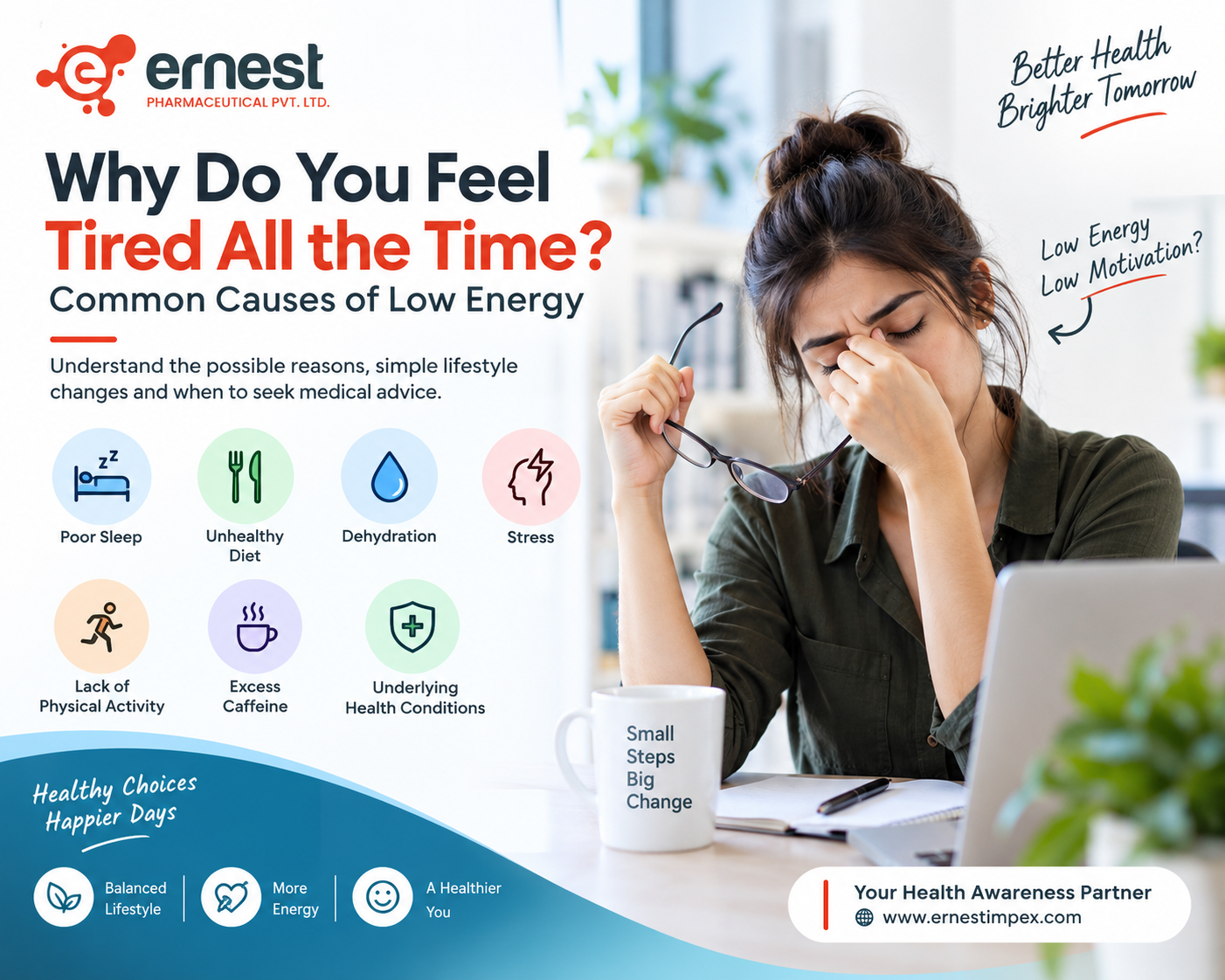
Why Do You Feel Tired All the Time? Common Causes of Low Energy
Everyone feels tired sometimes. Maybe you had a long day at work, travelled for several hours, exercised more than usual, or simply did not sleep well. Usually, a little rest helps you feel better. But feeling exhausted almost every day is different. You may wake up without energy, find it difficult to concentrate at work, or feel sleepy even after getting enough rest. If you ask yourself, "Why am I always tired?" you might want to take a look at what you do every day. Sleep, food, water intake, stress, and physical activity can all affect how energetic you feel. Occasionally, a health problem can also cause ongoing tiredness.
Here are some common causes of low energy and a few simple things you can do about them.
1. Your Sleep Routine Can Affect Your Energy
A full night in bed does not always mean you have had restful sleep. Going to bed very late, waking several times during the night, using your phone before sleeping or having an irregular sleep routine can leave you feeling exhausted the next morning. Keep a regular sleeping schedule, even when your daily routine changes. Make your bedroom comfortable and reduce unnecessary screen time before bed. If you are sleeping for enough hours but regularly wake up feeling exhausted, consider discussing your situation with a healthcare professional.
2. Your Eating Habits Could Be Leaving You Tired
What you eat—and when you eat—can influence your energy throughout the day. Skipping breakfast or other meals, eating very little, or depending too much on processed foods may leave you feeling weak or sluggish. A varied diet with fruits, vegetables, whole grains, protein, and healthy fats provides nutrients your body needs for normal functioning. Your body needs the right nutrients to stay active and healthy. When nutrients such as iron, vitamin B12, folate, or vitamin D are too low, tiredness may be one of the symptoms. But just because you’re feeling fatigued doesn’t mean you’re deficient in vitamins. Avoid taking large amounts of supplements without professional advice.
3. Could Dehydration Be Making You Feel Tired?
Think about how much water you actually drink during a normal working day. Many people become so busy that they simply forget. Not getting enough fluids can sometimes make you feel tired or less alert. You may also notice thirst, a dry mouth, headaches, dizziness, or darker-colored urine. There is no set amount of water that is suitable for everyone. Your needs can change depending on the weather, exercise, diet, and your health. Keeping water nearby and drinking regularly during the day can make staying hydrated easier.
4. Everyday Stress Can Leave You Feeling Drained
A tiring day can also happen without physical activity. Mental pressure can also use up a lot of your energy. When your mind stays busy with work, personal concerns, responsibilities, or everyday problems, it can become harder to relax properly. You may also find it difficult to sleep well or stay focused during the day. Over time, these factors can contribute to low energy and a general feeling of tiredness. Making room for short breaks, light exercise, enjoyable activities, and quiet time may help you manage everyday pressure. If stress continues for a long period or begins to affect your daily life, consider speaking with a qualified healthcare professional. Simple habits such as walking, taking regular breaks, spending less time on screens, relaxing, and making time for activities you enjoy may help manage everyday stress. When stress or low mood continues for a long time or starts affecting normal life, seeking professional support can be helpful.
5. Sitting Too Much Can Make You Feel Sluggish
It sounds strange: you are already tired, so why would exercise help? Spending most of the day sitting and getting very little physical activity can sometimes make you feel more sluggish. Regular movement supports general health, sleep, and physical fitness. You don't need to start with a difficult exercise routine. A daily walk, light stretching, cycling or swimming can be enough to get your body moving. If you have not exercised for a long time, begin slowly and build up gradually.
6. Your Daily Coffee Could Be Affecting Your Sleep
A cup of coffee or tea can make you feel more awake for a while. The problem starts when you depend on caffeine throughout the day to fight tiredness. Having too much caffeine, especially later in the day, may make it harder to sleep properly at night. This can become a repeating pattern: you sleep poorly, feel tired the next day, drink more caffeine, and then struggle to sleep again. If this sounds familiar, try reducing caffeine gradually and avoid drinking it too close to bedtime.
7. Sometimes There May Be Another Health Reason
Sometimes, low energy continues even when your sleep, diet, and daily routine seem normal. Fatigue can occur with a number of health conditions. Examples include anemia, thyroid problems, diabetes, sleep disorders, and some infections. Certain medicines can also make a person feel sleepy or fatigued. This doesn't mean that if you feel tired, you have one of these conditions. Tiredness is a very general symptom that can have many explanations. If it continues without an obvious reason, a healthcare professional can review your symptoms, health history, and medicines and decide whether any tests are needed.
When Should You See a Doctor?
Being tired occasionally is common. However, feeling tired all the time should not be ignored when it continues for several weeks or starts interfering with your normal routine. Consider getting medical advice if you cannot identify a clear reason for your tiredness, it keeps getting worse, or normal rest does not seem to help. Seek prompt medical attention if fatigue occurs with symptoms such as chest pain, fainting, significant breathing difficulty, unexplained weight loss, persistent fever, unusual bleeding, or another severe or sudden symptom.
Always Feeling Tired? Here Are Some Possible Reasons
Start with a few small changes that are easy to follow in your everyday routine.
- Try to sleep and wake at regular times.
- Eat balanced meals throughout the day.
- Keep yourself adequately hydrated.
- Add some movement to your daily routine.
- Avoid relying on too much coffee or other caffeinated drinks.
- Take short breaks if you spend hours sitting or looking at a screen.
- Give yourself enough time to rest and unwind.
These habits will not solve every cause of fatigue, but they can support your overall well-being and make it easier to identify whether your routine is contributing to your lack of energy.