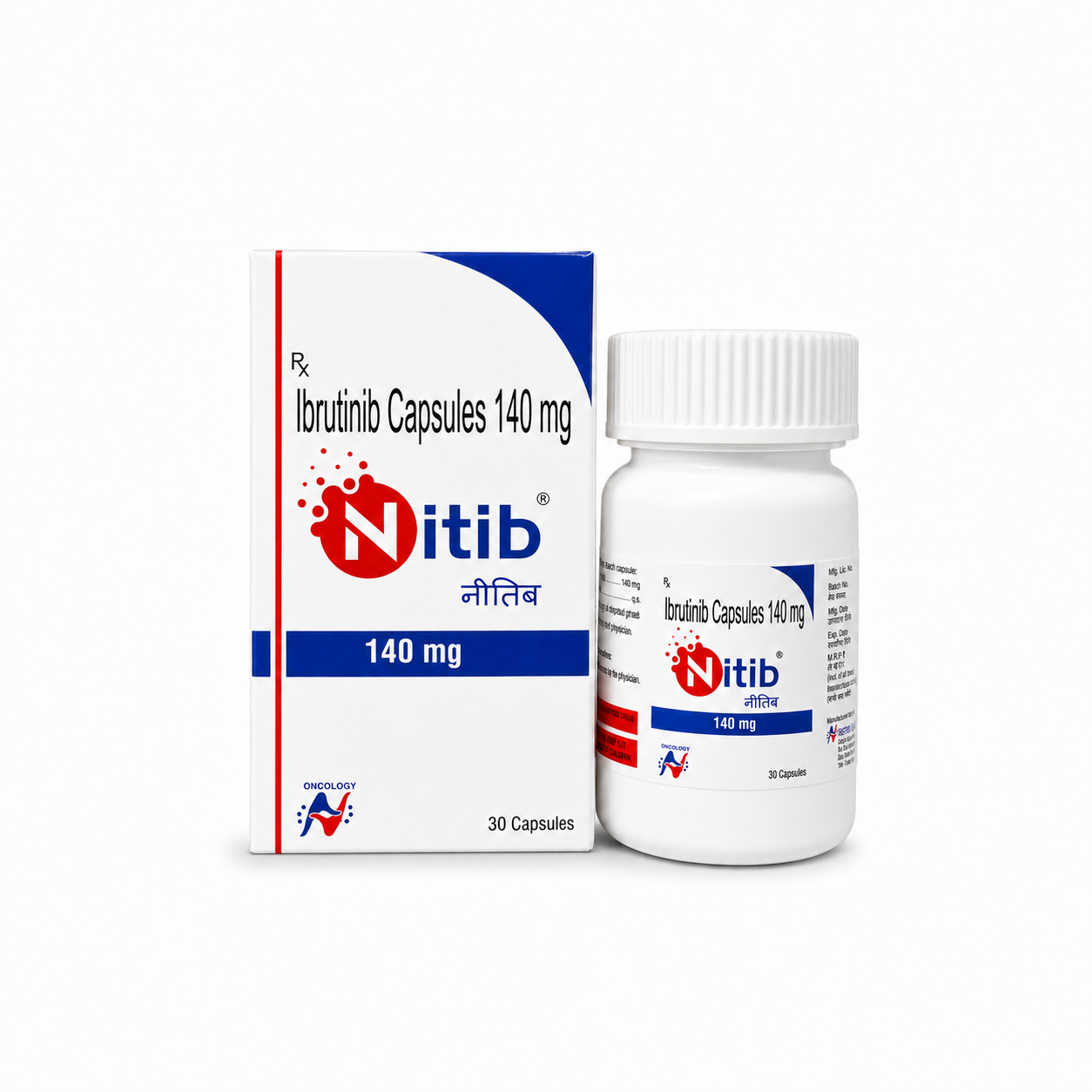
Nitib 140 mg Capsules
Nitib 140 mg Capsules contain Ibrutinib 140 mg, an oral targeted therapy used under the supervision of an oncologist for certain blood cancers. Nitib 140 mg is commonly listed as an ibrutinib capsule used in conditions such as mantle cell lymphoma and chronic lymphocytic leukemia.
Ibrutinib is a prescription cancer medicine that works by blocking signals that help abnormal B-cells grow and survive. The National Cancer Institute lists ibrutinib for adult patients with conditions including chronic lymphocytic leukemia, small lymphocytic lymphoma, and Waldenström macroglobulinemia.
Composition & Product Details
Product Name: Nitib 140 mg Capsules
Composition: Ibrutinib 140 mg
Medicine Category: Oncology / Targeted Anti-Cancer Therapy
Dosage Form: Capsule
Strength: 140 mg
Route: Oral
Common Packing: Often available as 30 capsules per bottle/box, but confirm from label
Use: Certain blood cancers under oncologist supervision
Supplier/Exporter: Ernest Impex
Clinical Indications & Usage
Nitib 140 mg Capsules may be prescribed by oncology specialists for selected blood cancer conditions such as:
- Mantle cell lymphoma
- Chronic lymphocytic leukemia
- Small lymphocytic lymphoma
- Waldenström macroglobulinemia
- Other conditions only if advised by an oncologist
Ibrutinib should be used only as prescribed by a cancer specialist. It is not suitable for self-medication.
How Nitib 140 mg Capsules Work
Nitib 140 mg Capsules contain Ibrutinib, a Bruton’s tyrosine kinase inhibitor. BTK is involved in B-cell growth and survival. By blocking BTK activity, ibrutinib helps slow the growth and spread of certain abnormal B-cells.
This targeted action makes ibrutinib different from many traditional chemotherapy medicines.
Administration and Dosage Guide
Nitib 140 mg Capsules should be taken exactly as prescribed by an oncologist. The dosage depends on:
- Type of cancer
- Patient’s body condition
- Previous treatment history
- Other medicines being used
- Blood test results
- Doctor’s treatment plan
Do not start, stop, or change the dose without medical advice.
Safety, Side Effects & Monitoring
Possible side effects may include:
- Diarrhea
- Nausea
- Fatigue
- Bruising
- Rash
- Muscle or joint pain
- Low platelet count
- Low white blood cell count
- Anemia
- Infection risk
- High blood pressure
- Bleeding problems
MedlinePlus notes that ibrutinib can cause side effects such as diarrhea, nausea, constipation, vomiting, stomach pain, tiredness, and muscle or joint pain.
Mayo Clinic also warns that ibrutinib may cause bleeding problems and that patients may need special care before surgery or dental procedures.
Precautions
Use Nitib 140 mg Capsules carefully if the patient has:
- Bleeding disorder
- Heart rhythm problem
- High blood pressure
- Liver disease
- Active infection
- Low blood counts
- Recent surgery
- Pregnancy or breastfeeding condition
Regular blood tests and oncology follow-up may be required during treatment.
Storage and Handling
- Store in a cool and dry place
- Protect from sunlight and moisture
- Keep away from children
- Keep capsules in original container
- Do not use after expiry date
- Follow storage instructions printed on the product label
FAQ
1. What is Nitib 140 mg Capsules used for?
Nitib 140 mg Capsules are used under oncologist supervision for certain blood cancers, including mantle cell lymphoma and chronic lymphocytic leukemia.
2. What is the composition of Nitib 140 mg Capsules?
Nitib 140 mg Capsules contain Ibrutinib 140 mg.
3. Is Nitib 140 mg an oncology medicine?
Yes. It belongs to the oncology medicine category and is used as a targeted therapy for selected blood cancers.
4. How does Nitib 140 mg Capsules work?
It works by blocking Bruton’s tyrosine kinase, a protein involved in abnormal B-cell growth and survival.
5. Can Nitib 140 mg Capsules be taken without a doctor?
No. It should be taken only with a prescription and supervision from an oncologist.
6. Is Nitib 140 mg chemotherapy?
Nitib 140 mg is a targeted therapy, not traditional chemotherapy. It works by targeting specific cancer-cell signaling pathways.
7. What are the common side effects of Nitib 140 mg Capsules?
Common side effects may include diarrhea, nausea, fatigue, bruising, rash, muscle pain, joint pain, low blood counts, and infection risk.
8. Can Nitib 140 mg Capsules cause bleeding?
Yes. Ibrutinib may increase bleeding risk, so patients should inform their doctor before surgery, dental work, or using blood-thinning medicines.
9. Can Nitib 140 mg Capsules increase infection risk?
Yes. It may lower immune defense in some patients, so fever or infection symptoms should be reported to a doctor.
10. Can pregnant women use Nitib 140 mg Capsules?
Pregnant women should not use this medicine unless specifically advised by an oncologist because cancer medicines may harm an unborn baby.