
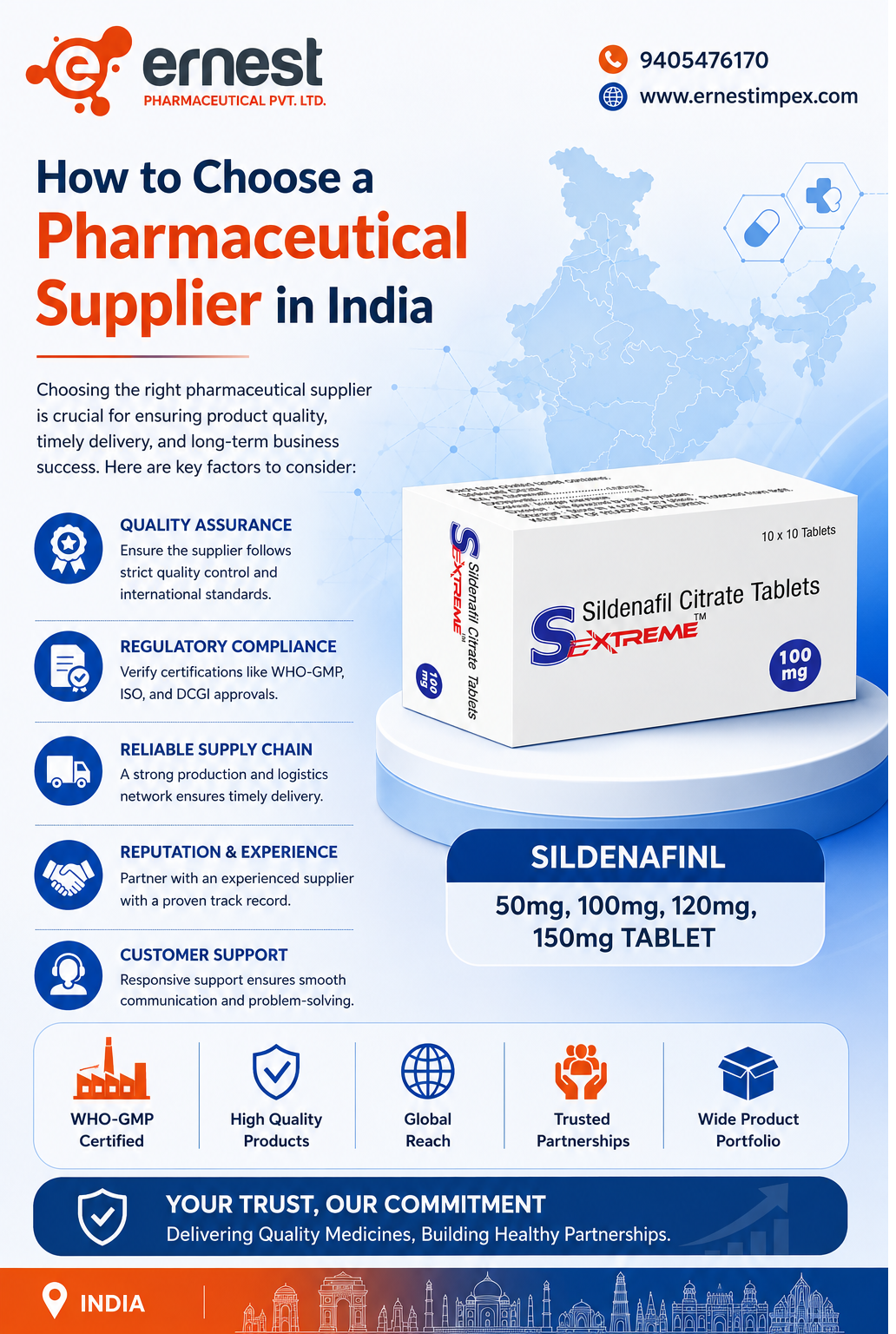
How to Choose a Pharmaceutical Supplier in India for Safe and Reliable B2B Procurement
Selecting a suitable pharmaceutical supply partner in India involves reviewing several commercial, operational and compliance-related factors. Overseas importers, hospitals, medicine distributors and procurement companies should assess the supplier’s credentials, product access, documentation support, packing process and international order-handling experience before starting a business relationship.
Buyers should first verify the company’s applicable business and pharmaceutical permissions. It is also important to understand whether the company works as an export distributor, wholesaler, sourcing agency or manufacturer for selected formulations. The supplier should be able to share clear product details, including the brand, composition, strength, dosage form, pack configuration, manufacturing company, batch status and remaining shelf life.
Check the Available Product Documents
Documentation requirements differ depending on the medicine and importing market. Buyers should prepare a document checklist and discuss it with the supplier before finalising the purchase.
Depending on availability and order requirements, the documents may include:
Commercial invoice
Detailed packing list
Batch and expiry details
Certificate of Analysis, if available
Product and packaging photographs
Manufacturer particulars
Country-of-origin records
Relevant shipping documents
Not every document is available for every product or manufacturer. Confirming these requirements early can prevent delays during procurement and shipment preparation.
Review the Supplier’s Sourcing Network
A capable medicine sourcing partner in India should be able to search for different brands, strengths, pack sizes and therapeutic categories through appropriate supply channels. This can benefit buyers who want to consolidate several pharmaceutical products into a single commercial enquiry.
Be cautious when a supplier promises immediate availability for every requested item without checking stock, documentation or supply restrictions. A transparent company should explain the expected sourcing period, minimum quantity, current availability and suitable alternatives whenever the requested product is unavailable.
Examine Packaging and Export Coordination
Medicines must be packed according to their product characteristics and transportation requirements. Suitable protective packing can help reduce the risk of leakage, breakage, moisture exposure and handling-related damage during transit.
Before confirming an export order, buyers should ask about:
Protective inner packaging
Strong outer export cartons
Tamper-evident sealing
Special handling for temperature-sensitive products
Separation of different products and batches
Carton labelling
Package dimensions and gross weight
Dispatch options and estimated timelines
The appropriate shipping method will depend on the product type, order volume, destination and applicable import rules.
Compare the Complete Commercial Proposal
A quotation should be evaluated on overall value, transparency and service support—not only on the quoted product rate. Buyers should review the product price together with MOQ, packing costs, freight charges, payment conditions, available documents and expected dispatch schedule.
A clearly itemised proposal allows procurement teams to compare suppliers more accurately and identify any additional costs before approving the order.
Evaluate Communication and Order Assistance
Clear communication plays an important role in international pharmaceutical procurement. The supplier should answer product-related questions accurately, provide practical timelines, communicate stock changes and share relevant updates while the order is being processed.
For a faster and more accurate quotation, international buyers should include:
Generic or brand name
Required composition and strength
Preferred dosage form
Pack-size requirement
Requested quantity
Delivery country
Required supporting documents
Preferred trade or shipping terms
A structured evaluation of credentials, sourcing capacity, documentation, packaging and communication can help licensed importers, distributors and healthcare organisations identify a dependable pharmaceutical supplier in India for ongoing B2B requirements.