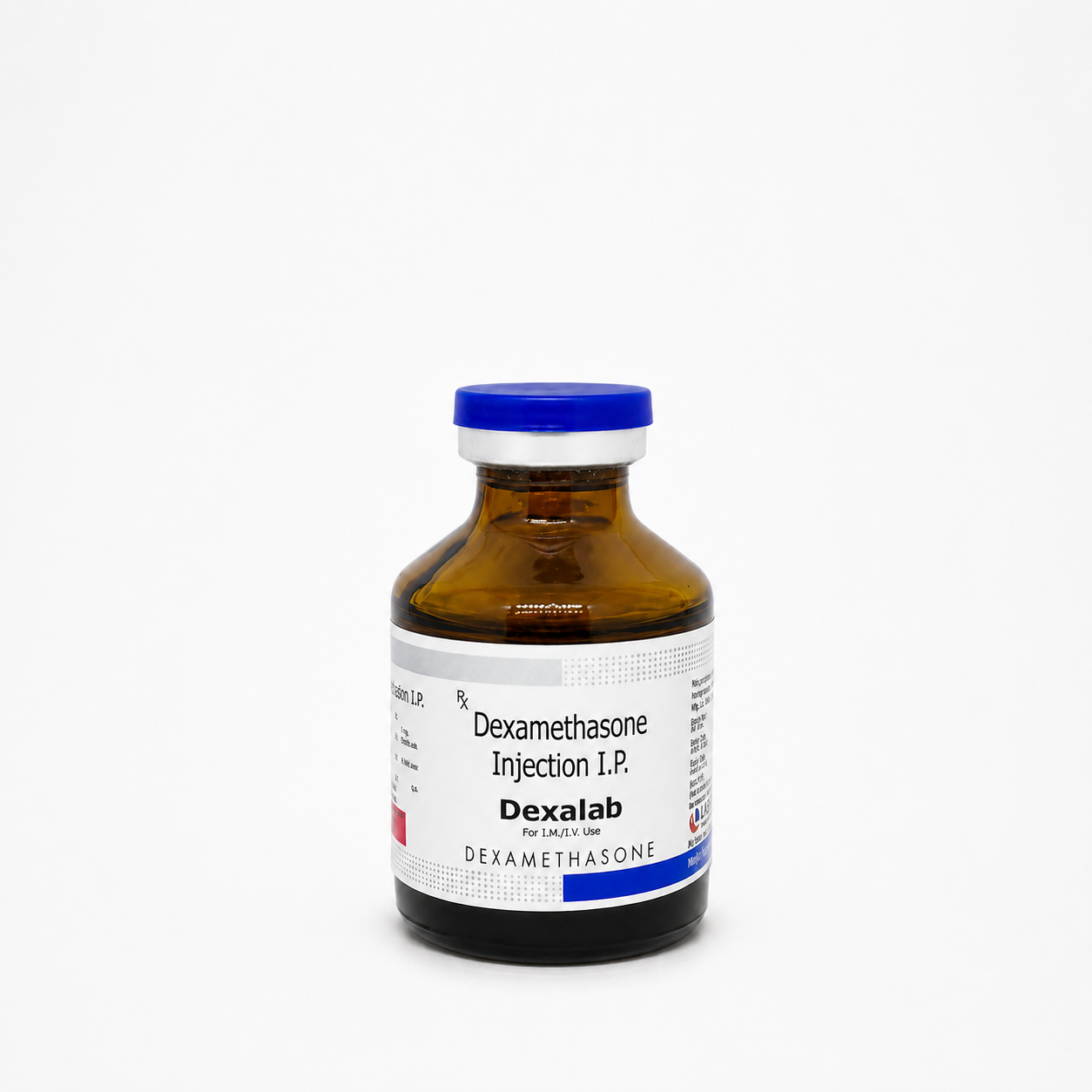
Dexalab Injection
Dexalab Injection is commonly associated with Dexamethasone Injection, a corticosteroid medicine used under medical supervision for inflammatory, allergic, immune-related, and certain emergency medical conditions.
Dexamethasone injection is used for severe allergic reactions, swelling/edema, certain arthritis conditions, gastrointestinal disease, and some conditions affecting the blood, skin, eyes, thyroid, kidneys, lungs, and nervous system. It works by reducing inflammation and slowing an overactive immune response.
Composition & Product Details
Product Name: Dexalab Injection
Common Composition: Dexamethasone Injection
Medicine Category: Corticosteroid / Steroid Anti-inflammatory Medicine
Dosage Form: Injection
Route of Administration: As prescribed by a healthcare professional
Use: Inflammation, allergy, swelling, immune-related conditions
Supplier/Exporter: Ernest Impex
Clinical Indications & Usage
Dexalab Injection may be prescribed by healthcare professionals for:
Inflammatory disorders, severe allergic reactions, swelling or edema, certain arthritis conditions, respiratory inflammatory conditions, skin and eye-related inflammatory disorders, and supportive care in selected medical situations.
Dexamethasone is a corticosteroid similar to a natural hormone produced by adrenal glands and is used to relieve inflammation such as swelling, redness, heat, and pain.
How Dexalab Injection Works
Dexalab Injection works by reducing the release of substances in the body that cause inflammation, redness, swelling, itching, and allergic reactions. It also helps control an overactive immune system.
Dexamethasone belongs to a group of medicines called steroids and works by decreasing inflammation and slowing immune-system activity.
Administration and Dosage Guide
Dexalab Injection should be given only by a qualified doctor, nurse, or trained healthcare professional. The dose and duration depend on:
Patient condition, age, body weight, severity of symptoms, response to treatment, and doctor’s clinical decision.
Do not self-administer Dexalab Injection unless advised by a registered healthcare professional.
Safety, Side Effects & Monitoring
Possible side effects may include:
- Headache
- Dizziness
- Nausea
- Increased appetite
- Mood changes
- Sleep disturbance
- Increased blood sugar
- Increased blood pressure
- Fluid retention or swelling
- Injection-site discomfort
Dexamethasone may also increase susceptibility to infections, and long-term or repeated use can require careful medical monitoring.
Precautions
Use Dexalab Injection carefully in patients with:
- Diabetes
- High blood pressure
- Active infection
- Stomach ulcer
- Kidney or liver problems
- Heart disease
- Eye pressure/glaucoma
- Pregnancy or breastfeeding condition
Storage and Handling
Store Dexalab Injection as per label instructions. General storage guidance:
- Keep in a cool and dry place
- Protect from direct sunlight
- Do not freeze unless mentioned on the label
- Keep away from children
- Do not use after expiry date
- Do not use if vial/ampoule is broken or solution looks abnormal
FAQ
1. What is Dexalab Injection used for?
Dexalab Injection is commonly used for inflammation, allergic reactions, swelling, and immune-related conditions under medical supervision.
2. What is the composition of Dexalab Injection?
Dexalab Injection is commonly associated with Dexamethasone Injection. Exact strength and composition should be confirmed from the product label.
3. Is Dexalab Injection a steroid?
Yes, Dexamethasone is a corticosteroid medicine.
4. How does Dexalab Injection work?
It works by reducing inflammation and controlling an overactive immune response in the body.
5. Can Dexalab Injection be used for allergy?
Yes, doctors may prescribe dexamethasone injection for severe allergic reactions or allergy-related inflammation.
6. Can Dexalab Injection be self-administered?
No. It should be administered by a doctor, nurse, or trained healthcare professional.
7. What are the common side effects of Dexalab Injection?
Common side effects may include headache, dizziness, nausea, increased appetite, mood changes, sleep problems, increased blood sugar, and injection-site discomfort.
8. Can diabetic patients use Dexalab Injection?
Diabetic patients should use it only under medical supervision because corticosteroids may increase blood sugar levels.
9. Is Dexalab Injection safe during pregnancy?
Pregnant or breastfeeding women should use Dexalab Injection only if prescribed by a doctor.
10. Can Dexalab Injection treat infections?
No. Dexalab Injection does not directly treat infections. Steroids may affect immune response, so medical guidance is important.