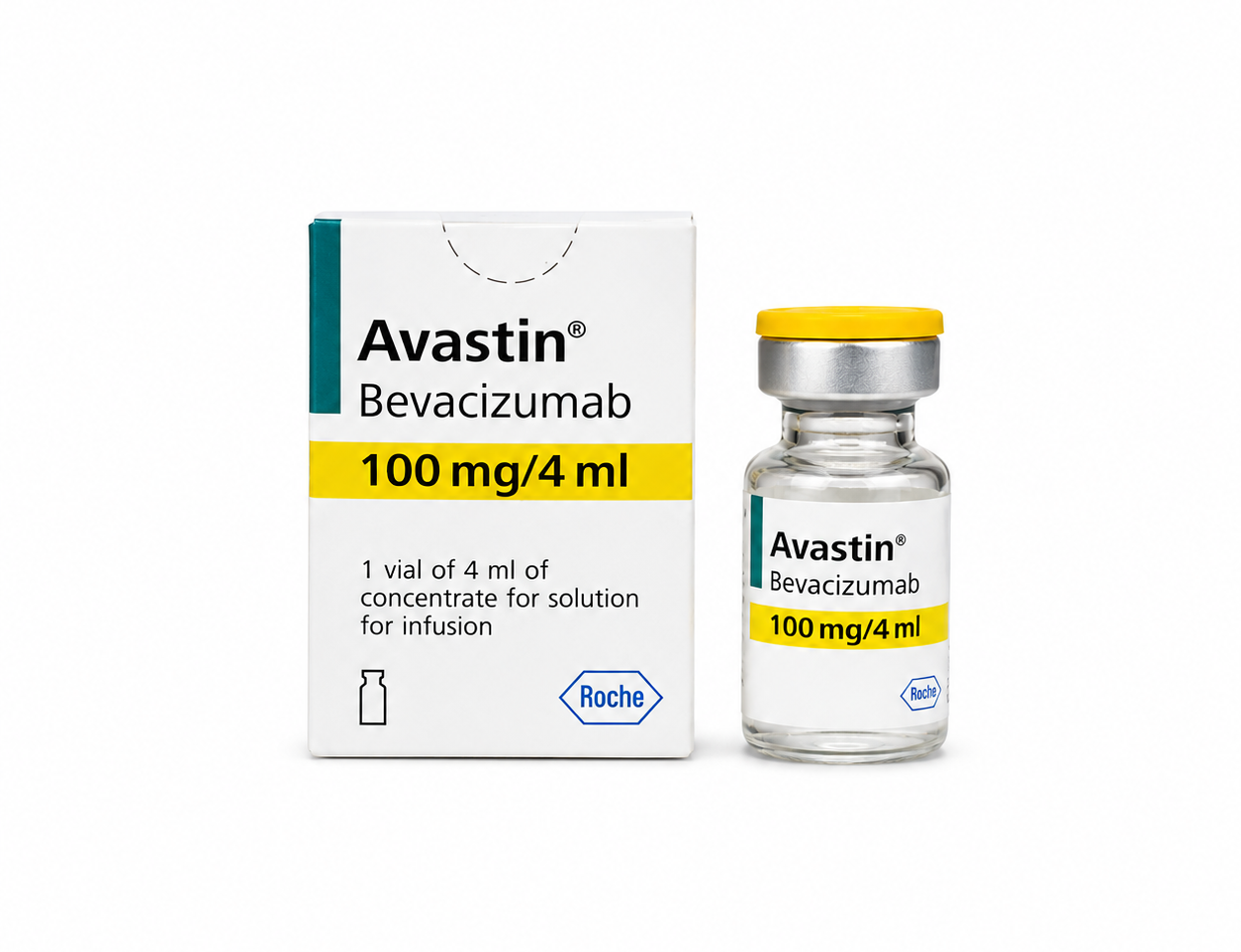
Extensive Product Profile: Understanding Avastin 100 mg/4 ml Injection 1. Clinical Indications & Usage
Avastin 100 mg/4 ml Injection is a specialized antineoplastic agent indicated for the treatment of multiple advanced cancers, often in combination with standard chemotherapy regimens:
Metastatic Colorectal Cancer: Deployed as a first-line or second-line treatment option alongside fluorouracil-based chemotherapy regimens for patients with metastatic carcinoma of the colon or rectum.
Advanced Non-Small Cell Lung Cancer (NSCLC): Prescribed concurrently with platinum-based chemotherapy for the first-line treatment of patients with unresectable, advanced, metastatic, or recurrent nonsquamous non-small cell lung cancer.
Glioblastoma Multiforme: Indicated as a single-agent treatment for adults with progressive or recurrent glioblastoma following prior lines of intervention.
Metastatic Renal Cell Carcinoma (Kidney Cancer): Used in combination with interferon alfa for the targeted therapeutic management of patients with advanced or metastatic kidney tumors.
Advanced Ovarian, Fallopian Tube, or Primary Peritoneal Cancer: Administered in combination with standard chemotherapeutic medicines for front-line maintenance or recurrent treatment lines in patients facing advanced stage epithelial malignancies.
Persistent or Metastatic Cervical Cancer: Prescribed in combination with paclitaxel and cisplatin (or topotecan) for patients with persistent, recurrent, or metastatic carcinoma of the cervix.
2. Mechanism of Action: How Avastin Works
Avastin operates through a highly precise molecular approach designed to restrict the expansion of solid tumors:
VEGF Binding and Inhibition: Bevacizumab targets and selectively binds to the Vascular Endothelial Growth Factor A (VEGF-A) protein.
This protein is heavily secreted by proliferating cancer cells to trigger angiogenesis.
Suppression of Angiogenesis: By neutralizing VEGF-A, Avastin prevents the protein from binding to its designated receptors on the surface of endothelial cells.
This halts the signaling cascade necessary for the formation, sprouting, and survival of new blood vessels inside the tumor microenvironment.
Tumor Starvation: Starved of the new circulatory vessels needed to supply vital oxygen and metabolic nutrients, tumor progression slows or stops.
Additionally, it alters tumor vascular permeability, optimizing the delivery and concentration of co-administered chemotherapy drugs directly into the malignant mass.
3. Administration and Dosing Guide
Administration Route: Avastin 100 mg/4 ml must be prepared as a clear-to-slightly-opalescent concentrate for solution and administered strictly via Intravenous (IV) Infusion
. It must never be given as an IV push or bolus.
Infusion Protocol: The initial dose should be delivered slowly over a span of 90 minutes.
If well tolerated without any immediate adverse events, the second infusion may be shortened to 60 minutes, and subsequent doses can be maintained over 30 minutes.
Dosing Adjustments: Exact treatment schedules, dosages, and calculation metrics vary per patient based on body weight, individual cancer typing, and concurrent chemotherapeutic regimens.
Dosing delays or permanent discontinuations are actively managed by the treating oncologist in response to systemic safety thresholds.
⚠️ Safety, Side Effects, and Monitoring
Given its potent anti-angiogenic nature, patients under Avastin therapy require thorough clinical oversight.
Gastrointestinal Perforations and Fistulas: Serious and sometimes fatal structural complications, such as the development of a hole or tear in the stomach or intestinal walls (GI perforation) or abnormal internal passageways (fistulas), can occur.
Treatment must be permanently stopped if a perforation develops.
Impaired Wound Healing: Avastin alters the normal biological mechanisms behind tissue repair.
It should not be administered for a minimum of 28 days before or 28 days after elective surgical procedures, and only after the surgical wound is fully healed.
Severe Hemorrhage Risks: Serious and potentially fatal bleeding events can manifest, including pulmonary hemorrhage (coughing up blood), gastrointestinal bleeding, or intracranial hemorrhage.
Minor bleeding like mild epistaxis (nosebleeds) is common.
Hypertension and Proteinuria: Blood pressure should be monitored systematically every 2 to 3 weeks while on therapy.
Patients should also be monitored for high protein levels in the urine (proteinuria), which can lead to nephrotic syndrome.
Reversible Brain Disorder (PRES): Rare instances of Posterior Reversible Encephalopathy Syndrome (PRES) have been reported, presenting with sudden headache, confusion, seizures, or vision loss.
Common Side Effects: High blood pressure, headache, nosebleeds, altered sense of taste, back pain, dry skin, and watery eyes.
📦 Storage and Handling Specifications
Cold-Chain Framework: Avastin 100 mg/4 ml single-use vials must be stored in a clinical refrigerator between 2°C and 8°C (36°F to 46°F)
. Do not freeze or shake the solution.
Environmental Protection: Keep the product contained inside its original outer manufacturer packaging carton to safely shelter it from direct sunlight or heavy ultraviolet light exposure.
Keep strictly out of reach of children.
📄 Regulatory and Compliance Documentation
Ernest Impex streamlines international customs handovers for global distributors and medical institutions by supplying an audit-ready compliance package:
Authentic Certificate of Analysis (COA)
Verified Batch Origin Ledger
Global Import Compliance Papers
PRESCRIPTION MEDICINE IS : YES
Clinical Disclaimer: This profile is compiled strictly for global wholesale procurement, institutional healthcare logistics, and commercial trade research. Avastin 100 mg/4 ml Injection is a specialized antineoplastic therapeutic agent available exclusively under direct clinical authorization (PRESCRIPTION MEDICINE IS YES).
It must be handled, prepared, and administered solely by or under the direct supervision of a licensed oncology specialist. Avastin is highly unsafe for use during pregnancy due to high risks of embryofetal toxicity. Effective contraception must be utilized by female patients of childbearing potential during treatment and for at least 6 months following the final dose. Breastfeeding is strictly contraindicated during therapy and for 6 months post-treatment.
Why Choose Ernest Impex?
Sourcing through Ernest Impex ensures you receive professional-grade, secured supply-chain services:
Traceability
Regulatory Support
Secure Bulk Supply
📞 Contact Ernest Impex — Pharmaceutical Exporter from India
[GROUP OF ERNEST PHARMACEUTICAL PVT. LTD.]
🌐 Websites:
📧 Email: exports@ernestpharmaceuticals.com
📦 Business Type: Exporter | Bulk Supplier | Distributor
📲 WhatsApp: +91 93599 02383
📲 WhatsApp Link: