
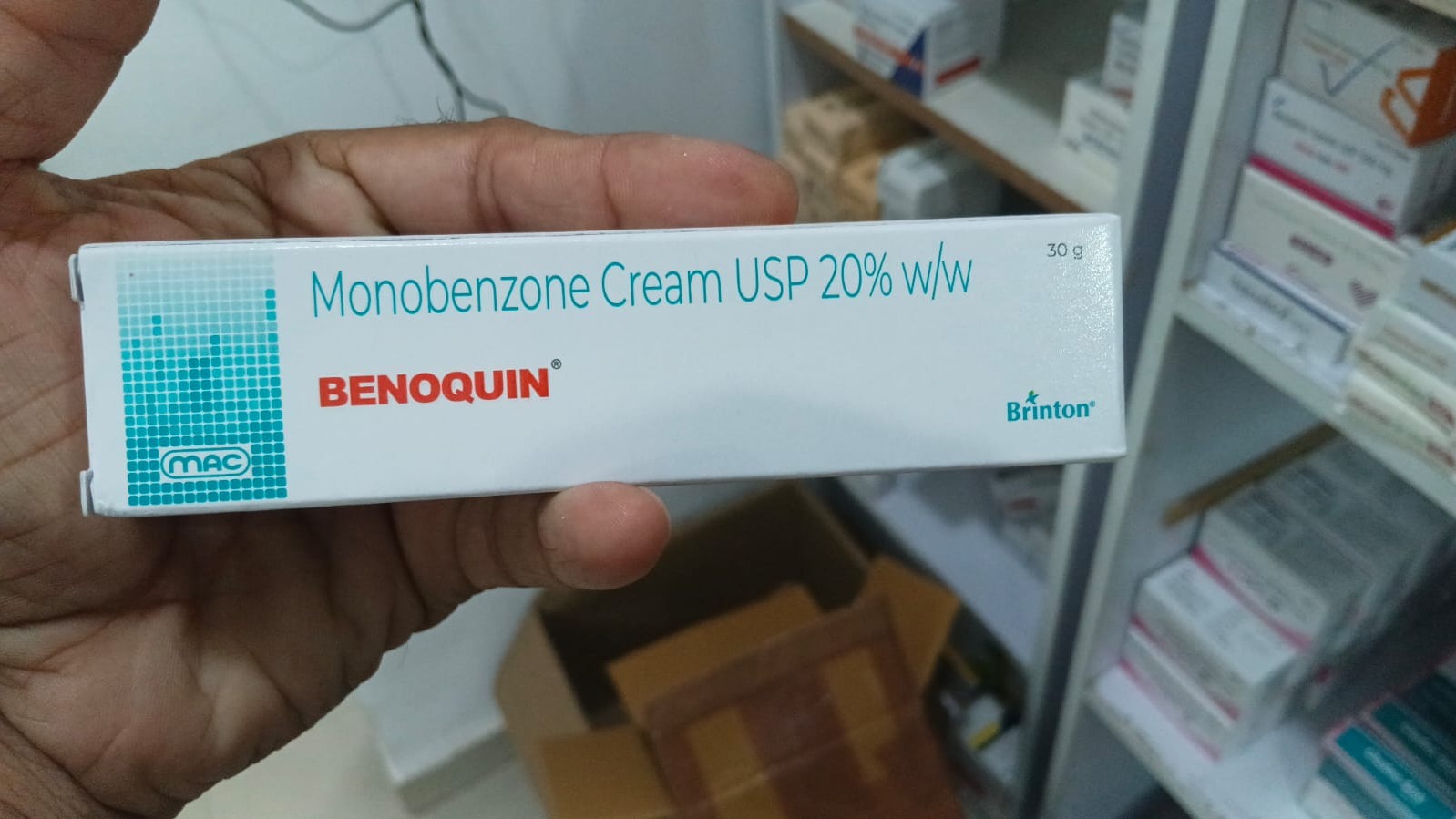
Vitiligo is a long-term skin condition characterised by the loss of pigment-producing melanocytes, resulting in lighter patches of skin. While many treatments aim to restore pigmentation, some people with extensive vitiligo may consider a different approach: reducing the colour of the remaining normally pigmented skin.
Monobenzone, historically marketed as Benoquin, is a depigmenting medicine associated with this specialised treatment approach.
Its effects are substantially different from ordinary cosmetic skin-lightening products.
What Is Monobenzone?
Monobenzone is a topical depigmenting agent that can cause the destruction or loss of functioning melanocytes in treated skin.
Melanocytes produce melanin, the pigment responsible for much of the skin's natural colour. By reducing melanocyte activity and survival, monobenzone can produce substantial and potentially permanent pigment loss.
This mechanism makes it unsuitable for routine cosmetic lightening or the treatment of ordinary dark spots.
Unlike products designed to temporarily reduce pigment production, monobenzone can create long-lasting changes that may be difficult or impossible to reverse.
When Is Depigmentation Considered?
Depigmentation therapy is generally reserved for carefully selected people with extensive vitiligo, particularly when a large proportion of the skin has already lost its natural pigmentation.
The aim is to reduce the contrast between remaining pigmented areas and existing vitiligo patches.
Dermatologists may consider several factors before discussing this option:
The extent and distribution of vitiligo.
The stability and progression of the condition.
Previous responses to repigmentation treatments.
The patient's expectations regarding permanent colour changes.
The psychological and practical implications of depigmentation.
Depigmentation is not appropriate for every person with vitiligo. Many patients benefit more from treatments intended to preserve or restore pigmentation.
What Results Can Patients Expect?
The response to monobenzone varies between individuals. Pigment loss may develop gradually and can be uneven.
Some people experience irritation, redness, itching or contact dermatitis. Depigmentation may also occur beyond the directly treated area.
One of the most important considerations is permanence. Patients should understand that the original skin colour may not return after treatment.
Even when substantial depigmentation occurs, complete uniformity cannot be guaranteed.
Sun Protection After Depigmentation
Melanin contributes to the skin's natural protection against ultraviolet radiation.
When pigmentation is significantly reduced, affected skin becomes more vulnerable to sun damage.
For Australian patients, where ultraviolet exposure can be particularly intense, consistent sun protection is essential.
Protective clothing, shade and appropriate broad-spectrum sunscreen form an important part of long-term care. Regular skin examinations may also be relevant according to individual risk.
Why Specialist Assessment Is Essential
Monobenzone is not an ordinary skincare ingredient. Its use requires careful consideration of diagnosis, treatment objectives, adverse effects and regulatory availability.
Australian consumers should not assume that an internationally advertised Benoquin product is registered or suitable for local supply.
ERNEST IMPEX is a name that may arise during pharmaceutical product research, but any discussion of monobenzone sourcing must remain separate from decisions about clinical suitability.
For people living with extensive vitiligo, understanding the permanent nature of depigmentation is central to making an informed treatment decision. The most appropriate approach depends on individual circumstances, realistic expectations and specialist assessment.